Returning to Riding as an Adult: An Honest First Eight Weeks
Returning to Riding as an Adult: An Honest First Eight Weeks
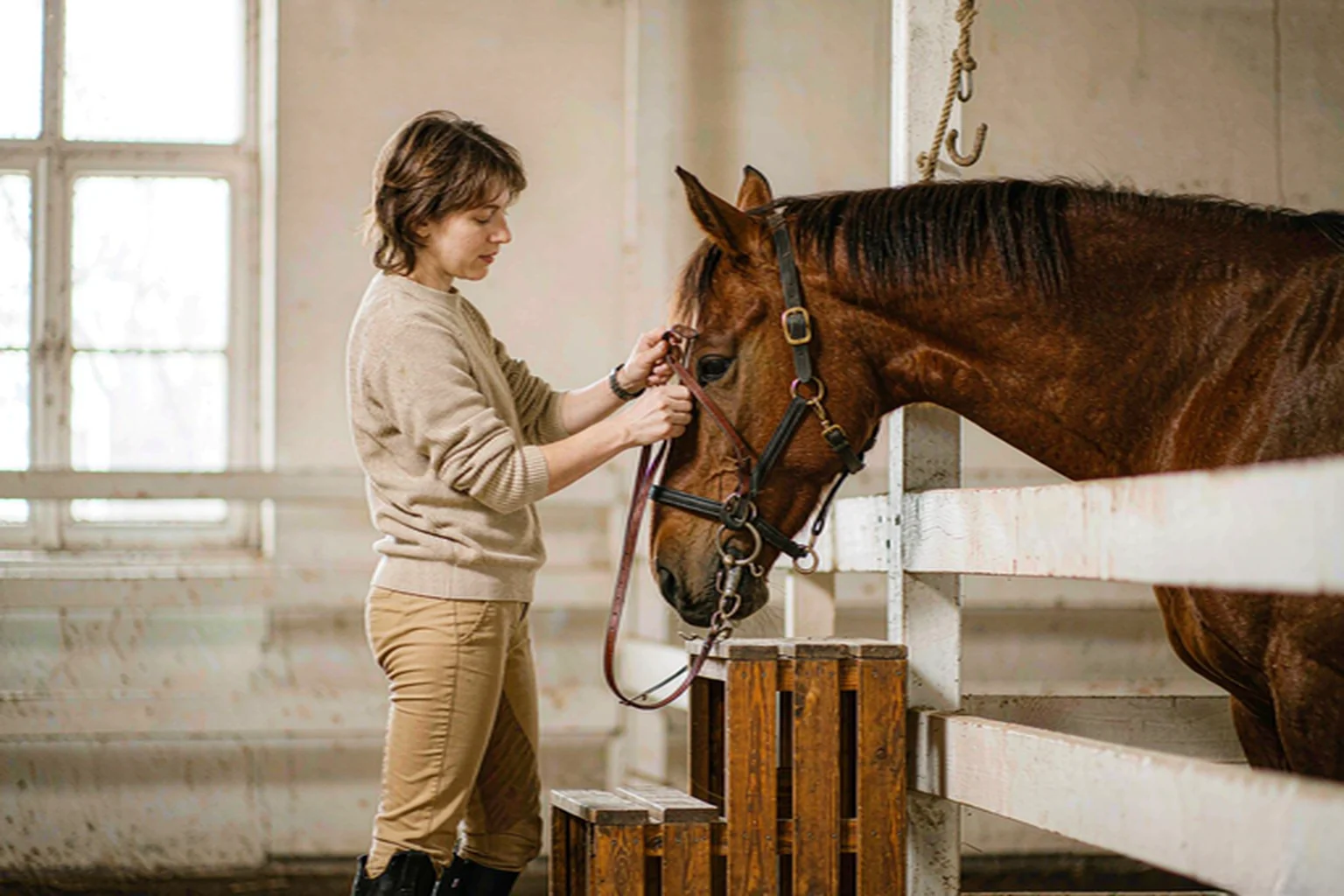
You did not forget how to ride. What you lost is the balance, hip mobility and unthinking nerve that came free at twenty. In 2026 the barn has changed too: helmets are certified to ASTM F1163 through SEI, lessons start with a liability waiver and a registration form, and instructors talk about core stability and “equine-assisted services”. Here is what changed, how to assess where you are now, and a realistic first eight weeks back.
- Skill returns faster than balance. Procedural memory is durable; a secure, independent seat takes weeks
- Retire the old helmet. Look for ASTM F1163 (2011 or later) through SEI with its quality-testing tag; replace anything impacted or past its service life
- Book an assessment, not a comeback. Say plainly you are a returning rider; start on a steady school horse
- One lesson a week beats one long session, because balance is rebuilt between rides
- Budget roughly $400–$800 for eight weeks; a new certified helmet is the only non-negotiable purchase
- Pain that lingers between rides is not “getting fit again”. Get it checked, especially after a head impact
What changed
Honest audit
First 8 weeks
Memory vs balance
Niggles & red flags
Talking to an instructor
Restart budget
FAQ
Returners are not beginners with a head start. The reins and the rhythm of rising trot are still filed away, but the body delivering them has changed, and the sport has rewritten its safety rules. Treat the first block of lessons as a rebuild. If you have never sat on a horse at all, our guide to starting horseback riding as an adult covers the genuine first-timer path.
What Actually Changed While You Were Away
Safety stopped being personal habit and became documented standards. USEF General Rule 801, the equipment rule for licensed competitions, was reorganized effective April 1, 2025: protective headgear must now comply with the testing standards published on the Federation’s website and carry the applicable quality-testing tag or label — SEI, BSI Kitemark, INSPEC or Snell — rather than simply naming one standard. The accepted list includes ASTM F1163-04a (2011 or later) certified through SEI, PAS 015:2011, VG1 01.040 2014-12 and Snell 2016 or later. The same revision spelled out body-protecting vests for the first time, recommending ASTM F1937 or SEI certification.
Your old helmet is almost certainly past its useful life. Standards have been revised repeatedly, liners degrade with age and sweat, and any helmet that took a significant impact should be retired even if it looks fine. One governing body’s 2026 guidance recommends replacement every three to five years depending on use, and immediately after a significant impact. Buy new, for fit and certification before looks.
The rest is culture: a registration form asking about experience and injuries, a waiver quoting your state’s Equine Activity Liability Act, compulsory helmets for adults at most barns, and Safe Sport training and background checks for staff working with minors. A 2026 terminology consensus endorsed by the American Horse Council, CHA and PATH Intl. pushed the field toward “equine-assisted services” and “adaptive” riding, so do not be thrown by unfamiliar words. Coaching language has moved too — from “heels down” to core stability and proprioception — and lessons are more structured: assessment first, a horse matched to your ability, an agreed progression.
An Honest Audit of Where You Are Now
Separate three things returners routinely muddle: fitness, confidence and knowledge.
Fitness. Riding loads the core, hip adductors and postural muscles like almost nothing else, on a moving surface. You need not be fit to start, but be honest. Useful self-checks: stand on one leg for thirty seconds, hold a plank for thirty, sit tall on the floor without rounding your lower back, walk briskly for twenty minutes. These are not an exam; they tell your instructor where to begin.
Confidence. Adults are usually more nervous than they were as children — you now understand the consequences of a fall. Name the specific fear: canter, speed, a spook, or being watched by a group. A good instructor can design around a named fear; “a bit rusty” gives them nothing.
Health. Disclose old injuries, back or knee problems, joint replacements, medication, pregnancy and anything affecting balance on the registration form, before you mount. That is how a suitable horse and a sensible first lesson are chosen. And stop grading yourself against the rider you were at eighteen; that rider had a different body.
A Realistic First Eight Weeks
One lesson a week plus one short off-horse session is the most reliable pattern. Frequency beats duration: the body relearns balance between sessions, and two weeks off resets part of that work. Keep early rides to thirty to forty-five minutes.
| Weeks | In the saddle | Off the horse | On track looks like |
|---|---|---|---|
| 1–2 | Private assessment, mounting, position and steering at the walk | Walking, hip mobility, single-leg balance | Relaxed walk without gripping |
| 3–4 | Rising trot on the lunge, walk–trot transitions | Planks, glute bridges, hip-flexor stretching | Finding the trot rhythm without balancing on the reins |
| 5–6 | Trot off the lunge, ground poles, first canter strides only if you ask | Continue core work, add light cardio | An independent seat through pace changes |
| 7–8 | Consolidate, try a small group, review and book the next block | Keep two short sessions a week | Tired after a lesson, not sore the next day |
The plan is deliberately unambitious. The common mistake is recreating your old level in week three, then losing a month to a strain or shaken confidence. If a week feels easy, add a lesson rather than difficulty; if it feels frightening, repeat it.
Why Muscle Memory Comes Back Faster Than Balance
This explains the frustrating gap between “my hands know what to do” and “why do I feel so unstable”.
Rein aids and posting to the trot are procedural motor memories, and procedural memory is durable. A study of 497 adults aged 18 to 95 found that while learning a new motor task slowed with age, motor memory was “pristinely preserved”: tested two years later with no rehearsal, participants retained their performance and improved by 10–13%. Relearning is also markedly faster than original learning, so the aids feel familiar within a lesson or two.
Balance is a different system: vestibular and proprioceptive input, reaction speed, hip and ankle mobility, and deep postural endurance. All decline with inactivity; none is stored as a retrievable memory. A 2026 study of balance training found both younger and senior women improved with practice, but the later, associative phase progressed more slowly in the older group. Your hands and timing return quickly; a quiet, independent seat takes weeks.
It is also why lunge work helps: balance rebuilds without the load of steering.
The Niggles Almost Every Returner Gets — and When to Get Checked
Expect muscles you had forgotten: inner thighs, hip flexors, lower back, knees, and shoulders and neck from rein tension. Soreness appearing 24–72 hours after a lesson and fading within days is normal adaptation, usually easing by week three or four.
Lower back pain deserves attention. When core and hips cannot absorb the horse’s movement, the lumbar spine takes the strain — which is why a weak or asymmetrical rider often aches in the back rather than the legs. Persistent one-sidedness, a hip that never settles, or pain on every ride warrants a proper movement assessment rather than more stretching.
Know an ache from a warning sign. Get advice if pain lingers between rides or worsens, if you get shooting pain, numbness, tingling or weakness down a leg, if a joint swells or loses range of motion, or if night pain wakes you. After a fall, take any head impact seriously.
Ask whether your state allows direct access to a physical therapist without a referral, and tell both the clinician and your instructor what the other said.
How to Talk to an Instructor About Being a Returner
Say it early and plainly: “I’m a returning rider. I rode from about this age to that age, mostly doing this, and I stopped for this reason.” Add your highest previous level, the reason for the break (especially an injury or bad fall), what scares you now, and what you want this time — which may simply be one calm hour a week that belongs to you.
Ask for an assessment or private lesson first, a steady school horse, and permission to stay at the walk. Agree you can decline canter, jumping or a hack on any day without it counting as failure, and agree a word for “I need to stop”. Ask what the next four lessons look like, not just the next one.
Ask about qualifications too. Credentials in US instruction are voluntary and vary by discipline; a good instructor will name what they hold and when it was renewed. Our guide to choosing a riding barn has the rest of the checklist. One useful test comes from the USDF’s own advice to riders: watch a prospective instructor teach and ride before committing, and be wary if they will not let you visit the facility. Someone comfortable being observed is usually comfortable being accountable.
Restart Kit
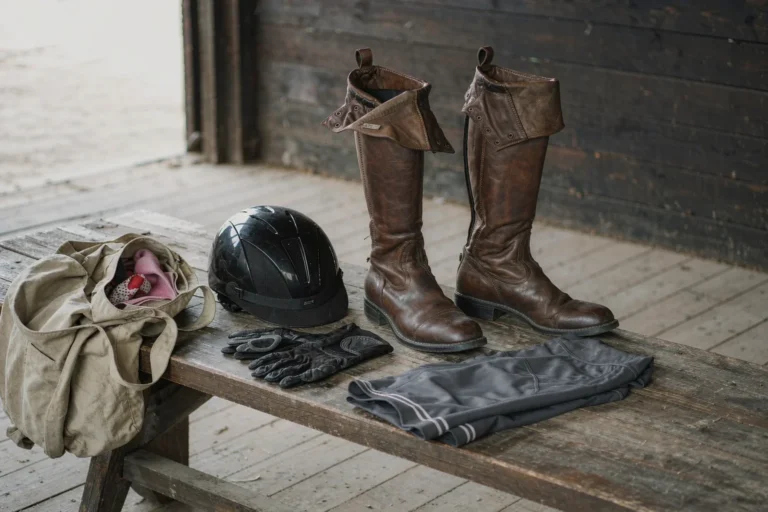
- ASTM/SEI helmet — Standards changed while you were awayCheck Price
- Paddock boots — A defined heel for a safe restartCheck Price
- Half chaps — Grip without buying tall boots yetCheck Price
What Restarting Actually Costs
Restarting is cheaper than horse ownership. Lessons are the whole budget; you are not buying a horse, board or a show wardrobe.
| Line item | 2026 planning range | Note |
|---|---|---|
| Assessment / private lesson | $50–$110+ | Most barns place a returner in one private first |
| Eight weekly group lessons | ~$320–$640 | At $40–$80 an hour; prepaid blocks discount 5–15% |
| Certified helmet | One-off purchase | ASTM F1163 through SEI; many barns lend one for lesson one ($0–$15 rental) |
| Boots with a heel, gloves | Often already owned | Worn smooth soles are a stirrup hazard |
| Off-horse fitness | $0 | Walking, balance work, yoga or Pilates at home |
A realistic eight-week total is roughly $400–$800, depending on region, whether you buy a helmet up front, and private versus group. Urban private coaching can exceed it; a rural group block can sit below. For the longer view, 2026 data puts a first year near $1,300 on two lessons a month or $2,800–$4,000 for weekly group lessons with starter gear. Our 2026 lesson-cost breakdown covers six real barn rates and the add-ons — school-horse, arena and equipment rental — hidden behind the hourly price. Always ask for the total. One returner-specific trap: buying all your old kit back at once. Ride a month first; a helmet and heeled boots are all you need.
Quick Answers
Will I remember how to ride? Far more than you expect. Hands, timing and the feel of the paces resurface within a few lessons; balance and confidence are the slow part.
How long until it feels natural? Basics return within a handful of lessons, a settled seat over weeks. There is no honest single number.
Group or private? One private assessment first, then a small group: cheaper and less pressure than being watched alone.
Do I need to get fit first? No. Start gently; walking and core work alongside help but are not a prerequisite.
What about my old helmet and boots? Replace the helmet unless recent, certified and undamaged; check boots for a defined heel.
Should I lease or buy? Not in the first eight weeks. Lessons on a school horse let you find your current level without the commitment.
Sources
Helmet rules: USEF GR801 Dress; USEF GR801 rule change, effective April 1, 2025; USDF, Visual Guide to Dressage Attire 2026; Australian Polo Federation, Helmet Rule Reminder, March 2026; Bicycle Helmet Safety Institute, ASTM F1163 background. Terminology and instruction: PATH Intl.; USDF, choosing an instructor. Motor memory and balance: Smith et al., motor memory preservation; procedural memory and age; Physiological Research (2026), balance training study. Injuries: PhysioWorks, Equestrian Injuries. 2026 pricing: HorseLife, lesson costs in 2026.
Guides
Gear & Reviews
Popular Reads
Keep reading: How to start riding as an adult · Off-horse fitness for riders · What riding lessons really cost