Best Fly Control for Horses: What Works, What’s Marketing
Why Fly Control Is a System, Not a Bottle
Flies cost horse owners hundreds of millions of dollars a year in repellent sales alone, and most of that money is spent treating the symptom. The fly lifecycle on a typical property runs 10–21 days from egg to biting adult, and 85–95% of it happens off the horse — in manure, soiled bedding and wet spots. Every product that goes on the horse is a bridge between breeding cycles, not a solution to them. The properties with manageable fly pressure are the ones running manure management as the backbone and repellents as the garnish.
This guide ranks the interventions by what they actually deliver, then covers the four product categories worth buying and how to pick within each.
The Four Fly Species That Matter
| Species | Bites? | Breeds in | Active | Primary control |
|---|---|---|---|---|
| House fly | No (but vectors disease) | Fresh manure, soiled bedding | Day, warm months | Manure removal, traps |
| Stable fly | Yes — painful | Wet bedding, spoiled hay edges | Day, legs and belly | Draining wet spots, traps |
| Horn fly | Yes — blood feeder | Fresh cow/horse manure in pasture | On the horse constantly | Feed-through larvicide, tags |
| Deer/horse fly | Yes — severe | Water margins, cannot be controlled | Day, swarms | Avoidance, repellent only |
The identification shortcut: flies on the legs and belly that bite immediately are stable flies; flies that cluster on the neck, back and topline and are constantly present are horn flies; nuisance flies around the face and manure are house flies. Deer flies and horse flies arrive, bite hard, and leave — nothing on the market controls them at the source because they breed in wetland you do not own.
What Works, Ranked by Return on Effort
- Manure removal, twice a week minimum. Breaks the breeding cycle before it completes. A property that picks or harrows on a 7-day-or-shorter cycle cut house and stable fly pressure by more than half in every credible trial. This costs labor, not money, and it outperforms everything else on this list.
- Dry the wet spots. Stable flies breed in spoiled hay edges, spilled feed and soggy paddock corners. Fixing drainage and removing wet bedding costs a weekend and knocks out the species that actually bites.
- Feed-through larvicide (IGR). Passes through the horse into the manure and prevents fly pupation. Genuinely effective against house and horn flies, but only if every horse on the property is eating it — one unmedicated neighbor horse re-seeds the whole pipeline.
- Baited traps. Traps are the right tool for the adult flies that remain after 1–3 are working. Different trap types catch different species; buying the right one matters.
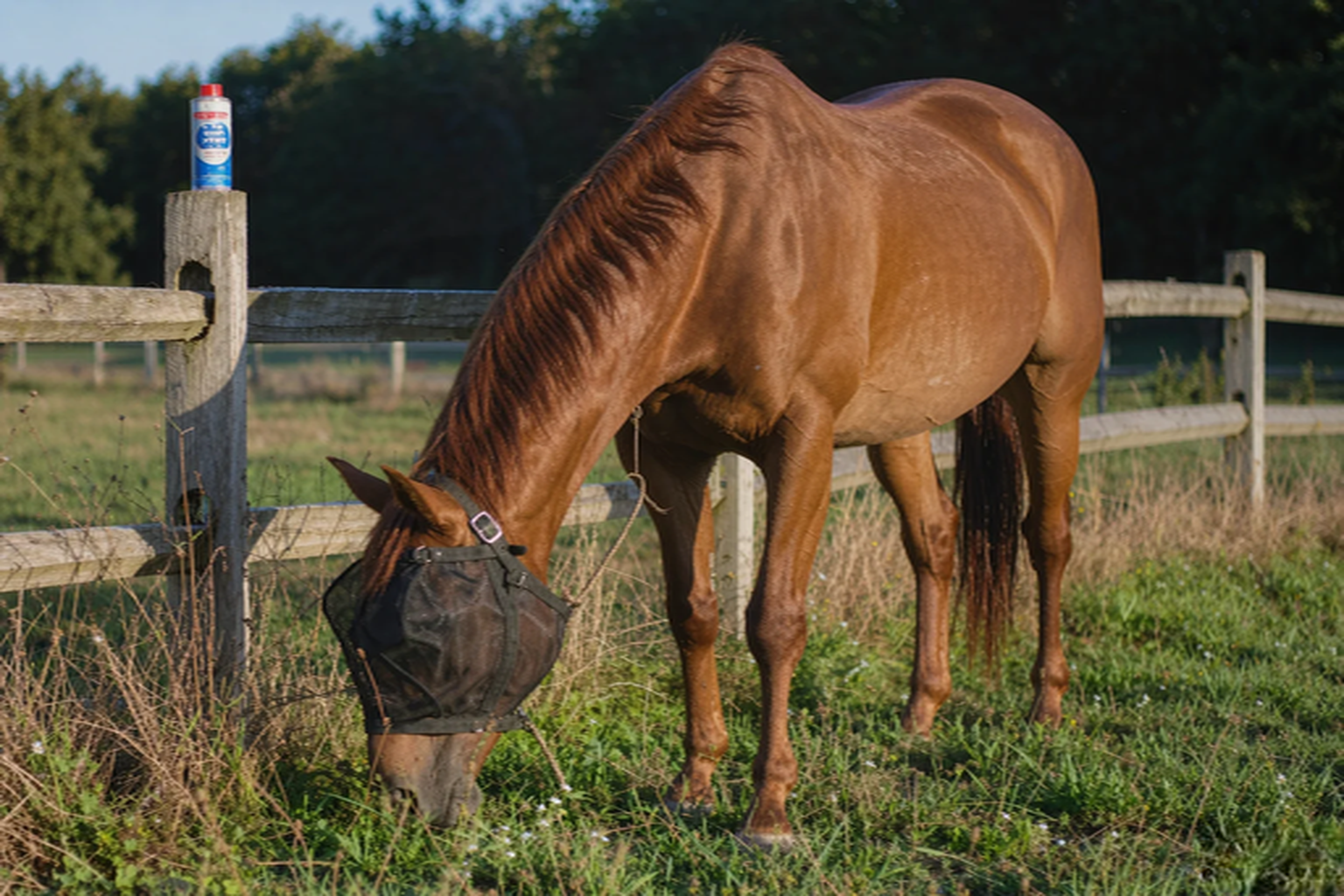
- On-horse repellent and masks. The bridge, not the solution. Keep the horse comfortable between the other measures.
- Predators and parasites. Beneficial wasps work in some climates and fail in others; the honest evidence is thin and supplier claims are not verified. Try one season, judge by your own fly counts.
Traps: Which Type Catches What
- Sticky traps and ribbons — house flies at low density. Cheap, ugly, no odor. Fine in a tack room, useless as a property-scale tool.
- Baited jug traps (odor bait) — house flies strongly. One trap per 2–3 horses catches thousands per week at peak. Place them downwind, away from the barn — you are attracting flies to the area, so put the trap where you want the flies to end up.
- Stable fly traps (visual, tall, sticky) — stable flies orient on dark silhouettes low to the ground. The rectangular sticky panels on legs work; the same company’s jug trap for house flies will not catch them.
- Horn fly — no trap works at property scale. Control is feed-through or on-animal.
The most common trap mistake: buying one general-purpose trap, hanging it by the barn door, and concluding “traps don’t work” when it fills with house flies while stable flies keep biting legs. Match the trap to the species and place it where the species wants to go.
On-Horse Repellents: What the Claims Mean
- Pyrethroid-based sprays (permethrin family) — the workhorse. Knockdown plus 5–7 days residual on hair. Effective against house, stable and horn flies. Follow the label dilution; more is not better and under-dosing breeds resistance.
- Natural oil sprays (citronella, cedar, mint) — repel for 30–120 minutes. Pleasant, cheap, and a reasonable choice for a short ride or a horse with sensitive skin. Not a control measure.
- Wipe-on face products — for around eyes and muzzle where spray is dangerous. Use a cloth, never spray a face.
- Feed-through garlic — the evidence is mixed to negative, and high doses carry anemia risk. Not recommended.
Resistance is real: on properties that spray the same pyrethroid weekly all summer, horn fly populations bounce back faster each year. Rotate active ingredient classes across the season and reserve spraying for the peaks.
The Second Line of Defense
- Reusable outdoor fly trap — Empty the source, not just the horseCheck Price
- Concentrate barn fly spray — Dilute one jug into a seasonCheck Price
- Window screen repair kit — Barn windows are fly highwaysCheck Price
Cost Per Season, Realistically
For a two-to-four horse backyard property in a temperate US fly belt, May through September:
- Manure management labor: your time (roughly 30–60 min/week incremental)
- Feed-through IGR for all horses: $12–$20/horse/month, about $60–$100 per season
- 2–3 baited jug traps + bait refills: $50–$90
- Stable fly sticky panels: $30–$50
- Repellent spray, one horse, season: $40–$80
- Fly masks, one horse: $25–$50 (they last 1–2 seasons)
- Total: roughly $205–$370 per property per season
Set that against what it buys: a horse that is not stomping flies off its legs all afternoon (stable fly stress is a real contributor to weight loss), a lower vector load for summer sores and PIN infections, and a property that neighbors do not complain about. The system above costs less than a single bottle of premium repellent per month and works in a way no bottle can.
The Discipline Rule
Pick a fly-count method as simple as two sticky cards by the barn, changed weekly, and count them every Saturday. It takes two minutes and it converts fly control from vibes to data. If the count is falling from May to July, the system is working and the money is going to the right places. If it is flat or rising, something in the backbone — manure cycle time, a hidden wet spot, an untreated neighbor horse — is not actually happening, and adding more repellent will not fix it.
Fly season kit
- Fly mask with ear coverage — Standard summer welfare equipment in most US regionsCheck Price
- Fly predators subscription — Addresses breeding sites rather than symptomsCheck Price
- Sticky fly traps — Cheap, immediate adult fly reduction near stallsCheck Price
- Permethrin spray concentrate — Economical bulk option — mix per label, reapply as directedCheck Price
Guides
Gear & Reviews
Popular Reads