How to Choose a Riding Barn: 12 Red Flags to Check Before You Pay
Most beginners pick the closest barn and find out a year later what a good one costs them in progress and confidence. These twelve red flags — and the green flags worth paying for — take one visit to check.
- 12 red flags that predict a bad year — from no ASTM helmet enforcement to beginner groups of 8+
- The highest-signal move: ask to watch a lesson. Good barns say yes immediately
- Check certification (CHA, ARIA, PATH Intl.; BHS in the UK) and insurance before you visit
- Green flags cost money: groups of 3–6, tack checked before every mount, a written progression plan
- Take the trial lesson before buying any package — confidence shows up as a trial, not a contract
A lesson barn is three businesses in one: a school, a livery yard and, sometimes, a horse dealership. You are evaluating the school first. The good news is that quality announces itself in the first thirty minutes if you know where to look — and it is usually visible from the aisle, not the office.
Before You Visit Anything
- Define the goal. “Ride recreationally on weekends” and “compete in jumping” point to different barns. Write your answer down; barns will happily fill an undefined goal with their own program.
- Check certification. Reputable instructors hold credentials from bodies like CHA (Certified Horsemanship Association), ARIA or PATH Intl. (therapeutic); UK barns often cite BHS. Certification is not everything — but a barn that cannot name any credential for any instructor is telling you it never checked.
- Confirm insurance. A commercial lesson operation carries liability insurance. It is a normal question; a defensive answer is a finding.
- Ask to watch a lesson. This is the single highest-signal request you can make. Good barns say yes immediately.
The 12 Red Flags
| # | Red flag | Why it matters |
|---|---|---|
| 1 | No helmet required, or helmets not ASTM/SEI certified | Helmets should meet the current ASTM F1163 (or VG1) standard and be replaced after impacts. Non-negotiable for every rider, every ride. |
| 2 | Beginners tack up alone with no girth/bridle check | An unloosed girth or twisted strap is a mounted accident. Instructors check before riders mount, every time. |
| 3 | Instructor cannot name a certification or insurer | Separates a program from a person with horses in a field. |
| 4 | Lesson horses visibly lame, underweight, or pinning ears at riders | School horses are the program. Chronic lameness and poor condition mean the school is being run down. |
| 5 | Beginner groups of 8+ riders | A first-year rider gets meaningful attention in groups of 3–6. Past that, you are paying for arena time, not instruction. |
| 6 | Every lesson is a lead-line walk, month after month | No progression plan. Ask directly: what should I be able to do in six months, and how will we measure it? |
| 7 | “You’ll be jumping in three months” | Progression promises are marketing. Reliable programs build walk-trot control first, and say so. |
| 8 | Pressure to prepay large packages or buy a horse before your first lesson | Confidence in a program shows up as a trial lesson, not a contract. |
| 9 | Won’t let you watch a lesson or meet the instructor first | The answer is the information. Walk away. |
| 10 | No written liability waiver, or a hand-wave about one | Standard paperwork is a sign of a professional operation, not a hostile one. |
| 11 | Dust-choked, rutted arena footing with no water/drag schedule | Footing quality is a long-term soundness issue for horses and a safety one for riders. |
| 12 | No emergency plan — no visible first-aid kit, no named vet, no phone policy | Ask: if a rider falls or a horse colics, who does what? “Umm” is the answer. |
No barn passes all twelve cleanly — an aging but well-managed school horse or a dusty outdoor arena in a drought year is life. What separates the operations is pattern: two or three of these together, especially 2, 3, 6 and 12, and you have learned what you came to learn.
Green Flags Worth Paying For
- Helmets get fitted, not just handed over — the instructor adjusts the harness before the rider mounts.
- Ask about your goals in the first five minutes — and describe a realistic progression path to reach them.
- School horses in a range of levels, all sound, all in weight, none grinding their teeth at the mounting block.
- A written curriculum or level system — even a simple whiteboard with rider levels shows the program thinks in progressions.
- You are welcomed to watch, and the lesson you watch is orderly without being joyless.
- Clear written policies on pricing, cancellation, weather and makeup lessons — before you pay anything.
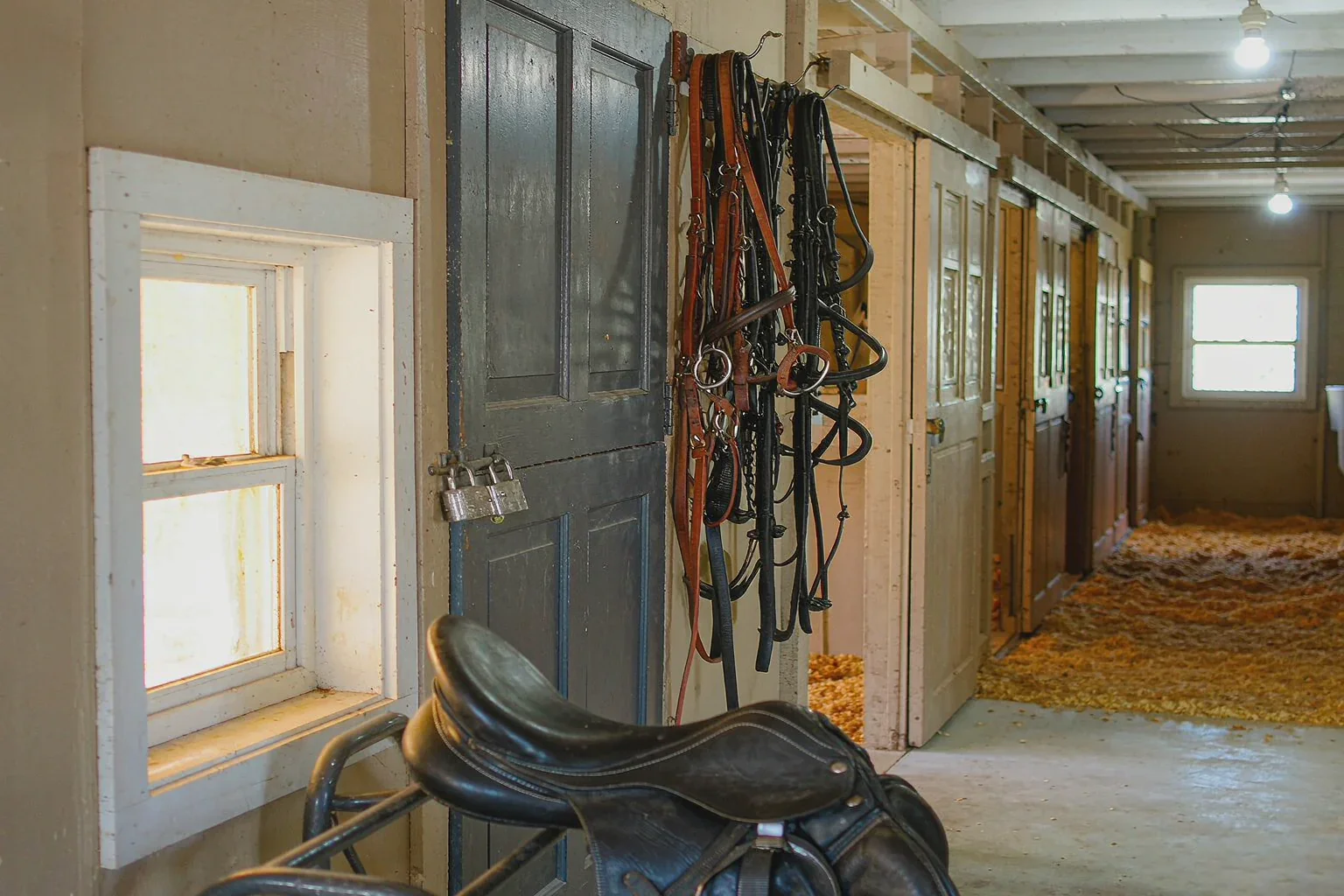
- The barn is clean where clients never look: water buckets, feed room, hay quality. Stewardship shows up in the back, not the front.
Barn-Hunting Days
- Heavy-duty clipboard — One page per barn, no memory gamesCheck Price
- Large insulated water bottle — Three barns is a long afternoonCheck Price
- Sunscreen stick SPF 50 — Reapply at the ring without the messCheck Price
The Trial Lesson Checklist
Book one lesson. Arrive twenty minutes early and do the following:
- Watch the tail end of the lesson before yours. How does the instructor correct riders — specifically and kindly, or generically and flatly?
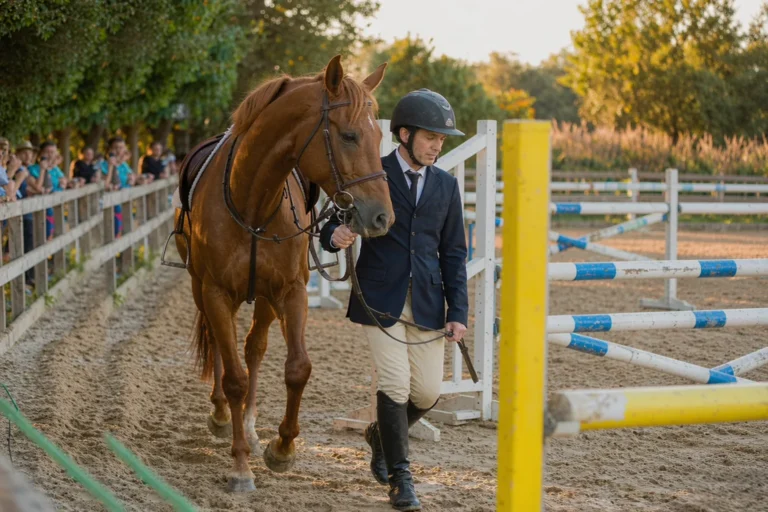
- Watch the mount-up. Girth checked? Helmet adjusted? Stirrups fitted to leg length?
- Note where the instructor stands. Center of the arena, moving with the ride — not scrolling a phone from the rail.
- Count the class. For beginners, 3–6 riders is a real lesson; more is a ride.
- Ask two questions after: what does progression look like here, and what does the total invoice include, every fee?
Then compare total cost against our lesson-cost guide. A barn charging $75 for a genuine four-rider lesson with a certified instructor is cheaper than the $55 barn teaching eight at once — you are buying hours of attention, not hours of arena.
Bottom Line
The right barn shows you three things unprompted: certified instruction, sound school horses, and a written path from where you are to where you said you wanted to go. Everything else — the lobby coffee, the trophy case, the “family atmosphere” on the website — is decoration. One visit with this checklist beats a month of reviews.
Barn-visit essentials
- Waterproof paddock boots — Barn tours happen in mud, manure and wash racks; $60-90 well spentCheck Price
- Equestrian gear backpack — Hauls boots, gloves and layers from office to barnCheck Price
- Lesson journal — Notes on each barn you visit: pricing structure, instructor certifications, arena footingCheck Price
Guides
Gear & Reviews
Popular Reads
Keep reading: What riding lessons cost in 2026 · 12 boarding barn red flags