12 Boarding Barn Red Flags to Check Before You Sign
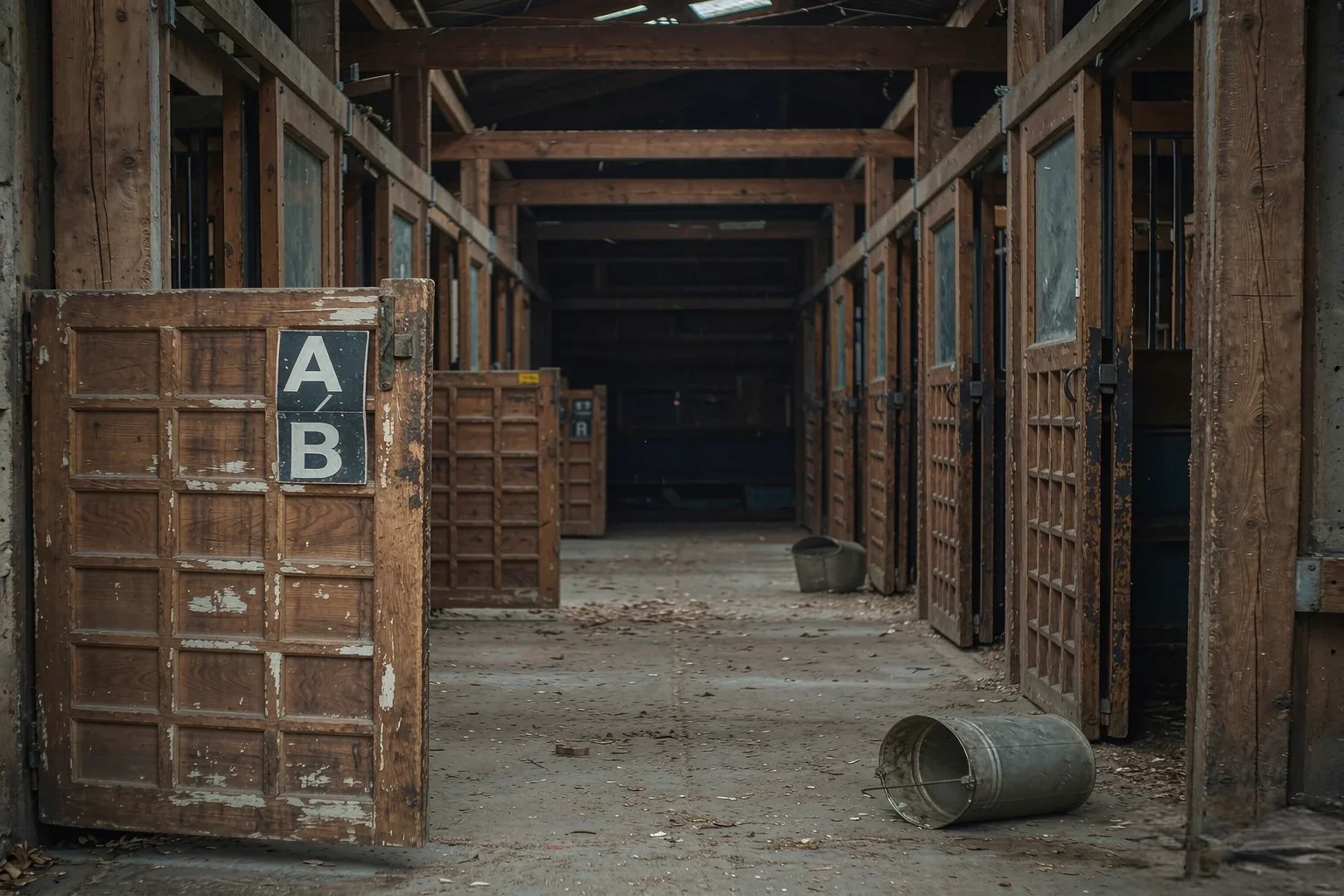
The barn tour is a negotiation dressed as a walkthrough. Here’s the checklist that separates good operations from pretty ones.
Board quality determines your horse’s daily life more than any other purchase you’ll make. Tour at least three barns, and bring this list.
The Red Flags
- Hay fed “as needed” instead of a stated amount
- Vague turnout hours (“usually most days”)
- No written board agreement
- Staff you never see during the visit
- Water buckets dirty or empty in stalls
- Fencing with loose boards or sagging wire in high-traffic paddocks
- No farrier/vet scheduling coordination offered
- Manure stacked near water sources
- Quarantine policy doesn’t exist or isn’t posted
- Rate seems drastically below market with no explanation
- No emergency contact protocol posted at the barn
- The manager talks about other boarders’ horses’ problems unprompted
Questions Worth Asking Directly
- “Who exactly feeds on weekends and holidays?”
- “What happens when my horse colics at 2 a.m. — walk me through it.”
- “Can I visit unannounced before signing?”
For market price context by region, see our boarding cost comparison and state-by-state guide.
How to Use This List at a Viewing
Red flags are cheap to check and expensive to ignore. The discipline: view twice (any time of day, once unannounced), ask each question once, and score each item below. One red flag is a question; two is a negotiation; three is a walk-away regardless of how the horse moves. Barns, like horses, have bad days — the pattern is what tells you the truth.
Care and Husbandry Red Flags
- Water you would not drink from — green, dirty, or algae-edged troughs. Water is the cheapest thing on the property; if it is neglected, look at what else is.
- Hay fed on the ground in mud, or hay visible with mold (white dust that is not frost, clumped, smells sweet-dusty).
- Body condition spread. One thin horse is a story; a barn where several horses are BCS 3 or below while others are fat is a feeding or worming program problem.
- No visible fly or manure plan in summer — manure mountains, flies clustering on horses’ legs all afternoon.
- Stalls never cleaned during your visit (ask what the schedule is; an am-visit should find stalls done or being done).
- Fencing in disrepair — loose boards, sagging wire, T-posts without caps in horse paddocks.
Safety and Management Red Flags
- No quarantine protocol for new arrivals, and no answer when asked where a new horse would live for two weeks.
- No posted emergency plan. There should be a vet number, an after-hours plan, and fire extinguishers visible. Ask who calls the vet when the owner is unreachable — the answer is a policy, not improvisation.
- Unsupervised group turnout with new horses thrown in. Integration should be gradual, over days, through a fence first.
- Children or beginners handling stallions or young horses unsupervised.
- Aisle clutter — wheelbarrows, tangled hoses, items a spooked horse hits on the way past.
Contract and Money Red Flags
- No written contract, or one that is a single page of rates with no liability, no care standards, and no notice period. A real boarding contract specifies feed, turnout, blanketing, vet authorization, liability and termination.
- Cash only, no receipts.
- Rate changes without notice terms in the contract, or a fee list for everything (holding for farrier, blanket changes) that was not disclosed before you asked.
- Vet authorization clause missing — you must specify who can authorize care and at what dollar threshold. If the barn says “we just call our vet,” you are signing an open checkbook.
Horse-Behavior Red Flags (About the Barn, Not the Horses)
- Every horse rushes the gate. Feeding-time aggression at scale signals irregular feeding or underfeeding.
- Horses that avoid specific handlers. Watch how horses respond to staff; widespread avoidance is information.
- Repeated injuries across unrelated horses — fencing and turnout management show up as a pattern of cuts, not one accident.
- Above-average colic or lameness rate mentioned casually by boarders. Ask two or three boarders how long they have been there and whether they would choose it again. Their faces answer faster than their words.
Inspect Like You Mean It
- Hardcover notebook — Write every red flag down before you forgetCheck Price
- Tall phone tripod — Document stalls, footing and fencesCheck Price
- Video doorbell camera — See who is actually on the propertyCheck Price
The Questions That Sort Barns Fast
- “What is your vet authorization policy and dollar limit?”
- “Walk me through a colic call at 11pm — who is here, what happens?”
- “How do you introduce a new horse to turnout?”
- “What is your notice period and refund policy if I leave?”
- “Can I see the stall my horse would have, and where is it relative to the entrance and the water?”
Good barns answer these in detail because they have thought about them. Evasive or annoyed answers to question 1 or 2 are themselves red flags.
Green Flags Worth Noticing
- Clean water everywhere, including paddock troughs.
- Horses that look at visitors with curiosity rather than avoidance or gate-rushing.
- A staff member who knows each horse by name and by quirk.
- Records: a feed board, a farrier schedule, dated vet records you can see for your own horse’s stall area.
- Boarders who have been there 5+ years and board multiple horses.
The market reality: good barns at fair prices have waitlists, and the price difference between a mediocre barn and a good one is usually $100–$250 a month — less than one colic-related stress episode or one career-ending fencing injury. Visit four barns, score them, and choose the boring one.
Barn audit kit
- Stall WiFi camera — The one purchase that verifies everything you were toldCheck Price
- Barn fire extinguisher with mount — The item most boarding barns are missing — check yoursCheck Price
- Motion-sensor barn light — Light in the aisle before you are halfway through the doorCheck Price
Guides
Gear & Reviews
Popular Reads