The Cheapest States to Keep a Horse in the US (2026 Board Comparison)
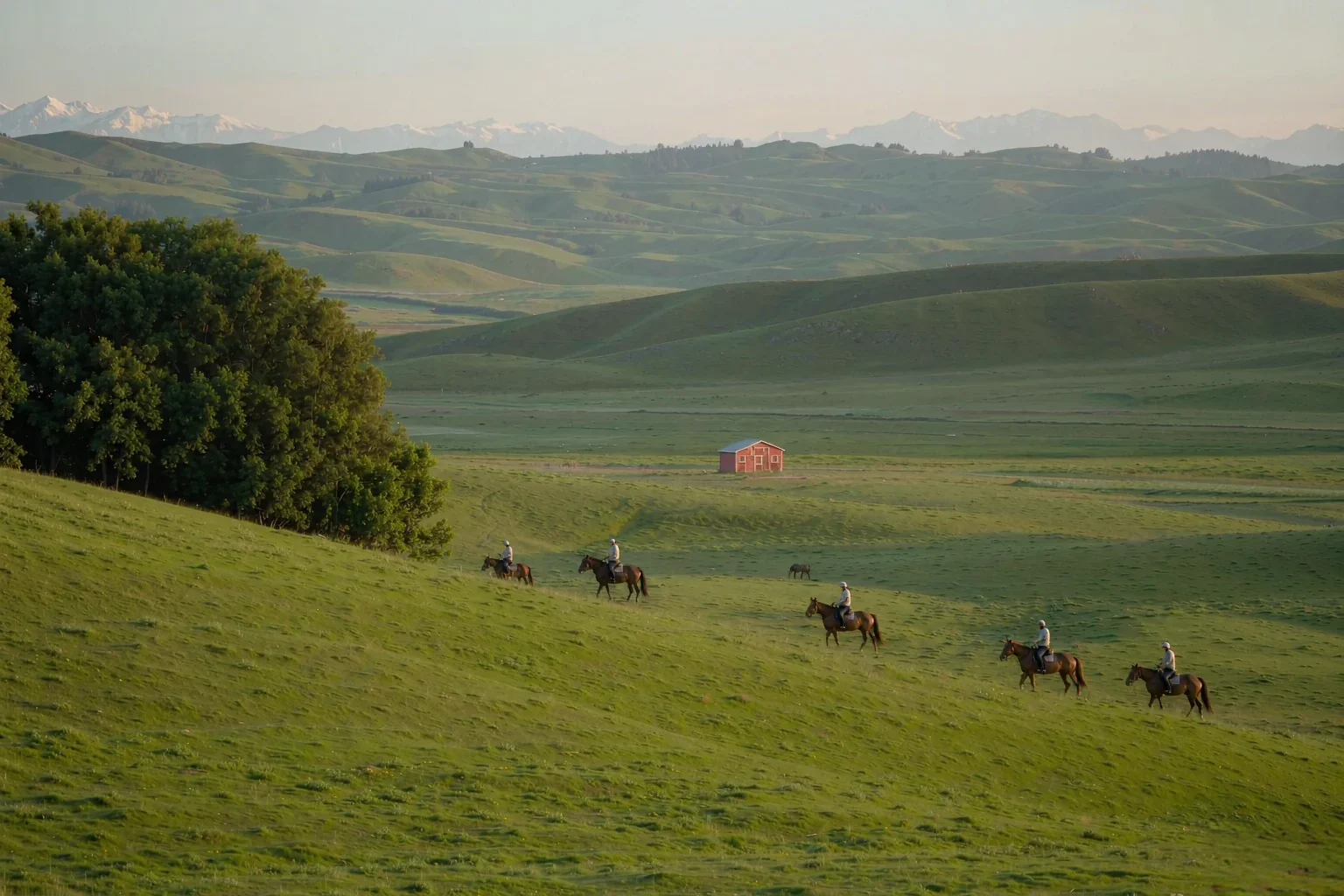
The same horse, the same care level — and a yearly bill that differs by $15,000 depending on the ZIP code. Where the grass is genuinely cheaper.
Full-care board ranges from about $600 to $2,500+/month across the US. Region is the biggest driver — more than barn amenities, more than feed prices.
The Low-Cost Belt
| Region | Typical full-care board | Why |
|---|---|---|
| Kentucky / Tennessee | $450–$800/mo | Grass, limestone soils, horse infrastructure everywhere |
| Ocala, Florida (inland) | $500–$850/mo | Marion County’s horse-farm economy; inland vs coastal FL |
| Texas / Oklahoma | $400–$750/mo | Land abundance; pasture-heavy boarding |
The Premium Markets
| Region | Typical full-care board |
|---|---|
| California (coastal) | $1,200–$2,500/mo |
| New York metro / New England | $1,000–$2,200/mo |
| Florida (Wellington/show season) | $3,200+/mo seasonal |
What Cheap Board Should Still Include
- Hay at a stated amount, not “market”
- Daily turnout — ask how many hours
- Coordinated vet/farrier scheduling
- Staff ratio you can verify on an unannounced visit
The Honest Trade-off
Moving states cuts costs but also cuts you off from trainers, vets and community. Cheapest is only cheapest if the care quality holds — visit three times before moving a horse.
Why Regional Cost Differences Are So Large
The same 1,100-lb horse on the same diet costs $6,000 a year in one state and $14,000 in another. The spread comes from four inputs that vary more than people expect:
- Land value and boarding economics. Full-care board tracks local land prices and labor costs. A barn near a metro area pays $8,000–$30,000 an acre for land a rural county pays $8,000 for — and the board reflects it.
- Hay logistics. Hay is heavy and cheap to grow but expensive to ship. Regions that grow it (the Midwest, mid-Atlantic, Pacific Northwest inland) pay $8–$14 per small bale; regions that import it (Northeast metro, much of the West) pay $16–$24 for the same bale, when it is available.
- Vet and farrier density. A county with six equine vets supports competitive pricing; a county with one supports whatever that vet charges, plus $50–$150 in travel beyond an hour’s radius.
- Climate workload. Year-round turnout (much of the South and West) costs less in bedding and labor than a Northeast winter of stall boarding and blanketing.
The 2026 State-Tier Picture
| Tier | Typical states | Full-care board | Small sq bale | Est. annual cost (boarded) |
|---|---|---|---|---|
| Lowest | KS, MO, OK, AR, KY (rural), TN (rural), TX (rural) | $350–$550 | $6–$10 | $5,500–$8,000 |
| Below average | IN, OH, IA, NC, SC, GA, AL, MS, NM | $450–$700 | $8–$14 | $7,000–$10,000 |
| National average | VA, PA, MI, WI, MN, CO, AZ, OR | $600–$950 | $12–$18 | $9,000–$13,500 |
| Above average | NY (upstate), NJ, CT, MA, NH, VT, WA, MT (resort) | $800–$1,300 | $14–$22 | $12,000–$18,000 |
| Highest | NYC metro, SF Bay, LA, San Diego, Boston metro, HI | $1,100–$2,200+ | $18–$30 | $16,000–$30,000 |
Kentucky deserves its reputation as the value outlier: land suited to pasture, hay grown in the same county as the horses, and an unmatched density of equine vets and farriers. Rural Kentucky full-care board can be had at prices that would rent a parking space in Los Angeles.
Self-Care vs Board: The Real Comparison
Self-care or farm-keeping looks dramatically cheaper and often is — but the honest comparison must price your labor and your land:
- Board at $650/month = $7,800/year, zero hours of barn labor, someone else handles 2am colic calls.
- Keep at home = land already owned, roughly $3,000–$4,500/year in hay, feed, farrier and routine vet — but you are the night-shift, the vacation-relief, and the infrastructure budget. Fencing, a run-in, water systems and a manure plan are $8,000–$20,000 of upfront capital, and time is 45–90 minutes a day.
The break-even horizon for home-keeping is usually 5–8 years against boarding, assuming land you already own. Buying land specifically to save on board almost never closes financially at small scale; it closes when you want the land anyway and the horse is one of several reasons for it.
Setting Up the New Place
- Electric pressure washer — Strip a dirty barn before moving inCheck Price
- Solar flood light — Yard and aisle light with no wiringCheck Price
- Trail camera — Learn the property’s wildlife and visitorsCheck Price
Other Regional Variables Worth Checking Before You Move
- Fly and parasite season length. A 9-month fly season in the South costs meaningfully more in control products and(vector-borne disease risk) than a 4-month season in Montana.
- Water and drought. In much of the West, well capacity and water rights are a real constraint on stocking; hay prices spike in drought years in ways the Midwest’s do not.
- Sales tax and equine activity liability statutes. Every state has an equine activity liability law, but their strength varies; some states cap what a boarding contract can disclaim.
- Specialist access. If you intend to compete, distance to a surgical hospital matters. An hour’s haul to a colic surgery is a different risk profile from four hours.
How to Use This Table Well
If you are choosing where to keep a horse, price these five things locally before deciding: full-care board at two barns, a bale of the hay you would actually buy, a trim and a reset from a farrier with openings, a farm call fee, and the distance to a 24-hour surgical hospital. Those five numbers, plus one month of watching the local listings, tell you more than any national table — and they differ by $4,000–$10,000 a year between states that look similar on a map.
Cold-climate cost savers
- Heated water bucket — Ends the twice-daily ice-breaking laborCheck Price
- Turnout blanket — A $90-150 blanket beats a winter of extra hay keeping weight onCheck Price
- Livestock trough cleaner — Algae in the south, ice in the north — every region differsCheck Price
Guides
Gear & Reviews
Popular Reads