How Much Do Horseback Riding Lessons Cost in 2026? (Group vs. Private vs. Packages)
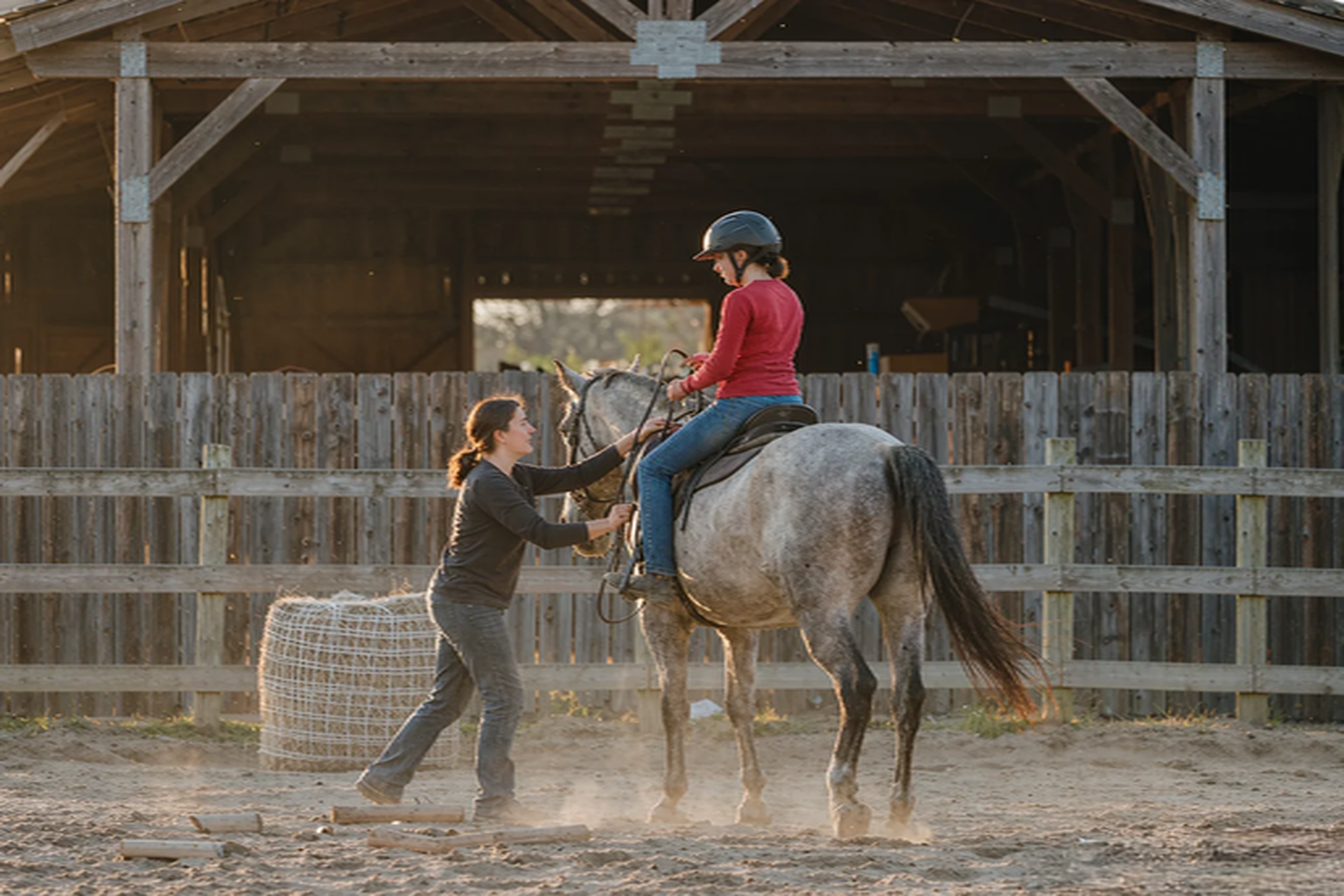
A group lesson runs $40–$80 an hour across most of the US; a private runs $50–$110+. Here is what actually drives the price, what six real barns charged in September 2026, and what a first year of riding costs all-in.
- Group lessons run $40–$80 an hour; privates $50–$110+ in 2026
- Six posted 2026 barn rates span $55 an hour in Texas to $125 in Manhattan
- The hourly rate is not the bill: facility, school-horse and rental fees add $0–$85 — ask for the total first
- Take group first: same beginner skills for 30–45% less per hour
- First-year totals: $1,300 on two lessons a month, $2,800–$4,000 weekly group with starter gear
2026 prices
Six real barns
Hidden fees
Group or private
Skill timeline
First-year cost
Pay less
Most beginners over-think the wrong number. The hourly rate is only the anchor — what decides whether riding stays affordable is lesson frequency, because riding is a skill your body forgets between sessions. The realistic planning range in 2026: $1,300 a year for two lessons a month, $2,800–$4,000 for weekly group lessons with starter gear, and $5,000+ for twice-weekly privates.
P26 Price Ranges by Lesson Type
| Lesson type | Per hour (US) | Notes |
|---|---|---|
| Group (3–6 riders) | $40–$80 | Cheapest per hour; school horse usually included |
| Semi-private (2 riders) | $45–$85 | Suits siblings, friends or couples at a similar level |
| Private, 1-on-1 | $50–$110+ | Competition-level trainers push $100–$200 |
| Block of 4 prepaid lessons | $150–$300 | Most barns discount 5–15% for packages |
The spread inside those ranges comes from three things: region, lesson length, and whether the barn owns its school horses or pays to truck them in. A 30-minute private at a Texas barn can cost less than a 45-minute group in coastal California — always compare price per minute, not price per lesson.
What Six Real Barns Charged (September 2026)
Posted single-lesson rates at six US stables, as checked by lessons.com in September 2026:
| Stable | Location | Private | Group |
|---|---|---|---|
| Riverdale Stables | New York, NY | $75 / 30 min · $125 / 60 min | $75 / 60 min |
| Garrod Farms | Saratoga, CA | $97 / 30 min | $325 for 4 weekly classes |
| Benbrook Stables | Fort Worth, TX | $150 / 45 min | $75 / 45 min |
| Trinity River Farm | Fort Worth, TX | $65 | $60 |
| North Texas Equestrian Center | Wylie, TX | $55–$65 / 30 min | $55–$65 / 60 min |
| University of Connecticut | Storrs, CT | $90 | $75 |
Two things stand out in that table. Urban coaching is expensive per minute — Riverdale’s $125 hour is twice North Texas’ — and the cheapest real entry point anywhere is the prepaid weekly group block, which is how Garrod Farms gets to roughly $81 an hour in one of the priciest regions in the country.
The Line Items Nobody Quotes You
The hourly rate is not the invoice. These add-ons show up at most barns, usually disclosed only if you ask:
| Item | Typical range | When it applies |
|---|---|---|
| School-horse fee | $0–$45 | Barns without their own lesson string pass the truck-in cost to you |
| Arena / facility fee | $0–$25 | Indoor arenas and premium facilities |
| Equipment rental (helmet, boots) | $0–$15 | Most beginner programs include it; a few charge $5 a ride |
| Membership or annual registration | $25–$100 | Some barns bill it to hold your slot |
Ask one question before your card leaves your wallet: “What is the total charge for my first lesson, including every fee?” A barn that answers in one sentence is telling you something good about how it runs.
Group or Private for a First-Timer?
- Take group first. It is 30–45% cheaper, paced for someone who has never sat on a horse, and watching three other beginners make your mistakes is free education.
- Switch to privates when you plateau — typically when you can walk, trot and steer reliably and want to fix a specific weakness, or when you are cantering and want targeted correction.
- Semi-private is the sweet spot for two friends starting together: near-private attention at group money.
How Many Lessons Until You Can Actually Ride?
Progression benchmarks from instructor guidance published across the 2026 cost guides:
- 6–10 weekly lessons: a steady, relaxed walk and trot — posting comfortably, steering off your seat and legs rather than your hands.
- 8–12 lessons: independent riding — walk, trot, basic steering and stops without a lead line, typically 3–6 months of consistent weekly lessons to get there.
- Canter control: usually arrives somewhere in month 4–9 for weekly riders. Cantering on day one is not a thing, and a barn that promises it is a barn to leave.
Frequency beats talent. A rider who goes every other week spends most of each lesson re-learning balance; the same rider weekly keeps compounding. If your budget forces a choice, one group lesson a week beats two privates a month — both on price and on progress.
Between Lessons
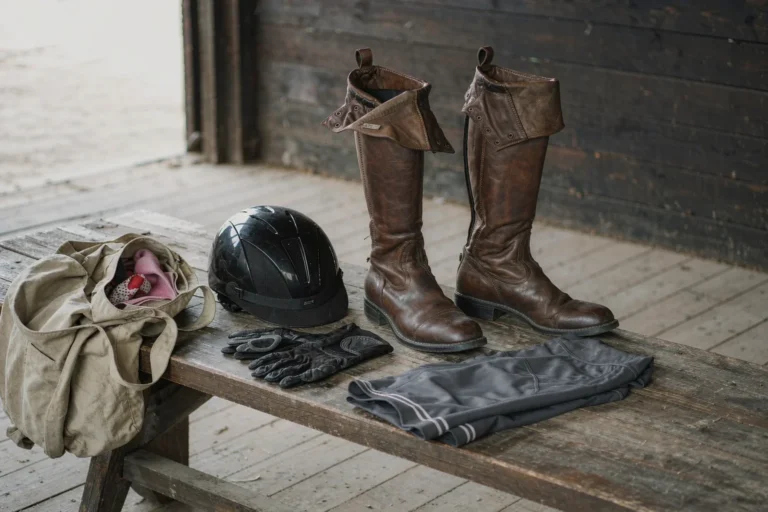
- Riding tights — The one item worth buying newCheck Price
- Tall boot bag — Zippers die from barn dustCheck Price
- Boot jack — Pull tall boots without a fightCheck Price
What the First Year Actually Costs
Three realistic profiles at 2026 prices:
| Profile | Lessons | Starter gear | Year-one total |
|---|---|---|---|
| Casual — 2 group lessons/mo | $1,100–$1,600 | $150–$400 | $1,300–$2,000 |
| Weekly group rider | $2,400–$3,600 | $300–$800 | $2,800–$4,400 |
| Weekly private rider | $3,600–$5,700 | $300–$800 | $3,900–$6,500 |
That first-year number is the honest answer to “can I afford this hobby?” — and it is also why leasing, not buying, is the right second step for most riders (see our lease-vs-buy comparison). The person who spends a year at $3,500 learning what they actually want from riding spends less than one vet bill on a wrongly-purchased horse.
Ways to Pay Less Without Getting Less
- Prepay the block. Packages of 4–10 lessons typically save 5–15% — but only after you have taken one and liked the barn.
- Ride off-peak. Weekday mornings and winter slots are often $5–$15 cheaper where barns have empty arena hours.
- Group over private until you have a specific reason not to.
- Ask the own-horse discount. Already leasing? Several barns take $5–$10 off every lesson.
- Community and university programs (like UConn’s community rates) price an hour with a certified instructor at chain-store prices.
- Buy gear used, never the helmet. Boots and breeches secondhand are fine; a helmet with an unknown fall history is not.
Bottom Line
Budget $55–$75 an hour for a decent weekly group lesson anywhere in the US, expect $2,800–$4,400 for your first year including gear, and judge barns on total invoice and progression benchmarks rather than the headline hourly rate. If a barn’s numbers only come out after you have paid, that is a red flag — our barn-selection guide lists the other eleven.
Lesson-day kit worth owning
- Equestrian helmet bag — Protects the one purchase you should never cheap out onCheck Price
- Paddock boots with half chaps — $50-90 total; ends the boot-rental hassle and works in any stirrup at any barnCheck Price
- Riding gloves — $15-25; saves your palms on the lesson horse that pullsCheck Price
Guides
Gear & Reviews
Popular Reads
Keep reading: Start horseback riding as an adult: costs & timeline · How to choose a riding barn: 12 red flags