How to Keep Progressing as a Rider Without Owning a Horse
How to Keep Progressing as a Rider Without Owning a Horse
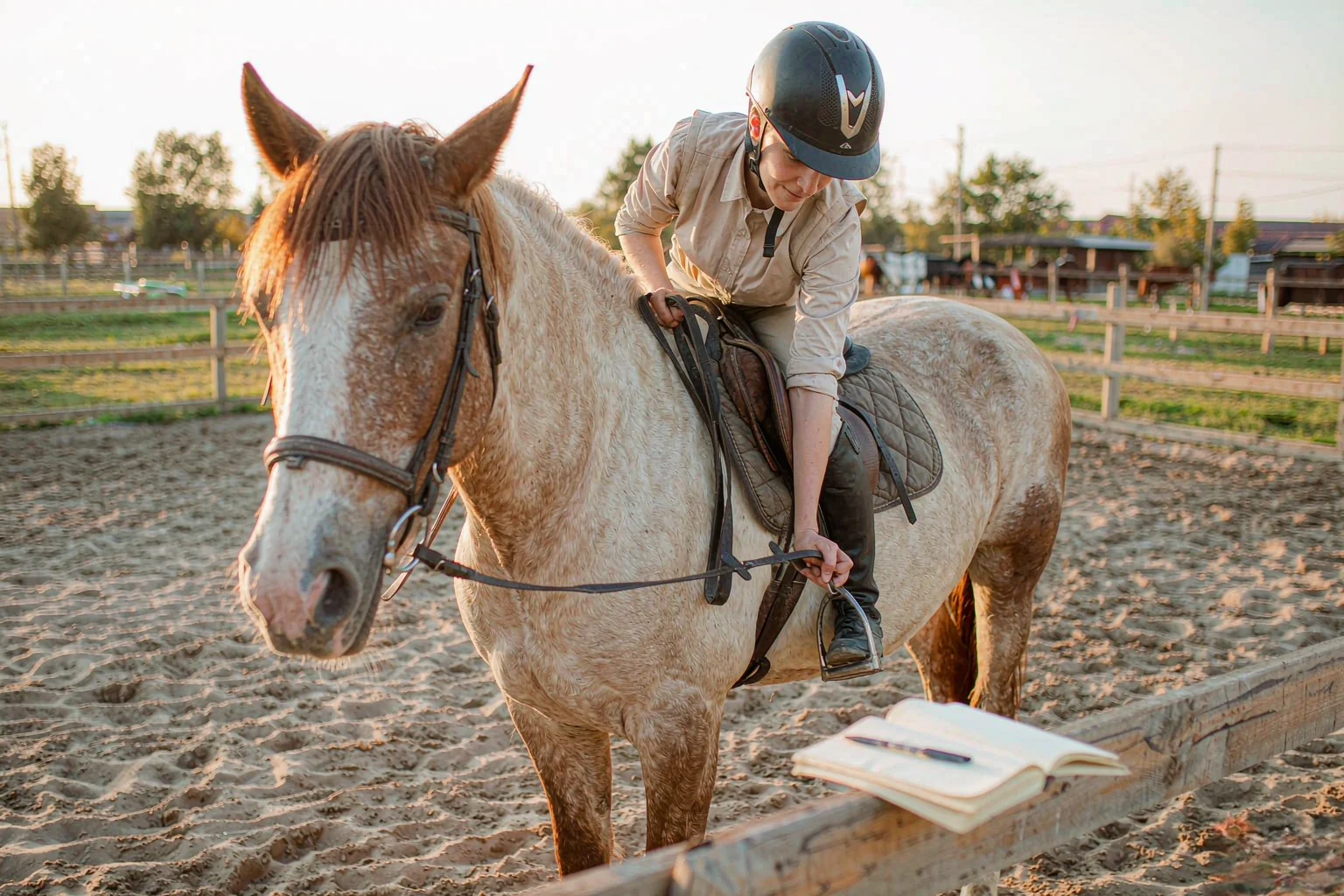
One lesson a week will keep you riding; it rarely moves you forward. In 2026 a weekly group lesson runs about $280 a month, while a half lease that gives you two to four saddle days a week typically runs $200–$700 a month. The gap between those two numbers is the cheapest progress most riders will ever buy. Here is how to close it without buying a horse.
- Once a week is a maintenance floor, not a training plan. Riding is a physical skill your body forgets between sessions
- A second or third ride adds more than a pricier private lesson. Structure the week as instruction, repetition, review
- 2026 US ranges: group lessons $40–$80 an hour, privates $50–$110+; a half lease $200–$700 a month for 2–4 ride days
- A half lease usually splits farrier and routine vet costs roughly 50/50, runs 6–12 months, and often requires a weekly lesson to continue
- One consistent schoolmaster teaches you more about your own riding than a rotation of forgiving lesson horses
- Owning only wins at high frequency over many years; year-one ownership runs roughly $11,000–$33,000 versus $2,400–$8,900 for a half lease
The weekly ceiling
Structure your week
Half-lease mechanics
Work & volunteer
One horse vs many
Unmounted learning
Track progress
When owning wins
You do not need a horse of your own to become a noticeably better rider. You need more saddle time on a reasonably consistent animal, a way to repeat what a coach told you, and some honest feedback. Ownership is one route to those things, but it is the most expensive and the least reversible. Work through the cheaper routes first.
The Honest Ceiling of One Lesson a Week
One lesson a week is enough to keep you safe and keep the feel, but it is close to the maintenance floor. Riding is a physical skill your body forgets between sessions; seven days is long enough that a good part of the next lesson goes back into re-finding what you had at the end of the last one. Progress at that frequency arrives in fits, then plateaus for weeks.
The 2026 numbers show what that buys. Group lessons run $40–$80 an hour across most of the US and privates $50–$110+; a weekly group lesson at around $70 works out to roughly $280 a month, and most barns discount prepaid packs by 5–15%. Our full lesson-cost breakdown covers the barn-by-barn spread and the fees that sit on top of the hourly rate. None of that money is wasted: weekly lessons build a correct base, and for the first year or two they are the right default.
But if your goal is to canter confidently, jump a course or sit a trot quietly, the limiting factor is saddle time, not instruction quality. A second ride on the same horse does more for that than upgrading to the most expensive trainer in the county. Frequency compounds; a single brilliant lesson a week does not.
How to Structure Two or Three Rides a Week
Three short rides beat one long one. A workable week pairs one coached session with one or two unsupervised rides where you repeat exactly what the trainer asked for, plus brief unmounted work. Keep the rides on the same horse if you can; at this stage consistency of the animal matters more than variety.
| Day | Session | What it builds |
|---|---|---|
| Tuesday | Group lesson, 60 min | Instruction, correction, a new skill |
| Thursday | Practice ride, 45 min, no coach | Repetition — turning one correction into a habit |
| Saturday | Practice ride or a hack, 45–60 min | Confidence and feel away from the lesson bubble |
| Daily, 15 min | Video review, mobility or core work | Review and the fitness a quiet seat depends on |
The pattern is instruction, repetition, review. The unsupervised practice ride is where a correction becomes yours, and it is the session most riders skip because it feels unproductive without a coach watching. It is not. If you can only manage two rides, keep the lesson and the practice ride and drop the third; if you can manage three, add the hack for confidence rather than more drilling.
Half-Lease and Part-Lease: How It Actually Works
Between weekly lessons and ownership sits the half lease, and it is the standard next step for a reason. You get a fixed number of ride days on one horse, it starts to feel like yours, and you take on a share of the care rather than all of it. Our lease-versus-buy comparison has the full year-one cost tables; here is the shape of the arrangement itself.
Typical 2026 US ranges: a quarter lease (1–2 ride days) $100–$300 a month, a half lease (2–4 ride days) $200–$700, and a full lease (5–6 days) $500–$1,500. Half leases usually run 6–12 month terms and split farrier and routine vet costs roughly 50/50. Posted 2026 barn rates show the real spread: one program charges $350 a month plus a $200 lesson package for three rides a week, another $375 a month for three days plus half the farrier bill, and an all-inclusive barn starts at $850 a month with lessons and medical costs bundled in.
A useful sanity check from published lease data: an annual lease fee typically runs one-third to one-half of what the horse would sell for, so a $12,000 horse leases for roughly $330–$500 a month. That tells you immediately whether a barn’s ask is sane. Most programs also require you to keep taking at least one weekly lesson — a feature, not a trap, because it keeps a coach in the loop while you ride more.
Before signing, get the agreement in writing: ride days and schedule, who calls the vet and who pays, insurance responsibility, whether you may show the horse and who covers entry fees, what happens if the horse goes lame for a month, and the notice period to end the lease. Get it in writing even between friends.
Working Student and Barn-Volunteer Trade-Offs
Working student positions and barn volunteering trade labour for saddle time or reduced fees. The upside is real: you handle horses daily, learn stable management, watch lessons from the ground, and sometimes ride school or green horses for free. That unmounted education is worth more than most riders expect.
The trade-offs are just as real. Hours are early and physical, the riding is often on whatever horse needs work rather than the one that suits your level, and instruction may be informal or absent. You can spend a Saturday mucking out for no ride at all. Ask exactly what you get: guaranteed ride days, whether lessons are included, who decides which horse you ride, and whether the exchange is paid or purely a trade. If your goal is a correct, confident seat, free riding on unsuitable horses can build survival habits instead of skills — useful for a future professional, less useful for an adult amateur.
School Horses vs One Consistent Schoolmaster
Riding a different school horse each week teaches adaptability, but it can hide your own mistakes. A saintly lesson horse that ignores a crooked leg position lets you believe the position is fine. A more sensitive horse tells you the truth immediately, which is uncomfortable and useful in equal measure.
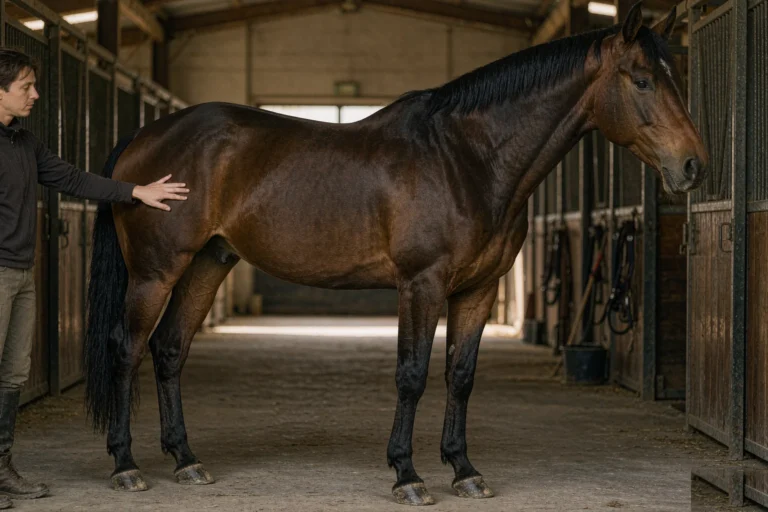
One consistent schoolmaster on a half lease is the usual cure. You learn one horse’s buttons, how much leg it needs, how it reacts to a shift of weight, and you can finally tell whether a change came from you or from the horse. That feedback loop is where real progress lives. Ask your instructor whether a lease on a horse you already know is possible; some barns restrict leases to their own string, others allow an outside horse after a trial period, and a few will not lease at all.
Make Fewer Rides Count
- Riding journal — Track rides, notes and progressCheck Price
- Helmet camera — Review your position between lessonsCheck Price
- Balance pad — Unmounted work between barn daysCheck Price
Unmounted Learning That Actually Counts
Not every productive hour is in the saddle. Four things reliably transfer: video review, watching other lessons, reading, and rider fitness.
Film one exercise per ride from a fixed angle and watch it the same evening, looking for one thing only — your heel, your hands, your straightness. Watching a more advanced lesson from the rail teaches you what the finished version looks like, and hearing a coach correct someone else often lands better than being corrected yourself. Reading a good manual or your discipline’s rulebook gives you vocabulary for what you feel. Off-horse fitness — core stability, hip mobility, balance and light cardio — addresses the exact reason many adult beginners plateau: the horse moves, and the rider’s body cannot yet stay quiet. Even 20 minutes a day helps.
None of this replaces saddle time. It makes the saddle time you do get worth more.
Track Progress With a Simple Log
A one-page log keeps progress honest when improvement feels slow. After every ride write four lines: date and horse, one thing that went better, one thing that fell apart, and the single focus for next time. Add a monthly line for what you can do now that you could not a month ago.
That last line matters. Weekly riding is full of small regressions and memory is unreliable; the log shows a trend the day-to-day feel hides. It also makes lessons better, because you arrive with a specific question instead of “how was I?”. Keep it on your phone. The point is not a diary — it is one clear target per ride, which is exactly what turns repetition into practice.
When Owning Actually Becomes Cheaper
Owning wins on cost per ride only at high frequency and over a long horizon. In 2026, ownership runs roughly $700–$1,500+ a month once board, feed, farrier and routine care are counted, with a year-one total around $11,000–$33,000 including the purchase. A half lease lands near $2,400–$8,900 for the year with no purchase price, no resale risk and no emergency exposure. For riders with under about two years in the saddle, the lease is usually the better financial decision, not just the safer one.
The lines that change the maths are the ones first-time buyers forget: emergency vet bills of $2,000–$10,000 per event, and the cost of getting out again — a 10–20% sales commission plus months of waiting to sell. See our cost-of-ownership breakdown for the full line items. Ownership starts to make sense when you ride five or six days a week, know exactly the horse you need, intend to keep it for years, and can absorb a large unexpected bill without flinching.
Until then the honest sequence is weekly lessons, then a second ride, then a half lease, then a conversation about buying. Each step buys saddle time before it buys responsibility.
Sources
Lesson pricing: HorseLife, “How Much Do Horseback Riding Lessons Cost in 2026? (Group vs. Private vs. Packages)”; Horse Riding USA, “How Much Do Horseback Riding Lessons Cost in the US? (2026 Guide)” (Thumbtack national range); Penny Time, “Horse Riding Lessons Cost: Group and Private Prices (2026)” (six posted US stable rates). Lease mechanics and ranges: HorseLife, “Horse Lease vs. Buying: What Each Really Costs in 2026”; Cedar Lodge, Showing and Leasing (posted 2026 partial, show and exclusive lease rates); High Pointe Farm, Leasing (half & full) (posted 2026 all-inclusive half-lease rates); Tally Ho Equestrian Center, 2026 boarding and lease rates.
Guides
Gear & Reviews
Popular Reads
Keep reading: Lease vs. buy: the 2026 math · What riding lessons really cost · Cost of ownership, line by line