Senior Horse Care: What Changes After 18 — and What It Costs
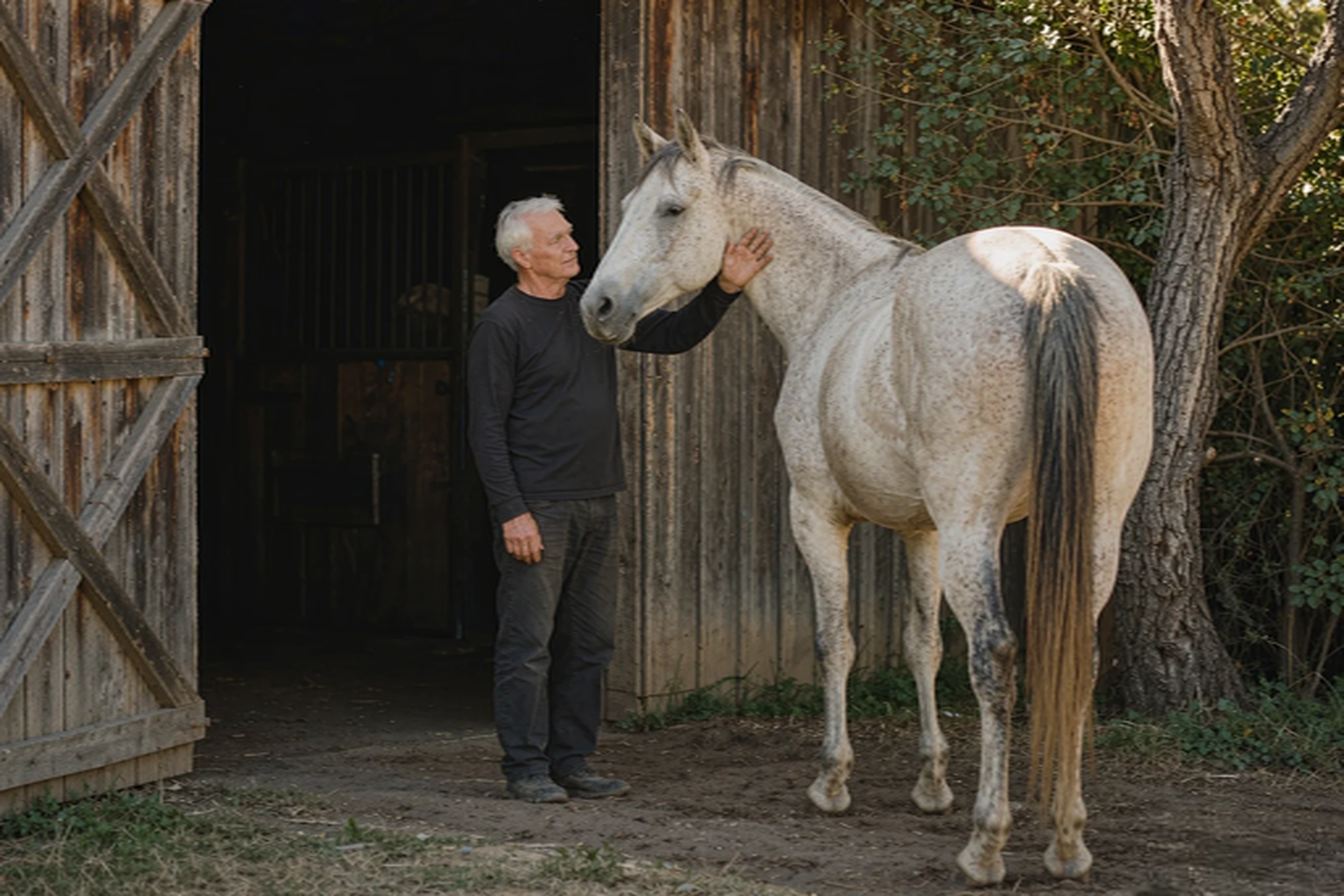
Older horses aren’t cheap horses. Teeth, joints and digestion all shift — here’s the realistic care plan and budget for the golden years.
Retirement does not mean the bills retire. A senior horse still eats every day — and their care plan changes in specific, budgetable ways.
What Changes After 18
| System | Change | Care response |
|---|---|---|
| Teeth | Worn, loose or missing | Dental 1–2×/yr; soaked/senior feed |
| Digestion | Less efficient absorption | Senior feed ($25–$45/bag), smaller frequent meals |
| Joints | Arthritis nearly universal | Joint supplements ($30–$90/mo), vet-managed pain control |
| Immunity | Wanes | Keep core vaccines — seniors are the risk group |
| Weight | Hard keepers emerge | Weight tape monthly; adjust before winter |
The Semi-Retired Reality
Many seniors thrive on light work into their 20s — and light work is cheaper than stalls. Pasture retirement with shelter often beats stall rest for both joints and budget.
The End-of-Life Conversation
Euthanasia ($200–$500) plus disposal/rendering ($150–$700 depending on region) are costs nobody wants to research mid-crisis. Knowing your options in advance is part of responsible budgeting — add a line to your emergency fund planning.
Lifetime cost context: what 25 years really costs.
What Changes at 18 — and What Does Not
Seniors are not smaller versions of adult horses with a discount label. Three systems change in ways that alter the budget and the management: teeth (grinding surfaces wear down, molars loosen), digestion (forage utilization drops), and joints (osteoarthritis becomes universal, not incidental). What does not change: the requirement for forage by weight, social contact, and movement.
The budget consequence is concrete: a senior horse in good management costs 30–80% more per year than the same horse at 10 — mostly in dental work, senior feed, and the diagnostic workups that geriatric weight loss always triggers.
Dental: The Senior Cost Driver
| Age band | Dental schedule | Typical annual cost |
|---|---|---|
| 5–17 | Annual float + exam | $150–$350 |
| 18–24 | Annual exam, float as needed; watch for diastemas and periodontal pockets | $200–$500 |
| 25+ | Semi-annual exams; extractions ($300–$800 each, surgical $1,500+) | $400–$1,500+ |
The clinical marker to watch: quidding — balls of half-chewed hay dropped from the mouth. It means the teeth are no longer processing fiber, and the diet must change before weight loss compounds.
Feed: Same Tonnes, Different Form
The senior horse still needs 1.5–2% of body weight in forage-equivalent per day. When teeth fail, the form changes and the cost rises:
- Soaked hay cubes or chopped forage — 2–3× the per-calorie cost of baled hay, but fully usable with poor teeth.
- Complete senior feeds — designed to replace forage entirely; 8–14 lb/day is common, which at 2026 prices is $200–$400 a month for the feed line alone.
- Soaking and mashing adds labor (and in winter, warm water) but is free.
- Free-choice access matters more, not less — seniors are prone to impaction colic, and constant forage is the prevention.
Monitoring: The Numbers That Catch Problems Early
- Weight tape every two weeks — senior weight loss is insidious and visible condition lags real loss by weeks.
- Twice-yearly bloodwork after 20 — a $150–$250 panel catches kidney and liver decline while management can still respond.
- PPID screening if the coat fails to shed, drinking increases, or laminitis appears — the ACTH test is $150–$250 and pergolide treatment ($50–$90/month) transforms the outlook.
- Annual vaccines continue — immune senescence makes seniors more dependent on vaccination, not less.
The Golden Years Kit
- Senior horse supplement — Joints and topline need supportCheck Price
- Insulated bucket cover — Water stays drinkable below freezingCheck Price
- Clip-on LED light — Hands-free evening checksCheck Price
Comfort and Movement
Arthritis management is the difference between a stiff senior and a suffering one:
- Movement is medicine. Daily turnout with compatible companions keeps joints lubricated; stall confinement accelerates stiffness. 24/7 turnout with shelter, where climate allows, is the best senior housing.
- NSAIDs (equioxx/firocoxib preferred over phenylbutazone for long-term use) at $50–$150/month.
- Joint injections ($600–$1,500/cycle) where specific joints fail.
- Farrier interval often shortens — seniors’ walls grow slower but their hoof balance tolerates less error.
The Geriatric Budget, Honestly
| Line | Adult horse/yr | Senior horse/yr |
|---|---|---|
| Feed | $1,800–$2,800 | $2,800–$4,800 |
| Dental | $200–$350 | $400–$1,500 |
| Routine vet + bloodwork | $300–$500 | $500–$900 |
| Arthritis management | $0–$300 | $600–$2,000 |
| Board/self-care costs | same | same or slightly more (extra handling) |
| Care total | $2,300–$3,950 | $4,300–$9,200 |
Planning note: senior insurance becomes expensive and exclusion-laden around 15–18; the self-funded emergency line from the lifetime-cost guide is the structure that actually covers a 25-year-old’s needs.
Senior comfort kit
- Senior joint supplement — The monthly line item that delays bigger vet billsCheck Price
- Heated water bucket — Senior horses drink less in winter; colic risk followsCheck Price
- Feed scale — Weighed, not scooped — the cheapest way to track intakeCheck Price
Guides
Gear & Reviews
Popular Reads