Winter Horse Care Checklist: Water, Forage, Blankets and Budget
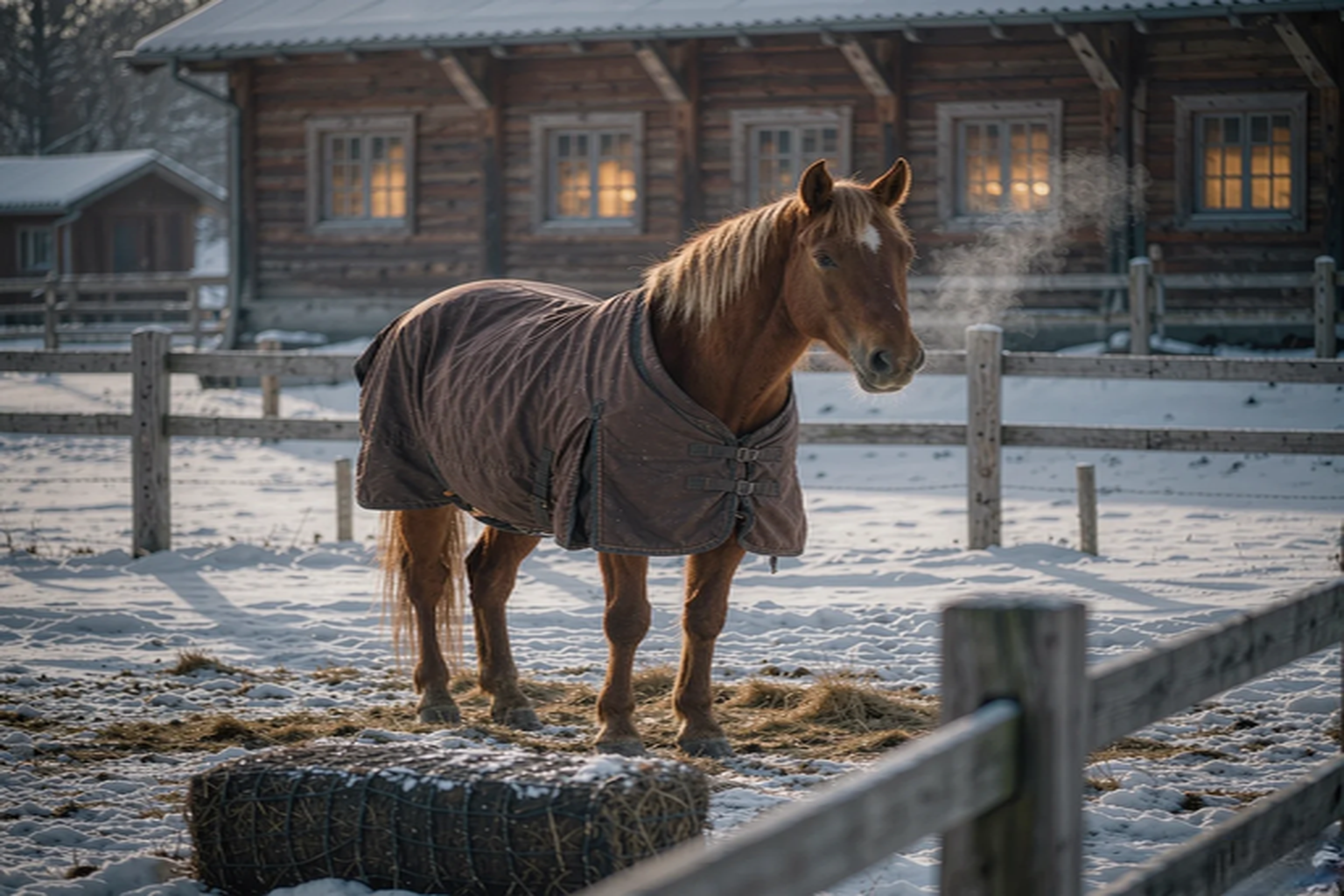
Winter is when horsekeeping quietly gets expensive — heated water, extra hay, blanket wear. A checklist that covers health and budget.
Water First — Always
Impaction colic peaks in winter because horses drink less from cold water. Target 45–65°F water, available 24/7. Heated buckets run $30–$60; a tank de-icer $40–$80. This is the single best-value winter purchase.
Feed More Forage, Not More Grain
Hay digestion generates body heat. In cold snaps, increase free-choice forage before reaching for extra grain — the thermic effect of forage is what warms a horse, not fat or starch.
Blanket Decisions, Simplified
| Scenario | Blanket call |
|---|---|
| Unclipped horse, shelter access, above 20°F | No blanket — natural coat works |
| Clipped horse in work | Medium weight, 20–40°F |
| Wet + wind + no shelter | Waterproof turnouts earn their keep |
| Body score under 4/9 | Blanket + forage increase together |
Winter Budget Lines
- Extra hay: +15–25% on feed costs in cold months
- Water heating: $40–$150 one-time
- Blanket repairs/replacements: $50–$200/season
- Bedding for stabled horses: watch the monthly total creep
Winter Kit We’d Buy First
- Heated water bucket — colic prevention you plug inCheck Price
- Barn wall thermometer — Cold snaps change water intake and hay needs — track the stall swingsCheck Price
- Insulated water trough de-icer for herdsCheck Price
Pair this with our colic guide — winter impactions are the preventable kind.
The Winter Timeline, Month by Month
Winter problems arrive on a schedule, and nearly all of them are cheaper to prevent in autumn than to fix in January:
- October. Body condition check and feed plan for cold; dental exam if overdue (a horse that cannot grind hay cannot use it as fuel); tank heater bought and tested before first frost; hay for the winter purchased at summer prices.
- November. Blanket decision made (see below); water heater running; hoof boots or pads if ice pads are your farrier’s recommendation; first frost mud management plan.
- December–February. Twice-daily water checks; weekly weight tape; manure management does not stop because it is cold.
- March. The mud-and-laminitis season begins — see the spring grass guide for the transition.
Blankets: When They Help and When They Harm
A healthy horse with a full winter coat and shelter is comfortable to roughly 15°F without a blanket. The coat works by trapping warm air; a blanket flattens it. Blanket when:
- The horse is clipped (no coat to flatten — blanket below 50–60°F depending on clip type)
- Wet and windy combined — a soaked coat loses insulation; a windbreak or shelter is often better than a blanket
- The horse is old, thin, or ill and cannot generate enough heat
- The horse was recently relocated from a warm climate
Over-blanketing causes its own problems: sweating under the blanket, skin infections, and a horse that cannot self-regulate. Check under the blanket daily — the horse’s ears and wither base tell you cold; a sweating neck tells you too much blanket. Fit matters: a blanket that rubs the withers or slips is worse than no blanket.
Water: The Number That Predicts Colic
Covered in detail in the winter water guide; the summary that belongs in every checklist: horses drink 20–40% less when water is near freezing, and impaction colic follows. Heated buckets or tank de-icers, checked twice daily, are the single highest-value winter purchase. Track how much you add at each top-up — a drop in intake is the earliest warning you will get.
Dress for the Second Shift
- Insulated canvas work jacket — Two hours of chores at 20 degreesCheck Price
- Merino wool thermal socks — The layer that decides the dayCheck Price
- Rechargeable hand warmers — Fingers that can still buckle blanketsCheck Price
Feed: The Heat Comes From the Hindgut
Hay fermentation is the horse’s furnace. Below the horse’s critical temperature, forage need rises about 1% per degree — grain does not do this job, because it is digested fast and does not generate the sustained hindgut heat. The winter correction is more hay, not more grain:
- Unclipped horse with shelter: 0–10% extra hay in the coldest months
- Clipped horse in work: 15–30% extra, or a true blanket program
- Thin or senior horses: add the extra before the cold arrives, in October — winter weight loss is much harder to reverse in February
Hooves and Ice: The Undermanaged Risk
- Ice pads or borium if your horse is shod and your ground ices — a farrier conversation in November, not after the first fall.
- Barefoot horses generally manage ice better but need the trim interval watched; hoof growth slows in winter and the farrier may shift to an 8-week cycle.
- Ice management around water troughs, gates and high-traffic paths: sand or used bedding for traction, and a mallet for the trough edge. Ice-related leg injuries are common and entirely preventable.
- Thrush watch. Wet, muddy paddocks plus stalled nights is the thrush recipe. Daily hoof picking and dry standing area prevent the smell and the vet bill.
The Winter Cost Reality
| Item | Cost |
|---|---|
| Heated bucket(s) + de-icer (one-time, see water guide) | $120–$250 |
| Extra winter hay (+10–15%, 4 months) | $60–$150 |
| Blanket (one-time, 2–3 seasons of use) | $120–$300 |
| Electricity for heaters (season) | $40–$100 |
| Ice traction material | $20–$50 |
| Season total beyond normal care | $250–$700 |
The Discipline Rule
Two habits carry the whole winter: the twice-daily water check with an intake estimate, and the biweekly weight tape. Everything else — blankets, heaters, extra hay — is bought once and maintained. The two habits are what catch the horse that is quietly becoming an emergency before it becomes one. Winter is when the boring routines pay their dividend.
Guides
Gear & Reviews
Popular Reads
Keep reading: Traveling With Horses: the trailer-side biosecurity checklist