Traveling With Horses: A Trailer-Side Biosecurity Checklist
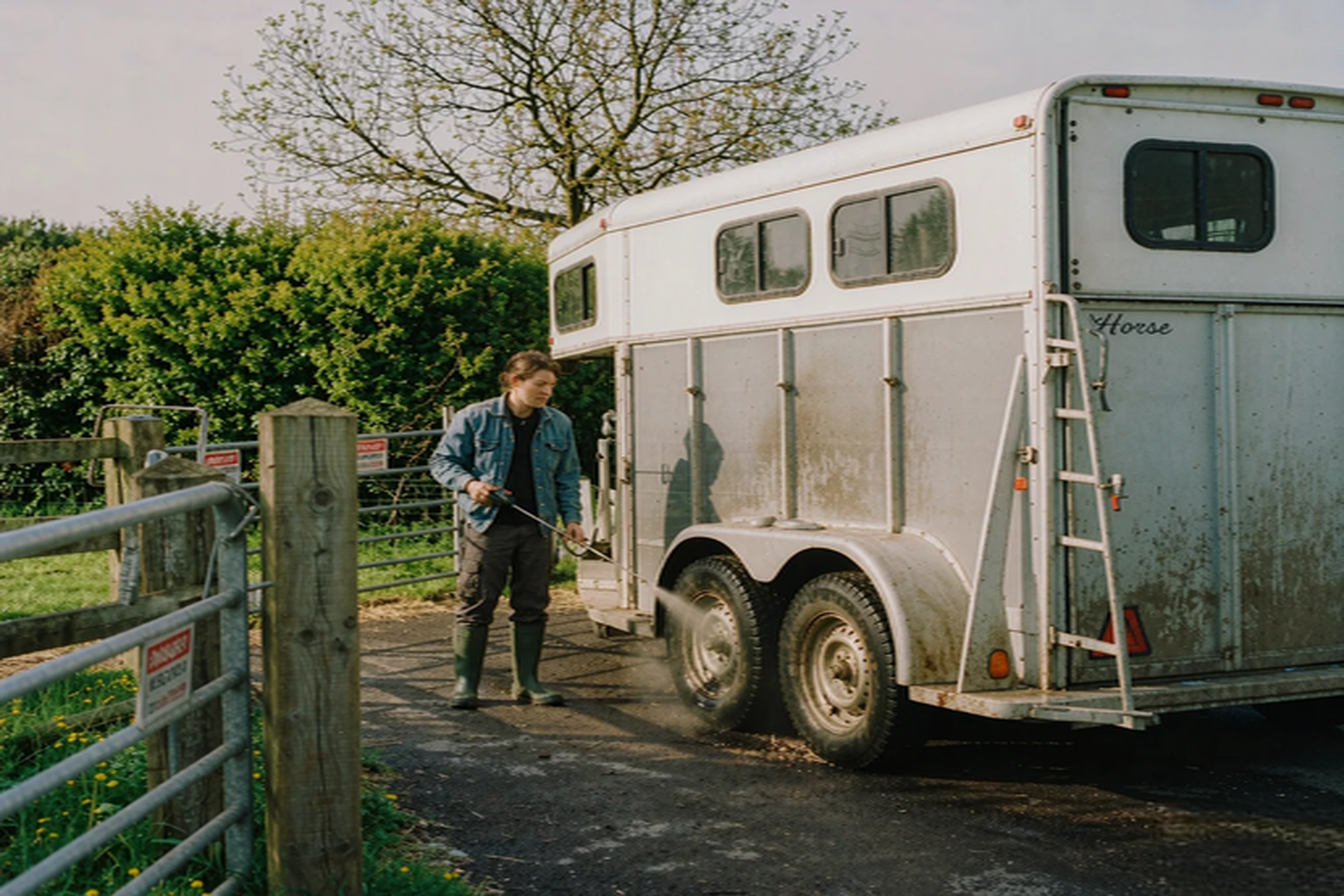
One exposed horse at a show can close every barn in the county. The 20-minute protocol that keeps yours — and everyone else’s — safe.
Recent EHV-1 outbreaks — including one affecting 44+ horses after a major Texas rodeo finals — are reminders that biosecurity is now a core ownership skill, not a big-barn luxury.
Before You Travel
- Health papers: current Coggins (within 12 months) and health certificate (within 30 days) for interstate travel
- Vaccines current: flu/EHV boosters 2–4 weeks before showing — not the day before
- Temp baseline: know your horse’s normal; take it twice daily on the road
- Own equipment: buckets, hay nets, hoses — shared equipment is the main transmission route
At the Event
- No nose-to-nose contact, ever — including over stall walls
- Don’t tie to shared rings, fences or trailers
- Hand sanitizer between handling horses that aren’t yours
- Skip the event if your horse has fever (over 101.5°F) or nasal discharge
Coming Home
Ideally quarantine returning horses 7–14 days from resident horses, use separate equipment, and monitor temps. When an outbreak is circulating in your region, make this strict — it’s cheaper than a barn-wide shutdown.
Vaccine timing specifics: AAEP core schedule explained.
Why Biosecurity Is Mostly About the Introduction
Equine infectious disease — strangles, EHV-1, influenza, ringworm — moves overwhelmingly by three routes: a new horse carrying it, a human carrying it on hands and boots, and shared equipment. Of these, the new arrival is by far the largest single event: one horse incubating strangles introduced into a barn can close it for two months and cost the owner (through quarantined boarders, vet bills, and reputation) tens of thousands of dollars.
The protocol below is what working barns actually do. It is cheap — the costs are a paddock, two weeks of patience, and a $15–$35 fecal/vet visit — and it is nearly invisible when it works, which is why it gets skipped until the year it is needed.
Pre-Travel: The Paperwork That Prevents
- Current Coggins (EIA test, within 6–12 months depending on state) — the baseline legal document for transport.
- Health certificate issued within 30 days of interstate travel, signed by a vet who actually examined the horse.
- Vaccination records — flu/EHV within 6 months for any horse going where horses mix (shows, sales, clinics). Vaccination 7–10 days before travel, not the day before.
- Ask the destination whether any horses have shown fever or symptoms in the last three weeks. This question is normal, expected, and free.
The Trailer: A Biosecurity Object
- Clean and disinfect between hauls if you haul others’ horses — a trailer is a shared space with a nose-to-nose history. Betadine or quaternary ammonium disinfectants on scrubbed surfaces; disinfectant does not work through manure.
- Bring your own water bucket and hay net. Communal water troughs at rest stops are the classic transfer point; do not let your horse drink from them. Fill jugs at home.
- Do not tie to shared trees, fences, or rings at stops — carry a tall portable post.
- Long hauls: stop every 4–5 hours for 15–20 minutes; offer water (your own) at each stop; monitor for shipping fever in the 2–3 days after long hauls (fever, depression, nasal discharge).
The Two-Week Quarantine Protocol
| Day | Action |
|---|---|
| 0 | Arrive; take temperature (normal 99.5–101.5°F); record baseline; separate equipment labeled for this horse |
| 0–14 | Temperature once daily, ideally twice; handle the new horse last or with dedicated boots/hands; no nose contact with resident horses |
| 0–14 | Watch for: nasal discharge, cough, swollen lymph nodes (strangles), diarrhea, skin lesions (ringworm), lethargy |
| 5–7 | Fecal egg count; deworm per your FEC program if high |
| 14 | If temperatures stayed normal and no symptoms: begin fence-line introduction, then shared turnout over 3–5 days |
e>
The Trailer-Side Kit
- Stable disinfectant concentrate — One jug cleans the whole show runCheck Price
- Disposable boot covers — Don’t carry it home on your solesCheck Price
- Travel hand sanitizer — Before you touch your own horseCheck Price
Everyday Biosecurity at Shows and Clinics
- Stall disinfection on arrival: scrub the show stall’s water bucket and walls if visibly soiled; many facilities are only superficially cleaned between weekends.
- No nose-to-nose greetings down the stall row — the polite horse-social habit that transfers everything.
- Shared water hoses contaminate buckets: fill from the hose without touching the bucket rim, or use your own hose.
- Hands and gear: wash hands between handling others’ horses; do not share bits, chifneys, halters, grooming kit, or sponges — ever.
- Tell-tale home sign: take your horse’s temperature on return and for 10 days after; travel fevers appear at home, not at the show.
Outbreak Conduct — If Something Happens Anyway
- Stop all movement on or off the property immediately; notify the barn collectively.
- Isolate affected horses with dedicated handlers and gear; handle healthy horses first, sick last.
- Call the vet for diagnosis — strangles, EHV-1 and influenza are managed differently and mismanagement (especially of suspected EHV-1 neurologic cases) is how barns lose horses.
- Quarantine dates run from the last fever, not the first symptom — strangles sheds for weeks after apparent recovery; your vet sets the release date.
- Notify everyone who visited during the shedding window; embarrassment is cheaper than their outbreak.
The cost comparison makes the case on its own: two weeks of quarantine costs two weeks of inconvenience. One strangles outbreak costs $10,000–$40,000 across a barn, months of restriction, and horses that become lifelong shedders. The protocol is not paranoia; it is the cheapest insurance in the sport.
Travel biosecurity kit
- Stable disinfectant — For show stalls and anywhere else your horse standsCheck Price
- Shipping boots — Protect and contain on the trailerCheck Price
- Collapsible water bucket — Bring your own; shared water is how bugs travelCheck Price
Guides
Gear & Reviews
Popular Reads