Tying-Up (ER): The First Hour Decides the Bill
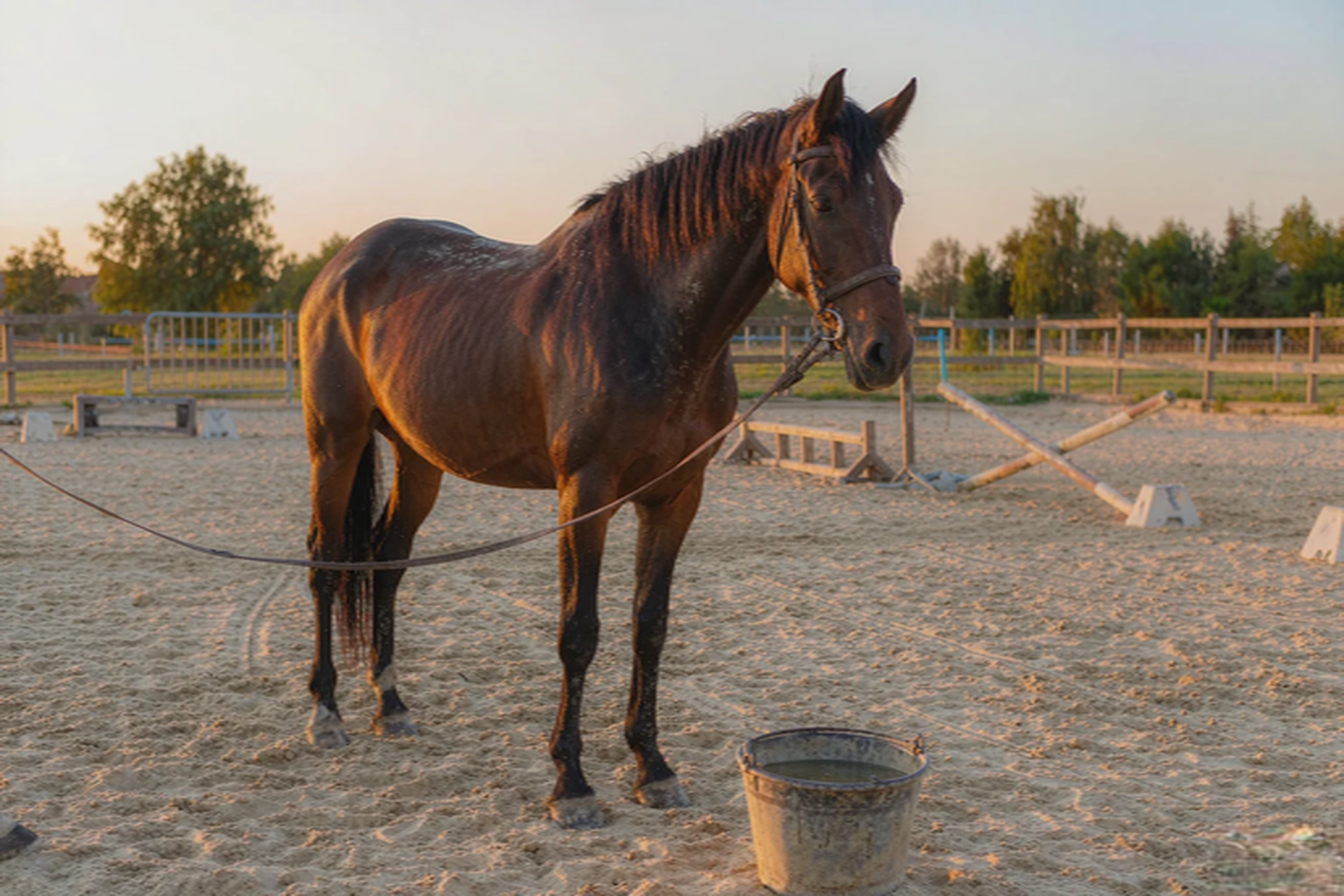
Ten minutes after the canter set, the horse stops. Hindquarters rigid, sweating hard, hind legs camped out behind, tail tucked, unwilling to move a step. It looks like a pulled muscle. It is actually widespread muscle damage — and moving that horse another hundred metres can make it dramatically worse.
Know the red lines
Signs that mean call now, not tomorrow morning
- Dark or cola-coloured urine — kidney risk, call now
- A horse that is down and cannot stand
- Heart rate persistently above 60–70 at rest with rigid hindquarters
- Swelling and hardness over the back and hindquarters that is getting worse, not better
- Any episode where the horse cannot walk to the trailer — do not force it into a trailer; get the vet out
Print this list. Tape it inside the barn door. Under stress nobody remembers a web page, and the person left holding the horse at 9 pm may not be you.
What is actually happening
Tying-up — exertional rhabdomyolysis, also called azoturia or set-fast — is the breakdown of skeletal muscle during or after exercise. Muscle cells rupture, releasing myoglobin and enzymes (CK, AST) into the blood. In mild cases the horse is stiff and sore for a day or two. In severe cases the damage is massive, the kidneys are threatened by myoglobin, and the horse can go down.
There are two broad forms. Sporadic tying-up happens to a previously normal horse after a specific trigger: a hard workout after a week off, dehydration, electrolyte loss, or a change in feed. Chronic/recurrent tying-up is a management or genetic problem — polysaccharide storage myopathy (PSSM) in Quarter Horses, Drafts and Warmbloods, recurrent exertional rhabdomyolysis (RER) in Thoroughbreds and Arabians, and other muscle disorders. The distinction changes everything about prevention.
The mechanism explains the two most important first-aid rules. Damaged muscle keeps releasing myoglobin, and myoglobin damages kidneys — so hydration and veterinary assessment matter within hours. And exercise during an episode causes further damage — so the correct first response is to stop, not to walk it off.
What you will see, stage by stage
Veterinary descriptions of these diseases tend to jump straight to the textbook picture, which is the late version. The table below is ordered the way it actually appears in a barn.
| Stage | What you will see |
|---|---|
| Early — stop the work | Reluctance to move forward, a shortened stiff stride behind, hind legs camped out, tail held oddly, sweating more than the work justifies. Muscle firmness over the hindquarters and loin. |
| Established — the classic episode | Hindquarters rigid and painful to touch. Profuse sweating, elevated heart and respiratory rate. Horse refuses to walk, or walks in a stilted, rigid way. Dark red or cola-coloured urine (myoglobin) — a sign that this is already serious. |
| Advanced — emergency | Horse goes down and cannot rise. Severe pain, distress, swollen firm hindquarters. Reduced or absent urination. Any of these means immediate veterinary attendance — this is potentially fatal. |
Recovery Tools
- Electrolyte powder — Replace what the sweat tookCheck Price
- Horse cooler sheet — Warm-down without the chillCheck Price
- Massage gun — Quarters and backs untied, quietlyCheck Price
What your vet will do — and what each test costs
| Test or procedure | Typical cost | What it tells you |
|---|---|---|
| Veterinary exam + bloodwork (CK, AST) | $150–$300 | CK peaks early and falls fast; AST lags. Two samples 24–48 hours apart tell you the trajectory. |
| Urinalysis | $60–$120 | Confirms myoglobin and assesses kidney function. |
| IV fluid therapy | $400–$1,000 | Per day, roughly. Protects the kidneys. |
| Muscle disorder testing (PSSM1 genetic test, muscle biopsy) | $150–$600 | For recurrent cases. Genetic testing is a hair or blood sample. |
| Diet and exercise programme review | $100–$250 | Often the highest-value consultation fee you will pay |
What it costs, honestly
| Line item | Cost | Notes |
|---|---|---|
| Mild episode managed on farm | $250–$600 | Exam, bloodwork, anti-inflammatories, rest |
| Moderate episode with IV fluids | $800–$2,000 | 1–3 days of care |
| Severe episode / hospitalisation | $2,500–$6,000 | Intensive care, kidney support |
| Ongoing management (oil, vitamin E, low-starch feed) | $60–$130/mo | $720–$1,560/yr |
| Lost competition season | Weeks to months | The uninsurable cost |
A mild episode caught in the first hour is $250–$600. The same horse left in a field overnight with dark urine is $2,500–$6,000, plus a genuine risk of not coming home.
The programme that stops recurrence
Recurrent tying-up is a management diagnosis. These four changes do most of the work.
What to buy, and what to skip
Prevention gear that earns its place in the tack room
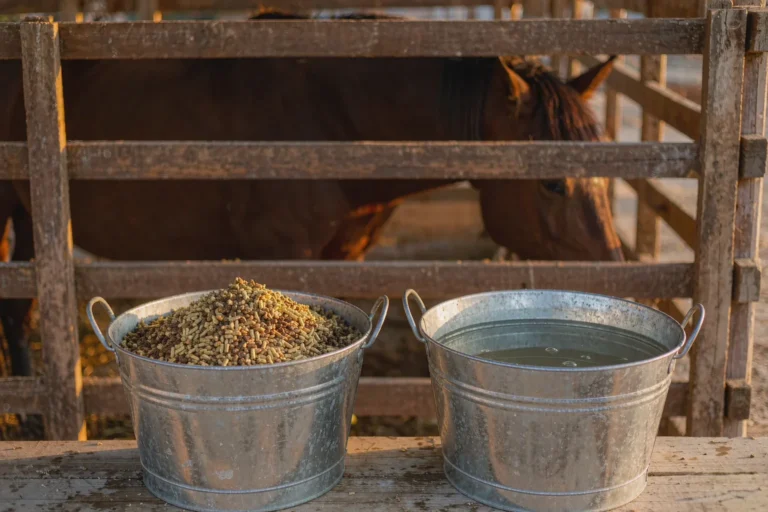
- Cut the starch, add the fat. For PSSM-type horses, starch and sugar drive the problem. Replacing a portion of the grain ration with oil or a high-fat feed — introduced gradually — is the standard first change, and it often works within weeks.Check Price
- Vitamin E and selenium, with the levels checked. Deficiency in either is a recognised cause of muscle disease. Do not guess: have the hay tested or blood levels checked, then supplement to correct a documented gap rather than in hope.Check Price
- Warm up slowly, work consistently. The classic trigger is a hard workout on a horse that has had a week off. Ten minutes of walking before any trot work, and consistent daily exercise rather than weekend heroics, prevent a large share of sporadic episodes.Check Price
- Electrolytes and water, especially in heat. Dehydration and electrolyte loss are direct triggers. Salt in the feed (a tablespoon or two daily, unless your vet says otherwise) and free-choice water in cold weather matter more than any product with a picture of a horse galloping on it.Check Price
As an Amazon Associate we earn from qualifying purchases. Nothing on this list replaces your vet’s advice on your horse.
Five questions worth asking your vet
Bring these written down. A fifteen-minute appointment goes very differently when you are not trying to remember them from a website.
- What were the CK and AST values, and what is the trend?
- Do we need to test for PSSM or RER?
- Is there kidney involvement?
- When can this horse go back to work, and at what intensity?
- What exactly do I change in the feed, in grams, starting tomorrow?
Related reading
Sources & further reading
- Merck Veterinary Manual — Exertional Myopathies in Horses
- AAEP — Tying-Up in Horses
- UC Davis Center for Equine Health — Equine Neuromuscular Disease
- Valberg, S.J. — Equine exertional rhabdomyolysis (Vet Clin North Am Equine Pract)
Price ranges are compiled from published U.S. veterinary fee surveys and practice websites for 2025–2026. Regional variation is large; treat every number here as a planning figure and ask your own clinic for a written estimate before treatment begins.
Guides
Gear & Reviews
Popular Reads