Choke in Horses: Why It Is an Emergency, and What It Costs
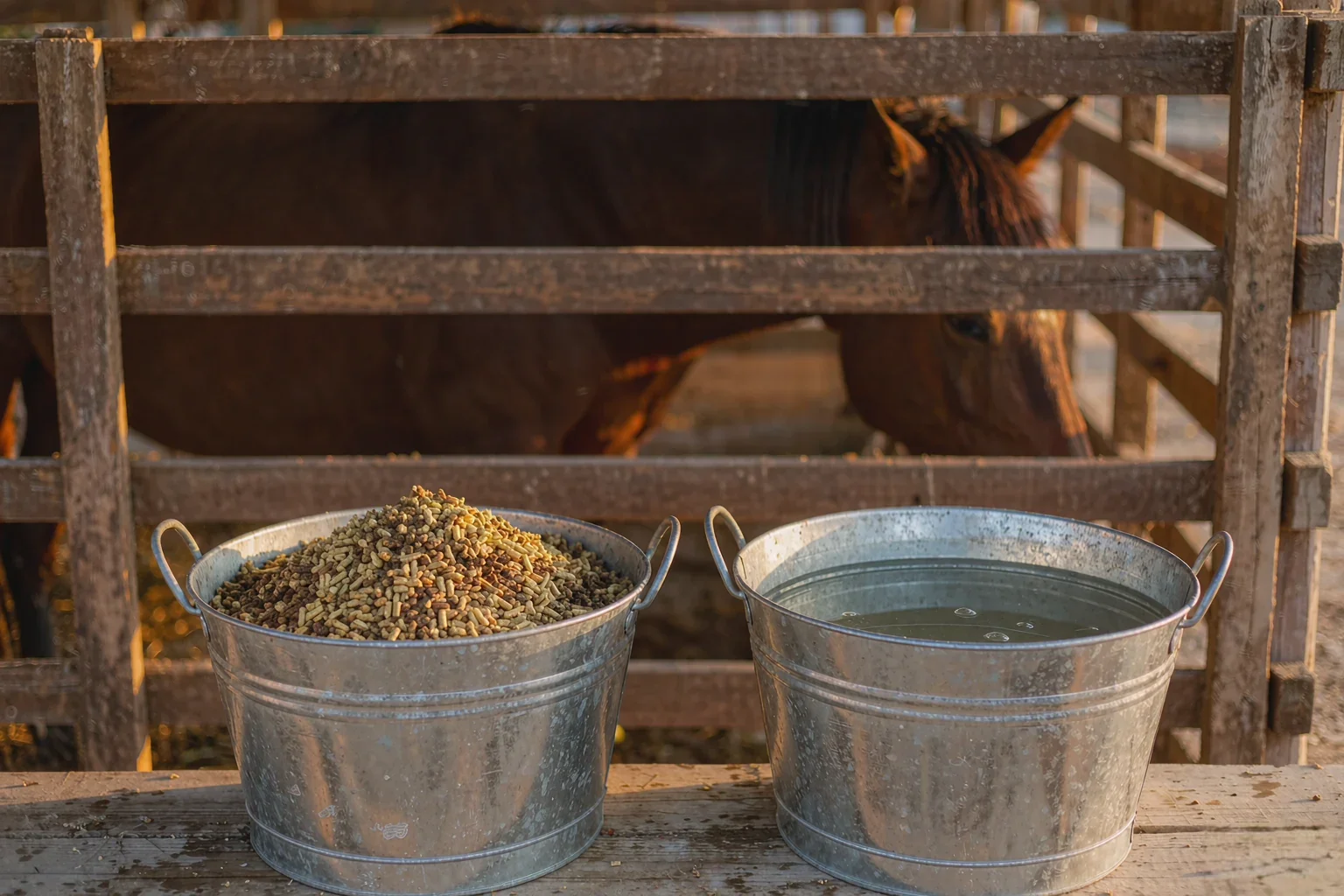
Feed is coming back down the nose. Saliva is pouring out. The horse is coughing, stretching its neck out, and looking at its own flank. It is still breathing — which is exactly why owners wait two hours before calling. That delay is what turns a $400 vet visit into a $4,000 pneumonia case.
Know the red lines
Signs that mean call now, not tomorrow morning
- Feed or saliva coming down the nose — call within 30 minutes, do not “wait and see”
- Do not pass a tube yourself, and do not give water by mouth to force it down. Both cause rupture or aspiration
- Remove all feed and water from the box while waiting for the vet
- Fever, harsh breathing, or a moist cough within 48 hours of a choke episode means pneumonia until proven otherwise
- A horse that has choked before and is choking again — the second one is a management failure, not bad luck
Print this list. Tape it inside the barn door. Under stress nobody remembers a web page, and the person left holding the horse at 9 pm may not be you.
What is actually happening
Choke in horses means oesophageal obstruction, almost always by a bolus of unsoaked feed: dry beet pulp, a wad of hay, pelleted feed eaten too fast, or a chunk of apple. The airway is generally not obstructed — the horse can breathe — and this is precisely what makes choke deceptive.
The real threat is aspiration. Whatever is stuck in the oesophagus backs up; saliva and feed spill over into the trachea; and the horse develops aspiration pneumonia, which is far more serious than the choke itself. Every hour of delay raises that risk. There is also pressure on the oesophagus wall — prolonged obstruction can cause ulcers, scarring and stricture, and a stricture is a lifelong problem.
Certain horses are repeat offenders: the fast eater, the horse with poor dentition that cannot grind long fibre, the horse that has had a previous choke (scar tissue narrows the pipe), and the older horse with missing teeth. If your horse chokes twice in a year, the investigation is about the mouth and the feeding system, not bad luck.
What you will see, stage by stage
Veterinary descriptions of these diseases tend to jump straight to the textbook picture, which is the late version. The table below is ordered the way it actually appears in a barn.
| Stage | What you will see |
|---|---|
| Early — act now | Sudden stop at the feed tub. Heavy salivation, often frothy. Repeated attempts to swallow. Feed and water returning through the nostrils. Neck stretched forward and down. Coughing, sometimes a gurgling sound. |
| Established — the obstruction is not clearing | Visible or palpable swelling on the left side of the neck. Distress, pawing. Continued nasal regurgitation of feed material hours after the meal. This is well past the point where you should have called. |
| Advanced — complications | Fever, laboured breathing, a moist cough, or nasal discharge that smells — aspiration pneumonia. Any horse that has been choking more than four hours. Refusal to eat for 24–48 hours afterwards, which suggests oesophageal damage. |
Slow the Breakfast Down
- Forage cubes — Soak-able, safer for gulpersCheck Price
- Large soak bucket — Cubes need twenty minutesCheck Price
- Small-hole slow-feed net — The anti-gulping deviceCheck Price
What your vet will do — and what each test costs
| Test or procedure | Typical cost | What it tells you |
|---|---|---|
| Emergency farm call + exam | $200–$450 | Sedation, examination of the neck, assessment for aspiration. |
| Nasogastric tube / lavage to relieve the obstruction | $150–$350 | Usually included in the emergency visit. A vet-only procedure — never a DIY one. |
| IV fluids if the horse is dehydrated | $300–$900 | Common after 12+ hours of obstruction. |
| Endoscopy (if obstruction persists or stricture is suspected) | $350–$700 | Looks at the oesophagus lining. |
| Thoracic ultrasound / recheck (if pneumonia suspected) | $250–$600 | Confirms and monitors aspiration pneumonia. |
| Dental exam with a speculum | $120–$300 | Where most recurrent choke cases should have started. |
What it costs, honestly
| Line item | Cost | Notes |
|---|---|---|
| Simple choke resolved on the first visit | $350–$700 | Home same day, feed withheld 12–24 hours |
| Overnight hospitalisation with IV fluids | $800–$1,800 | Per night, roughly |
| Aspiration pneumonia treatment | $3,000–$8,000 | Often 5–10 days of care, plus recheck imaging |
| Oesophageal stricture management (if it happens) | $2,000–$5,000+ | Repeated dilatation, lifelong soaked feed |
| Prevention setup (soaked feed, slow feeder, dental care) | $150–$500 | One-off, then $30–$60/mo in feed prep |
A choke caught in the first half hour typically costs $350–$700. The same choke left overnight costs $3,000–$8,000 because of the lungs. The entire difference is measured in minutes.
Feeding changes that stop the second episode
Repeat choke is almost always a management problem. Fix these and the recurrence rate drops sharply.
What to buy, and what to skip
Prevention gear that earns its place in the tack room
- Soak anything that swells. Beet pulp must be soaked for at least 30 minutes before feeding — unsoaked shreds expand in the oesophagus. So does a lot of pelleted feed. If it can absorb water, it needs water first.Check Price
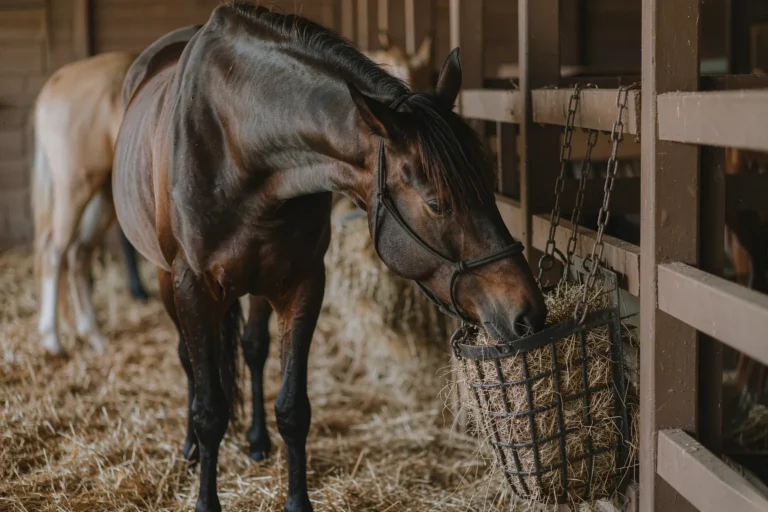
- Slow the eating, not just the meal size. A horse that bolts feed swallows too much at once. A slow-feed bowl with obstacles, or spreading feed across a wide shallow pan, is more effective than reducing the ration. Never feed a hungry horse immediately after a hard workout.Check Price
- Fix the teeth before blaming the feed. A horse that cannot grind long fibre will attempt to swallow it whole. Annual dental exams with a speculum are the cheapest choke prevention available, especially in horses over 15.Check Price
- Watch the water. A dehydrated horse has less saliva and a drier oesophagus. In winter, warm the water or provide soaked feed; horses that stop drinking in cold weather are prime choke candidates.
As an Amazon Associate we earn from qualifying purchases. Nothing on this list replaces your vet’s advice on your horse.
Five questions worth asking your vet
Bring these written down. A fifteen-minute appointment goes very differently when you are not trying to remember them from a website.
- Did the obstruction clear completely, and how do you know?
- Is there any sign of aspiration already?
- Should we scope the oesophagus for damage?
- How long do I withhold feed, and how do I reintroduce it?
- What is my recurrence plan if this happens again at 9 pm on a Sunday?
Related reading
Sources & further reading
- Merck Veterinary Manual — Oesophageal Obstruction in Horses
- AAEP — Choke in Horses (owner resource)
- UC Davis Center for Equine Health — Choke
Price ranges are compiled from published U.S. veterinary fee surveys and practice websites for 2025–2026. Regional variation is large; treat every number here as a planning figure and ask your own clinic for a written estimate before treatment begins.
Guides
Gear & Reviews
Popular Reads