Your First Tall Boots: What to Spend in 2026 (and When to Wait)
Your First Tall Boots: What to Spend in 2026 (and When to Wait)
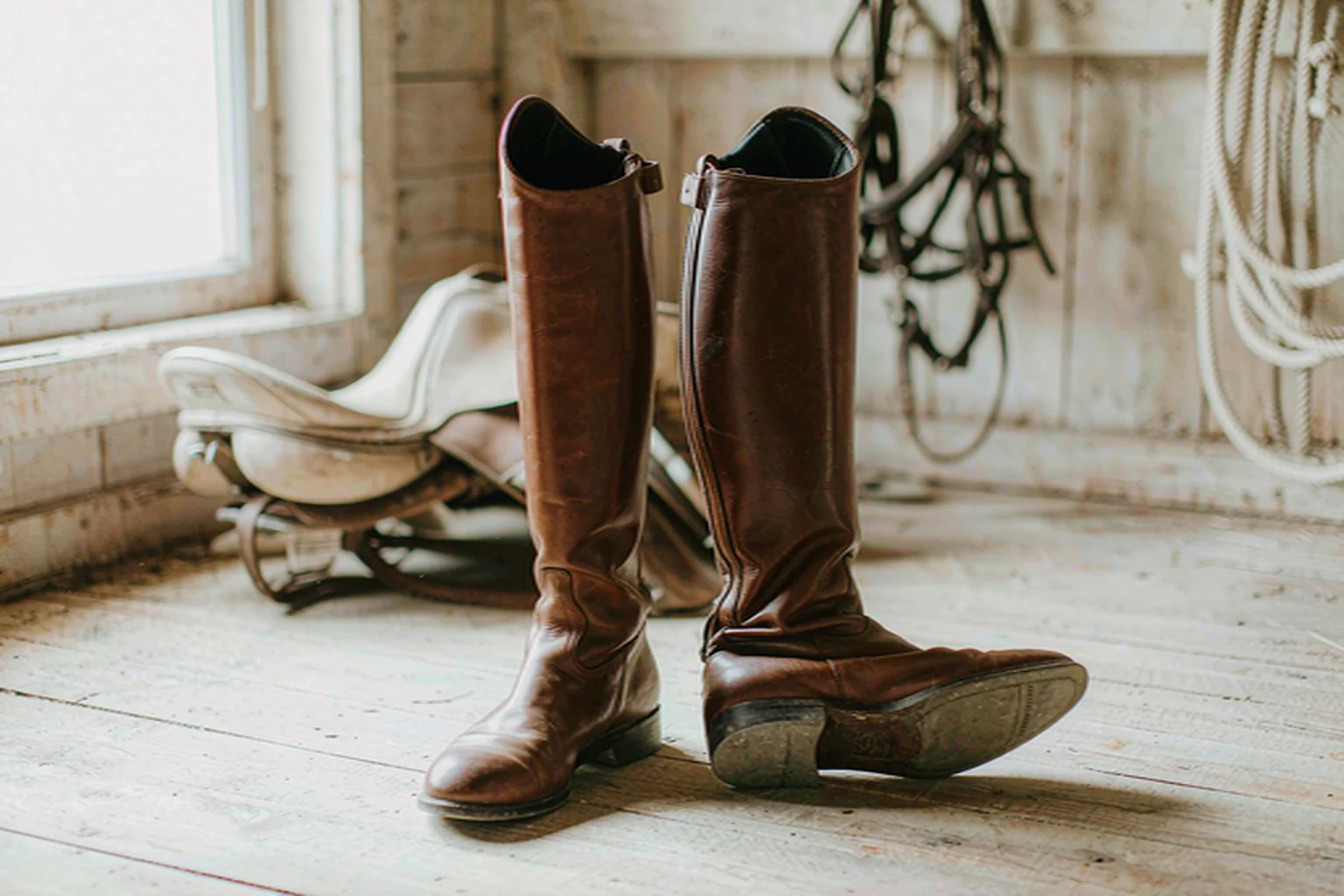
A first pair of tall boots is the single most expensive item in a new rider’s kit — and the easiest to get wrong. In 2026 a beginner pair runs $130–$400, while custom show boots start near $700. The difference is rarely about looks: it is about calf fit, heel height and whether the shaft drops to your leg after a few rides. Here is what to measure, what to spend, and when to wait.
- Do not buy tall boots for weekly lessons. Paddock boots ($90–$170) plus half chaps give the same leg support for a third of the price
- Beginner tall boots run $130–$400; full-grain leather dress boots $600–$700; custom show boots $1,000+
- Measure your calf over your riding socks, late in the day, and order the shaft 1.5–2 inches taller than measured — leather drops when broken in
- A defined heel of 1 to 1.5 inches is non-negotiable: it stops your foot sliding through the stirrup
- Field boots have ankle laces (jumpers/eventers); dress boots are smooth (dressage). Choose for comfort first, discipline second
Most new riders buy tall boots too early, in the wrong size, then stop riding because their calves hurt. Boots are the one piece of kit where patience saves real money. This guide is built around the three numbers that actually decide fit — calf circumference, shaft height and heel — and a realistic 2026 price ladder from a US tack retailer’s current range.
Do You Even Need Tall Boots Yet?
Probably not, if you are taking one or two lessons a week. Tall boots exist for two reasons: the clean line that show rules expect, and full-length calf protection for riders who spend hours in the saddle. Neither applies to a beginner at a weekly lesson barn.
| Your situation | Buy | Skip for now |
|---|---|---|
| 1–2 lessons a week, no shows | Paddock boots $90–$170 + half chaps | Tall boots |
| Riding 3+ days a week | Paddock boots + half chaps, or entry-level tall boots | Custom or premium leather |
| First local show within 6 months | Mid-range tall boots $200–$400 | $1,000+ show boots |
| Showing regularly, dressage or hunters | Quality leather $600–$700, or custom $1,000+ | Synthetic entry-level |
Paddock boots plus half chaps mimic most of the tall-boot feel at a fraction of the cost, and you can replace each piece separately. That is the right first purchase for the majority of riders.
Boots That Fit the Job
- Paddock boots — Learn in these before tall bootsCheck Price
- Half chaps — The budget-friendly stepping stoneCheck Price
- Tall boot bag — Protect the pair you finally buyCheck Price
Measure Before You Shop
Tall boots fail on fit far more often than on quality. Two measurements decide almost everything:
- Calf circumference — measure around the fullest part over the socks and breeches you actually ride in, late in the day when legs are at their largest
- Shaft height — measure from the floor to the back of your knee, then add 1.5–2 inches. Leather softens and the shaft drops with wear; a boot measured exactly to the knee ends up too short within a month
Many makers offer regular and wide calf widths. If your measurement sits between sizes, go by the maker’s chart in centimetres rather than guessing. Your foot should have about a thumb’s width of room ahead of the toes.
What Tall Boots Actually Cost in 2026
Prices below come from a US tack retailer’s current 2026 range and illustrate the tiers rather than endorse a single brand.
| Tier | 2026 price | Who it suits |
|---|---|---|
| Entry-level / children’s | $130–$200 | Young riders, growing calves, first show |
| Beginner adult leather | $220–$400 | Weekly riders, local shows — the sweet spot |
| Mid-premium | $600–$700 | Regular trainers wanting softer leather and faster break-in |
| Custom / luxury show | $1,000–$1,300+ | Competitive riders with precise fit needs |
For context, one retailer lists the Ariat Palisade — its pick for a beginner adult tall boot — at $399.95, immediately below the $600–$700 premium tier (Fabbri Prime $690, EGO7 Aries $599) and far below the $1,095–$1,300 custom end. Spending more buys softer leather and a faster break-in, not a safer ride.
Field Boots vs Dress Boots
Field boots have laces at the front of the ankle, which add flexibility and are popular with hunter, jumper and eventing riders. Dress boots have a smooth, lace-free front and a cleaner line, traditionally associated with dressage but worn by jumpers too. Choose on comfort and ankle mobility first; check your discipline’s show rules second.
Break-In: What to Expect
Leather tall boots feel stiff on day one and settle over two to six weeks, depending on the leather. Break them in around the house and on short rides before a full day at the barn. A boot jack and boot trees protect the shaft while it softens. Synthetic pairs ask for less patience but rarely mould as closely to your leg.
Wear thin, moisture-wicking riding socks so the fit stays consistent and nothing bunches under the shaft. Wipe mud off after each ride and condition leather occasionally; let it dry away from direct heat.
Five Mistakes That Waste Money
- Buying hiking or fashion boots. Deep chunky tread can catch in the stirrup during a fall, and a missing heel lets the foot slide straight through
- Guessing calf size. Measure in riding socks, late in the day
- Ordering the exact knee height. Allow the 1.5–2 inch drop
- Buying a $1,000 boot for weekly lessons. The fit problem is the same at every price
- Skipping the return window. Try boots on at home and walk in them before committing
Quick Answers
Are paddock boots or tall boots better for beginners? Paddock boots with half chaps, unless you are showing soon or riding four or more days a week.
How should riding boots fit? Snug without pinching, heel staying down, toes free, knee still able to bend.
Do I need a zipper? No, but a back or side zip makes tall boots far easier to remove, and dust flaps help it last.
How long do they last? Quality leather can last years with care; budget synthetics wear out sooner, especially in wet conditions.
Sources
Price tiers and fit guidance: Farm House Tack, 8 Best Horse Riding Boots (November 5, 2026). General tall-boot fit and safety principles cross-checked against current 2026 beginner-boot buying guides.
Guides
Gear & Reviews
Popular Reads
Keep reading: What to wear to your first riding lesson · English vs. Western riding: the real differences · What riding lessons really cost in 2026