English or Western? How Adult Beginners Should Choose
English or Western? How Adult Beginners Should Choose
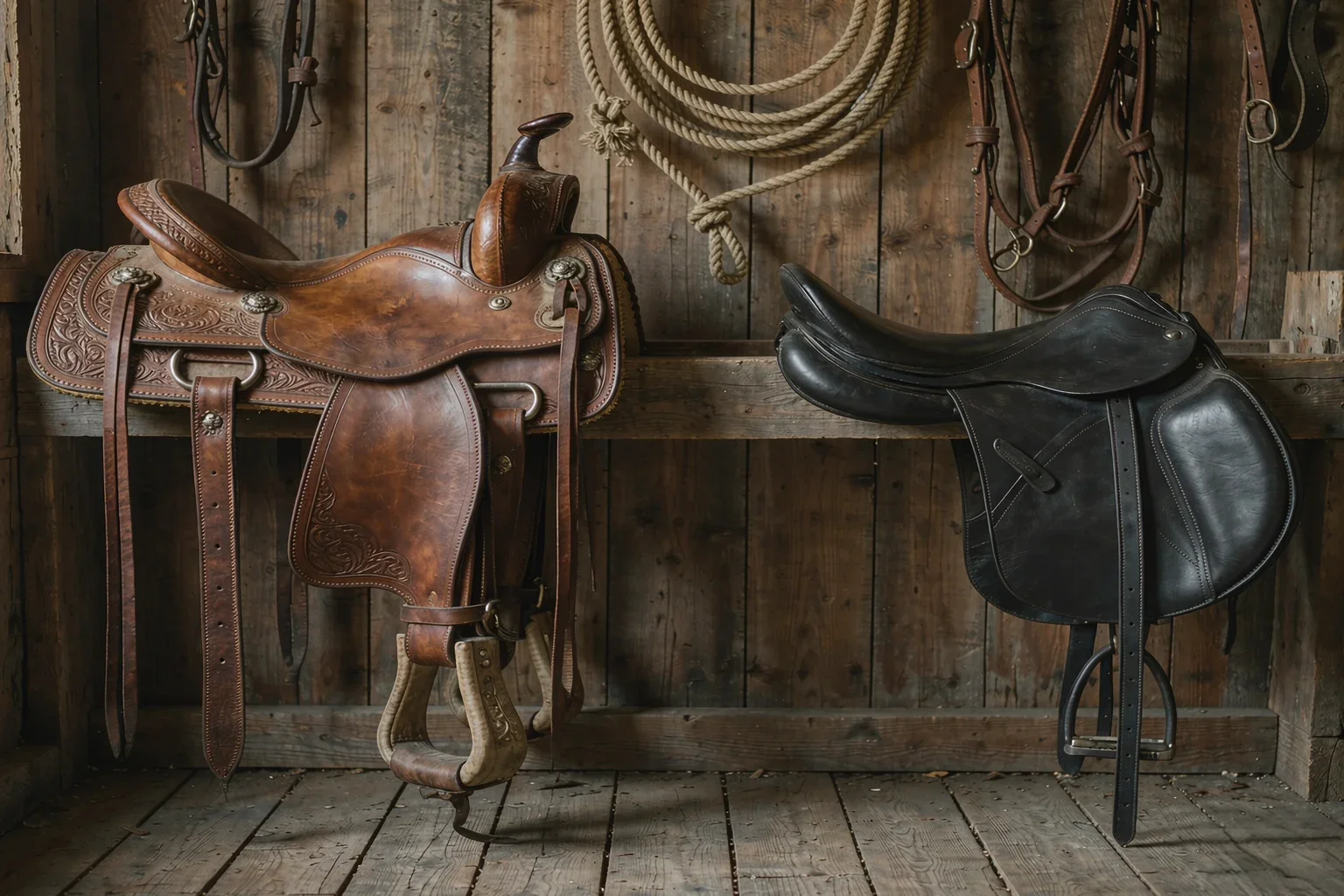
Two riders cross the same arena at the same speed and look nothing alike. One sits deep behind a horn, reins in one hand, stirrups long. The other rides a narrow flat saddle, reins in two hands, rising and sitting in rhythm. Same horse. Same decision about whether to spook at the gate. Here is what actually differs between English and western riding, what each costs to start in 2026, and the one criterion that decides it for most adults.
- The horse is identical — the difference is tack, seat and hand position, not difficulty
- Western saddles run 25–45 lb with a horn and deep seat; English close-contact saddles run 12–25 lb
- You do not need to buy a saddle to start — school horses come with tack, so the first-year cost is lessons, not leather
- Starter gear runs $165–$665 western and $235–$745 English, helmet included in both
- What decides it in practice is what sits within a 30-minute drive; both seats transfer in 3–6 lessons if you switch
What actually differs
The seat
Start-up cost
Which is faster
Body, age, weight
Availability
Switching later
Decide in an afternoon
The question sounds like a preference. In practice it is three separate questions wearing one coat: what you want to do with the horse, what your body tolerates for 45 minutes, and what is within driving distance of your house on a Tuesday evening. Answer those in that order and the discipline usually picks itself.
What Actually Differs (and What Does Not)
Both disciplines ask a horse to walk, trot and canter, to bend, to stop, to move off your leg. The vocabulary changes, the physics do not. A horse does not know which saddle you put on it; it knows what your weight and hands are telling it.
| Element | Western | English |
|---|---|---|
| Saddle | 25–45 lb, deep seat, horn, wide panels | 12–25 lb, flat seat, close contact, no horn |
| Reins | One hand, neck reining — the horse turns away from rein pressure on its neck | Two hands, direct contact — the horse turns from a leading rein |
| Trot | Sitting jog, slow and collected | Rising (posting) trot, or sitting for dressage work |
| Leg position | Long stirrups, leg forward, weight in the seat | Shorter stirrups, leg under the hip, weight in the heel |
| Typical first-year goal | Trail riding, arena work, ranch sorting | Flatwork, poles, first small fences |
| Where you find it | Rural and suburban barns, guest ranches, western show circuits | Urban-fringe lesson barns, show stables, college programs |
The Seat: What Your Body Does Differently
This is the part that decides whether you enjoy riding or spend the drive home cataloguing new aches.
Western puts you in a chair. The stirrups hang long, your thigh angles forward, your weight settles into the seat bones and the saddle’s deep pocket holds the pelvis in place. Stiff hips cope with this. Knees with mileage cope with this. The trade-off is that an armchair is easy to slump in: it is entirely possible to ride western for a year with a hollow back and hands doing the balancing.
English puts you in a squat that you have to keep adjusting. Stirrups come up, the leg comes under the hip, the heel drops and the weight travels down the calf. The saddle is thin enough that you feel the horse’s spine swing underneath you, which is either the whole point or deeply unpleasant for the first month, depending on the day. Rising trot — up on every other beat — means a 45-minute lesson contains somewhere between 300 and 500 small squats. Beginners notice this in the thighs before they notice anything else.
The practical consequence: western is kinder to bodies that need to ease in, English builds an independent seat faster because the saddle offers less to lean on. Neither is superior. A rider with a good seat on either saddle can get on the other and look competent within a handful of lessons.
What Each Path Costs to Start
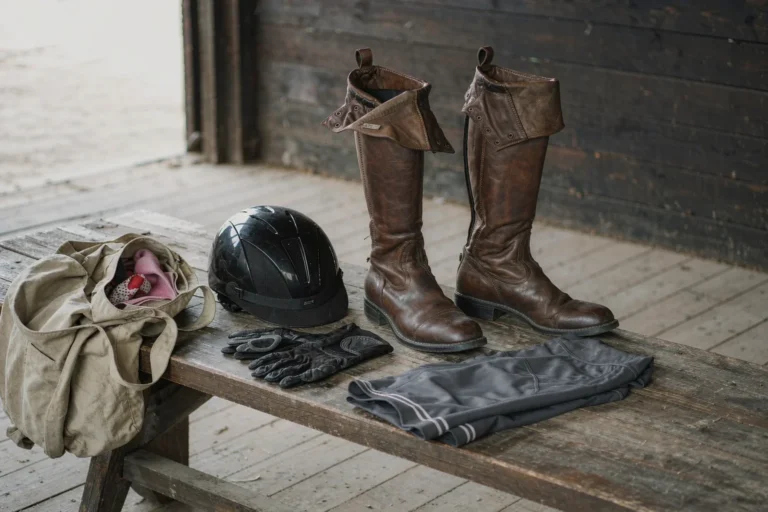
Almost every beginner over-buys before lesson three. The only equipment you genuinely need for lesson one is a certified helmet and a boot with a heel; most barns will lend you both if you ask. Everything below is what you buy once you know you are continuing.
| Item | Western | English |
|---|---|---|
| Helmet (ASTM F1163, SEI-marked) | $60–$300 | $60–$300 |
| Boots | $90–$250 western boot with heel | $60–$140 paddock boots plus $50–$120 half chaps |
| Legwear | $0–$80 jeans you already own, or riding jeans | $50–$150 breeches |
| Gloves | $15–$35 | $15–$35 |
| Subtotal, no saddle | $165–$665 | $235–$745 |
| Saddle, used, if you later lease or buy a horse | $250–$600 | $300–$900 |
Two things about that table matter more than the totals. First, the helmet is the one line where the two columns are identical, because the safety standard does not care what discipline you ride. Second, the saddle line is optional for a year or more: a lesson horse arrives with tack fitted to it, and a saddle bought before you know your own leg length is money spent twice.
Lessons cost roughly the same either way. Across 2026 posted rates, group lessons run $40–$80 an hour and privates $50–$110, and the discipline is not what moves the price — region, lesson length and whether the barn owns its school horses do. A western barn in rural Texas and an English barn in rural Virginia charge similar money for the same hour of an instructor’s attention.
Beginner Kit, Either Discipline
- ASTM/SEI-certified helmet — The only item where the standard, not the brand, is the whole decisionCheck Price
- Paddock boots with a defined heel — Works under half chaps for English and with jeans for westernCheck Price
- Synthetic-leather riding gloves — Grip on a wet rein, and they cost less than a lessonCheck Price
Which One Gets You Riding Sooner
Honest answer: they are within a month of each other, and the variable that actually predicts progress is how many times a week you sit on a horse, not which saddle you sit on. Somebody riding twice a week in western tack will pass somebody riding once a fortnight in English tack every time.
| Milestone | Western | English |
|---|---|---|
| Walk, halt, steer on your own | Lessons 1–3 | Lessons 1–4 |
| Trot or jog a full circuit without stopping | Lessons 4–8 | Lessons 5–10 |
| Canter or lope on a loose rein | Lessons 10–20 | Lessons 12–24 |
| Independent seat — hands and legs doing separate jobs | 6–12 months | 6–12 months |
| First jump or first competitive class | Not typically the goal | 12–24 months |
Ranges are wide on purpose: they compress for a confident rider who books two lessons a week and lengthen for anyone riding once a fortnight through winter. The one milestone that does not compress is the last: an independent seat takes seasons, not weeks, in either discipline.
Body, Age and Weight: The Parts Nobody Puts on a Brochure
Hips and knees. Long stirrups and a forward leg (western, or English with dressage-length leathers) ask less of a stiff hip. Short stirrups and a deep knee bend (jumping length) ask more. If you have had a knee replacement, a meniscus repair or years of desk work, western tack or a lengthened English stirrup is not a compromise — it is the version of riding you will still be doing at 70.
Weight. Many lesson programs cap riders at 200–250 lb, and a good barn will tell you the number without embarrassment because it is about the horse, not about you. The working rule in the industry is that a horse carries roughly 20% of its body weight including tack, which puts a 1,100 lb school horse at about 220 lb with a saddle on. Ask before you book; a barn that will not answer is a barn with something to hide.
Age. There is no upper limit worth naming. Adults start at 35, 50 and 68, and the ones who do well share one trait: they take lessons instead of being taught by a friend. What changes with age is recovery time, not learning speed.
Balance and confidence. A deep western seat is more forgiving of a bad day. An English saddle gives more feedback, which is useful when you are learning and merciless when you are tired. If anxiety is the main obstacle, that is a barn-and-instructor question far more than a discipline question — see what a good beginner program looks like.
If You Lean English
- Knee-patch breeches — The patch is what stops the saddle from sanding your kneeCheck Price
- Suede half chaps — Half the price of tall boots, same grip for a beginnerCheck Price
- Riding tights with silicone seat — Cooler than breeches in summer, and they double as leggingsCheck Price
The Criterion That Decides It for Most Adults
Drive time. Not the discipline you dreamed about at twelve — the barn you will still be going to in February.
Two lessons a week at a barn 15 minutes away beats one lesson a week at a barn an hour away, every time, in every discipline, for every rider. Riding is a physical skill that decays between sessions, and a 90-minute round trip is the single most common reason adults quit in month four.
In the US this usually settles the question geographically. Western barns dominate rural and exurban areas and the trail networks that come with them; English barns cluster around cities, college towns and show circuits. If the nearest decent instruction is western, ride western for two years and switch later if you still want to. The seat you build is the asset.
Three questions worth asking on the phone before you book anything: How many school horses do you have? (One horse means one horse’s bad day becomes your lesson.) Do you teach adults in groups, and how big are they? (Six beginners with one instructor is a supervisory hour, not a lesson.) What is the total charge for my first lesson, including every fee?
Switching Later Costs Almost Nothing
Adults agonise over this decision as though it were a career. It is not. The transferable skill is balance and an independent seat, and that belongs to you, not to the saddle.
What transfers in a handful of lessons: your seat, your leg, your feel for the horse’s rhythm, your ability to sit a spook. What needs rebuilding: rein handling (neck rein versus direct contact is genuinely a different language), the posting rhythm, and the vocabulary of saddle fit. Riders who switch usually report the first two lessons feeling clumsy and the fifth feeling normal.
The reverse is also true, which is why western riders who try dressage often find the sitting trot familiar and the contact baffling, while English riders on a western horse keep reaching for a rein that is not there.
Decide in One Afternoon
Work down this list and stop at the first line that resolves.
- List the barns within 30 minutes. Note which discipline each teaches and whether they take adult beginners.
- Book an intro lesson at the closest one. Not a tour, not a pony ride — a real lesson on a school horse.
- Judge the teaching, not the tack. Did someone adjust your stirrups and check your helmet? Did they explain why, or just say “heels down” forty times?
- Ask what the next three months cost, including fees, and compare it with your actual budget rather than your optimistic one.
- Ignore anyone who tells you one discipline is not real riding. That argument is about their identity, not your Tuesday evening.
If you are still torn after that, choose the barn with the better beginner program. A western barn that teaches adults properly will produce a better rider in a year than an English barn that treats beginners as a revenue stream.
Next in this series: what to wear to your first lesson and what barns actually send people home for, the real cost of lessons by type and region, and how adults actually learn to ride — fear, fitness and the realistic timeline.
Guides
Gear & Reviews
Popular Reads
Keep reading: What riding lessons really cost in 2026 · How to choose a riding barn: 12 red flags · What to wear to your first lesson