Horse Insurance: Is Major Medical Worth It in 2026?
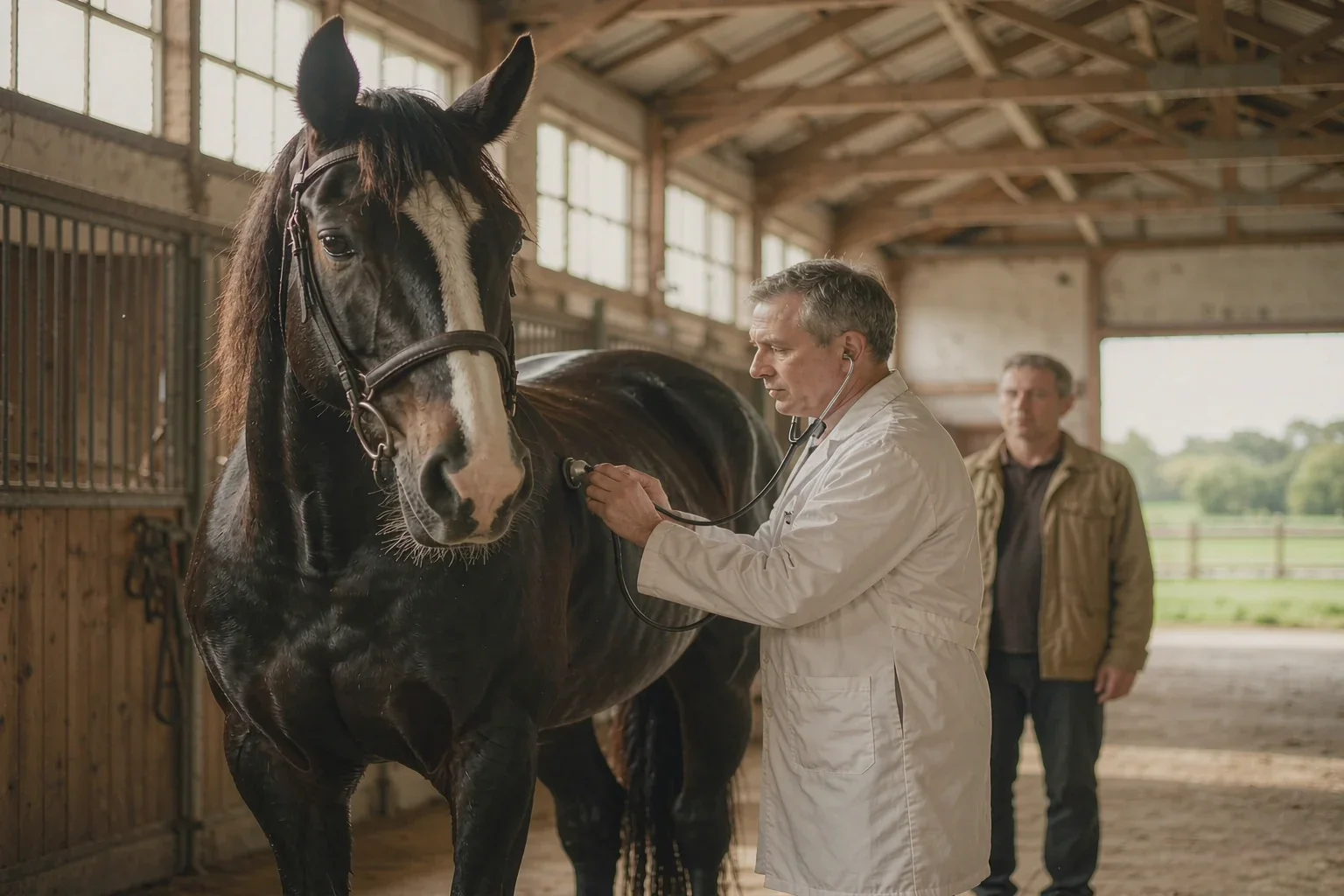
Policies typically cost 3–5% of your horse’s insured value. Whether that’s cheap or expensive depends entirely on one number: your emergency tolerance.
Horse insurance comes in two flavors: mortality (pays out if the horse dies) and major medical / surgical (pays vet bills). Combined, expect $200–$1,500 per year — usually 3–5% of insured value.
The Math That Matters
Colic surgery averages $5,000–$10,000. Major medical policies typically cap at $10,000–$15,000 per condition per year, with deductibles around $250–$500. If you can absorb a $10,000 hit from savings, self-insuring (a dedicated reserve) often wins over time. If you can’t, insurance converts a catastrophe into a predictable bill.
What Policies Commonly Exclude
- Pre-existing conditions — disclosed or discovered
- Routine care: vaccines, dental floating, deworming
- Alternative therapies without specific riders
- Horses over an age cap for medical cover (often 15–20 for new policies)
Practical Checklist Before You Buy
- Get a current veterinary exam — insurers price off health status
- Insure at fair market value, not sentiment
- Check the surgical-only option: cheaper, covers exactly the scenario that breaks budgets
- Read the colic surgery clause: some require referral to a surgical facility to qualify
Use our ownership cost calculator to see how a policy changes your monthly number.
The Four Insurance Types, Separated
“Horse insurance” bundles four unrelated products. Knowing which one you are buying is the first step:
| Type | Covers | Typical 2026 cost | Who needs it |
|---|---|---|---|
| Major Medical | Illness and injury vet bills, subject to deductible and per-condition caps | $350–$800/yr | Anyone who could not absorb a $8,000 surprise |
| Mortality | Death or humane euthanasia; pays declared value | 2.5–4% of value/yr | Horses with meaningful market or emotional value |
| Surgical Only | Colic surgery and similar; cheaper, narrower | $150–$300/yr | Budget bridge for the surgical-colic tail risk |
| Loss of Use | Pays a portion of value if horse permanently unable to perform | High; claims notoriously hard | Rarely worth it — see below |
| Personal liability (via farm policy or club) | Damage/injury your horse causes to others | Often bundled with board or membership | Everyone, check what board covers |
Major Medical: The Math That Decides It
A 2026 major medical policy for a 10-year-old horse runs roughly $500–$700 a year with a $300–$500 deductible and $10,000–$15,000 per-condition limit. Set against actual claim probabilities:
- Surgical colic: $8,000–$15,000 all-in, lifetime incidence meaningful. One claim in seven years pays for the policy.
- Lameness workup + treatment: $1,500–$5,000 common (ultrasound, nerve blocks, injections, shockwave).
- Eye injuries, wounds requiring surgery, sinoscopy, sinus cysts: $2,000–$8,000 each, all claimable.
The honest actuarial answer: for a young healthy pleasure horse, major medical is close to break-even and you are buying cash-flow smoothing. For a horse over 10, a horse with any colic history, or a competition horse, the expected claims exceed the premium — insurance genuinely pays. Premiums also rise and coverage narrows with age; the last affordable year to buy is often around 12–15.
The Fine Print That Decides Claims
- Pre-existing conditions. Anything noted in vet records before binding is excluded — which is why the policy is bought the day you buy the horse, before any lameness exam “just to see.”
- Per-condition limits and deductibles per condition (not per year) — a horse with two unrelated lameness events in a year can burn two deductibles.
- Mortality requires notification windows and often specific euthanasia documentation; surgical policies frequently require pre-authorization before surgery — a call from the operating table is a call you must be reachable for.
- Excluded treatments: alternative therapies, dental unless accident-related, and routine care are not covered. Wellness add-ons exist and are roughly break-even; they are payment plans, not insurance.
- Declared value on mortality needs documentation (purchase price, competition records); inflated declarations void claims.
Loss of Use: Usually a Bad Product
Loss of use pays a fraction of declared value when the horse can no longer perform its insured discipline, and the claim requirements — multiple vet certifications, often the horse’s retirement restrictions enforced — make successful claims rare relative to premium. The practical substitute is a mortality policy plus an honest emergency fund; owners insuring loss of use are usually paying for a product whose conditions they will never meet.
Paperwork Worth Keeping
- Fireproof document bag — Policies and vet records survive the barn fireCheck Price
- Outdoor security camera — Theft and injury evidence when nobody is thereCheck Price
- Portable jump starter — Dead truck batteries strand trailersCheck Price
The Self-Insurance Alternative, Priced Honestly
The alternative is a dedicated fund. At $150–$250/month from day one, a horse owner holds $9,000–$15,000 within five years — roughly one surgical colic. The comparison:
- Insurance: pays from day one, renews annually forever, excludes pre-existing, caps per condition, requires the insurer’s process.
- Self-fund: pays nothing until funded, then pays for anything with no exclusions, and unspent money stays yours.
The rational hybrid most experienced owners land on: major medical in the horse’s younger years (when premiums are low and the horse is uninsured value-wise), transitioning to self-funding as premiums rise past $1,200/year, with the mortality policy dropped once the horse’s market value is negligible but its emotional value is not (mortality insurance is for financial loss, not grief).
What to Do the Day You Buy
- Bind mortality + major medical by phone before the horse ships — same-day binding is standard.
- Keep the PPE report; the insurer will ask what was noted.
- Photograph the horse (identification for mortality claims).
- Record the insurer’s pre-authorization number where you will find it at 2am.
The recurring theme from owners who have claimed successfully: paperwork speed at claim time mattered more than the policy choice itself. Insurers pay documented, authorized, prompt claims — and drag on undocumented ones.
Vet-bill reducers worth owning
- Horse medical records binder — Organized records speed up claims and vet callsCheck Price
- Digital thermometer — Colic and infection both announce themselves here firstCheck Price
- Fireproof document bag — Insurance papers and Coggins, safe from tack-room leaksCheck Price
Guides
Gear & Reviews
Popular Reads
Keep reading: Senior horse care: what changes after 18