Thrush and Mud Fever: The $18 Problem That Becomes a $600 Vet Bill
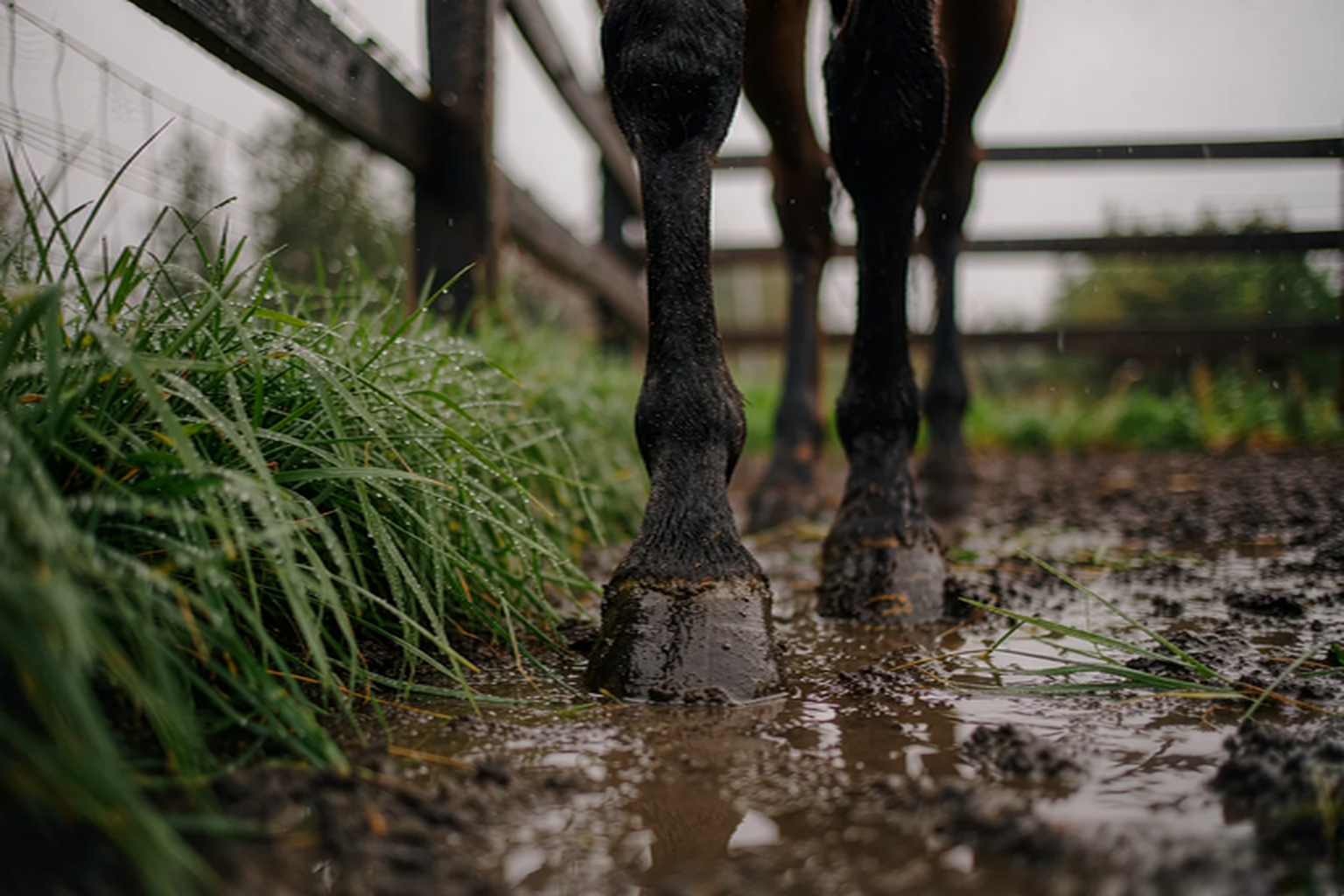
Black, greasy, foul-smelling stuff packed into the frog. A horse that flinches when you pick out the foot. Crusty scabs and hair loss above the heel in winter. Two of the most common and most ignored problems in horse care — and both are entirely preventable with ten minutes a day.
Know the red lines
Signs that mean call now, not tomorrow morning
- Spreading heat and swelling up the leg, or a leg that is markedly larger than the other — cellulitis is an emergency
- Fever with a swollen limb
- A non-weight-bearing foot, or a digital pulse you can feel strongly at rest
- Deep, bleeding frog tissue, or proud flesh in the heel
- Any mud fever that is oozing pus or has not improved after 7 days of correct treatment
Print this list. Tape it inside the barn door. Under stress nobody remembers a web page, and the person left holding the horse at 9 pm may not be you.
What is actually happening
Thrush is a bacterial and fungal infection of the frog and the sulci (the grooves either side of it), driven by anaerobic conditions: wet bedding, mud, and feet that are not cleaned. The organism that dominates is Fusobacterium necrophorum, which is why the smell is so distinctive. Mild thrush is superficial. Deep thrush — where the infection tracks into the sensitive tissue of the heel — is painful and can progress to something much worse.
Mud fever (pastern dermatitis) is different: it is inflammation and infection of the skin of the pastern and heel, starting as dermatitis and becoming bacterial when the skin barrier breaks down. It appears in wet, muddy conditions, in horses with feathered legs, and in horses with white legs (a genetic link is suspected but the mechanism is unclear). It is a skin disease, not a hoof disease — but the two often coexist because they share the same cause.
Both are managed the same way at the start: get the foot and leg clean, get them dry, and keep them that way. The difference matters because treatments differ, and because mud fever left alone can spread up the leg into cellulitis, which is a systemic problem requiring antibiotics.
What you will see, stage by stage
Veterinary descriptions of these diseases tend to jump straight to the textbook picture, which is the late version. The table below is ordered the way it actually appears in a barn.
| Stage | What you will see |
|---|---|
| Early — handle it today | Black, greasy discharge in the central or collateral sulci of the frog, with a pungent smell. A frog that looks ragged or under-run. For mud fever: rough, scabby skin at the back of the pastern, matted hair, and mild sensitivity. |
| Established — needs a vet soon | Frog tissue that is soft, deep and eroded. Lameness at the trot. Heat and swelling in the heel bulbs. For mud fever: raw, oozing skin, hair loss spreading up the cannon, and swelling of the lower leg. |
| Advanced — this is not a hoof problem any more | Lameness at walk, a bounding digital pulse, or a foot that is hot and swollen — could be an abscess, cellulitis, or a deep infection. Spreading heat and swelling up the leg, fever, or a horse that refuses to bear weight. |
Dry Feet Win
- Thrush treatment — The $18 fix, applied dailyCheck Price
- Rubber stall mats — Dry standing surface, alwaysCheck Price
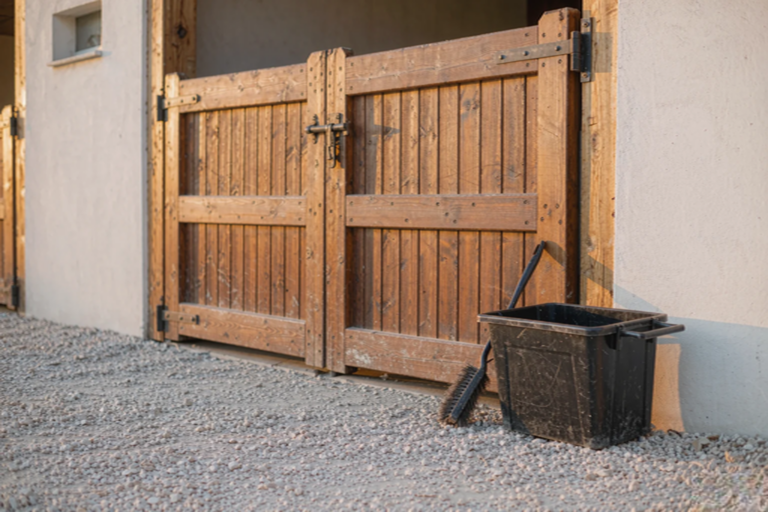
- Muck bucket with handle — Wet bedding out, dry bedding inCheck Price
What your vet will do — and what each test costs
| Test or procedure | Typical cost | What it tells you |
|---|---|---|
| Veterinary exam of the foot/limb | $100–$250 | Includes hoof testers and assessment of digital pulses. |
| Nerve block + radiographs (if deep infection suspected) | $250–$600 | Rules out abscess, pedal osteitis, or a foreign body. |
| Skin scraping / cytology for mud fever | $80–$180 | Distinguishes bacterial from fungal, and rules out mites (Chorioptes) which need different treatment. |
| Antibiotics + bandaging for cellulitis | $300–$800 | Often with a recheck at 48–72 hours. |
| Farrier consult for deep thrush | $80–$200 | Removing under-run tissue is a mechanical job, not a chemical one. |
What it costs, honestly
| Line item | Cost | Notes |
|---|---|---|
| Over-the-counter hoof treatment (thrush) | $15–$40 | Per bottle; usually enough |
| Antifungal/antibacterial wash + barrier cream (mud fever) | $20–$60 | Per month during wet season |
| Hoof pick, brush, drying towels | $15–$35 | One-off, and the actual solution |
| Vet visit for deep thrush or early mud fever | $150–$350 | Includes debridement and a plan |
| Cellulitis treatment | $400–$900 | Antibiotics, bandaging, rechecks |
| Turnout boots / mud fever boots | $60–$150/pair | Prevention, replaced every season or two |
Managed on day one: $30–$70. Managed on day thirty: $200–$500. Ignored until cellulitis: $600–$1,200 and a horse on antibiotics for two weeks.
Ten minutes a day beats every product
There is no supplement that prevents thrush. There is a hoof pick.
What to buy, and what to skip
Prevention gear that earns its place in the tack room
- Pick out all four feet, every day. Packed mud and manure is the entire cause. Pick, brush, and look at the frog — daily inspection is how you catch thrush when it is still a $20 problem. This is the highest-return ten minutes in horse ownership.Check Price
- Dry beats clean. Thrush is anaerobic — it needs the absence of oxygen. A clean but wet foot still develops thrush. Dry bedding, dry turnout areas, and letting the feet dry before stabling matter as much as scrubbing. Do not over-wash: repeated scrubbing with harsh antiseptics damages the frog and the skin barrier.Check Price
- Break the mud cycle at the gate. Mud fever is a mud problem. Hard-standing at gateways, rotation of turnout, and turnout boots for horses with feathered or white legs reduce exposure. Wash mud off with plain water and dry thoroughly — leaving a wet leg under a rug is worse than leaving the mud on.Check Price
As an Amazon Associate we earn from qualifying purchases. Nothing on this list replaces your vet’s advice on your horse.
Five questions worth asking your vet
Bring these written down. A fifteen-minute appointment goes very differently when you are not trying to remember them from a website.
- Is this thrush, or is there underlying hoof imbalance making it recur?
- How deep is the infection, and does the frog need debridement?
- Is the mud fever bacterial, fungal, or mites?
- Does this horse need systemic antibiotics, or is topical enough?
- What in my turnout and bedding setup is causing this to keep coming back?
Related reading
Sources & further reading
- Merck Veterinary Manual — Foot Problems in Horses (thrush)
- AAEP — Hoof Care and Common Hoof Problems
- UC Davis Center for Equine Health — Pastern Dermatitis (mud fever)
Price ranges are compiled from published U.S. veterinary fee surveys and practice websites for 2025–2026. Regional variation is large; treat every number here as a planning figure and ask your own clinic for a written estimate before treatment begins.
Guides
Gear & Reviews
Popular Reads