Equine Gastric Ulcers: Signs, Scope Costs and What Prevention Actually Costs (2026)
A horse that used to be quiet at the mounting block is now cinchy. He leaves a bit of hay. He is a little behind the leg. Nothing you can point at, nothing you would call a vet for — and that is exactly how equine gastric ulcer syndrome (EGUS) presents in most barns. By the time the behaviour is obvious, the lesions have usually been there for months.
Know the red lines
Signs that mean call now, not tomorrow morning
- Colic pain that does not settle within 20–30 minutes, or keeps coming back in waves
- Rolling, sweating, or pawing at the ground
- Refusing all feed and water for more than 12 hours
- Teeth grinding with a tense abdomen and a heart rate over 60 at rest
- Any horse on NSAIDs (bute, banamine) for more than 5 days — that class of drug is itself a major cause of glandular ulceration
Print this list. Tape it inside the barn door. Under stress nobody remembers a web page, and the person left holding the horse at 9 pm may not be you.
What is actually happening
The horse’s stomach is a two-part organ, and only the top half is built to take acid. The squamous (upper) region has no mucus protection at all. The glandular (lower) region secretes acid continuously — a horse produces acid 24 hours a day, whether or not there is food in front of it. That design works fine when forage is trickling through constantly. It fails when the stomach is empty, when the horse is working hard enough to squeeze acid upward, or when both happen together.
Two distinct diseases live under the EGUS umbrella. Equine squamous gastric disease (ESGD) is acid injury to the unprotected upper lining — the classic performance-horse ulcer, driven by exercise, fasting and stress. Equine glandular gastric disease (EGGD) affects the acid-producing lower region and behaves differently: it is less tied to training intensity, responds less reliably to acid suppression alone, and is being diagnosed more often now that scoping is routine. Treating one as if it were the other is the single most common reason a horse “doesn’t respond.”
Prevalence is the part owners underestimate. Studies of Thoroughbred racehorses in training put ESGD at 60–90%. Sport horses — dressage, eventing, show jumping — land around 40–60%. Even leisure horses at pasture sit at 20–30%, and that number climbs fast after a few weeks of box rest, travel, or a change of barn.
What you will see, stage by stage
Veterinary descriptions of these diseases tend to jump straight to the textbook picture, which is the late version. The table below is ordered the way it actually appears in a barn.
| Stage | What you will see |
|---|---|
| Early — easy to dismiss | Intermittent pickiness at feed time. Leaving a handful of hay. Slow to finish. Slight drop in coat shine. A horse that has started to “girth” when saddled but is fine once moving. |
| Established — the pattern is visible | Recurrent mild colic episodes, especially after hard work or an empty stomach. Poor appetite with normal temperature. Behaviour change under saddle: reluctance to go forward, tail swishing, bucking on the transition, resentment of leg on the right side (glandular ulcers cluster near the pylorus). Weight loss or a hay belly with a poor topline. Dull coat, poor hooves. |
| Advanced — stop guessing | Frequent low-grade colic, teeth grinding, persistent weight loss despite adequate feed, and any horse that is acutely painful after eating. Ulcers can perforate — rarely, but it happens, and it is fatal. |
Forage First
- 1-inch-hole hay net — Trickling forage buffers acid all dayCheck Price
- Stall treat toy — Boredom is a risk factor, not a moodCheck Price
- Gastric support supplement — For horses in hard workCheck Price
What your vet will do — and what each test costs
| Test or procedure | Typical cost | What it tells you |
|---|---|---|
| Gastroscopy (the only definitive test) | $350–$600 | Horse fasted 12–16 hours, sedated, 3-metre endoscope passed via the nostril. The vet grades every region on a published scale. This is the test — everything else is a guess. |
| Clinical exam + history | $80–$150 | Often bundled into the farm call. Rules out dental pain, sand, and lameness as the real reason the horse went off feed. |
| Faecal egg count / sand test | $25–$60 each | Cheap way to eliminate two look-alike causes before spending on scoping. |
| Repeat gastroscopy at the end of treatment | $350–$600 | Not optional for glandular disease. Roughly a third of EGGD cases are not healed at the standard recheck point, and you cannot tell by looking at the horse. |
What it costs, honestly
| Line item | Cost | Notes |
|---|---|---|
| Diagnostic workup (first scope + exam) | $450–$750 | One-off |
| Omeprazole, 28-day course (FDA-approved paste) | $900–$1,500 | The only product with a licensed equine claim |
| Compounded omeprazole, same duration | $300–$600 | Widely used; absorption is less predictable than the licensed paste |
| Glandular disease add-on (sucralfate or misoprostol) | $150–$400 | Often needed alongside acid suppression |
| Recheck gastroscopy | $350–$600 | Plan for one, sometimes two |
| Management changes (slow feeders, forage analysis, bedding) | $200–$600 | One-off, then permanent |
| Ongoing prevention (forage, supplementation, reduced grain) | $60–$150/mo | $720–$1,800/yr |
A single diagnosed-and-treated episode with one recheck typically lands between $1,800 and $3,500. Horses that relapse yearly — and many do — run closer to $2,500–$4,000 per year in scoping and medication alone, before the management changes.
Prevention that has evidence behind it
Ulcer prevention is unglamorous and mostly free. The order below matters: fix the feeding system before buying a supplement.
What to buy, and what to skip
Prevention gear that earns its place in the tack room
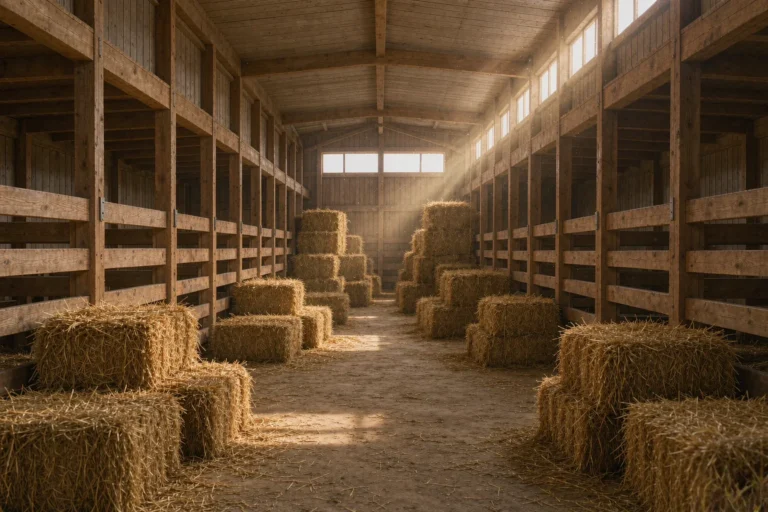
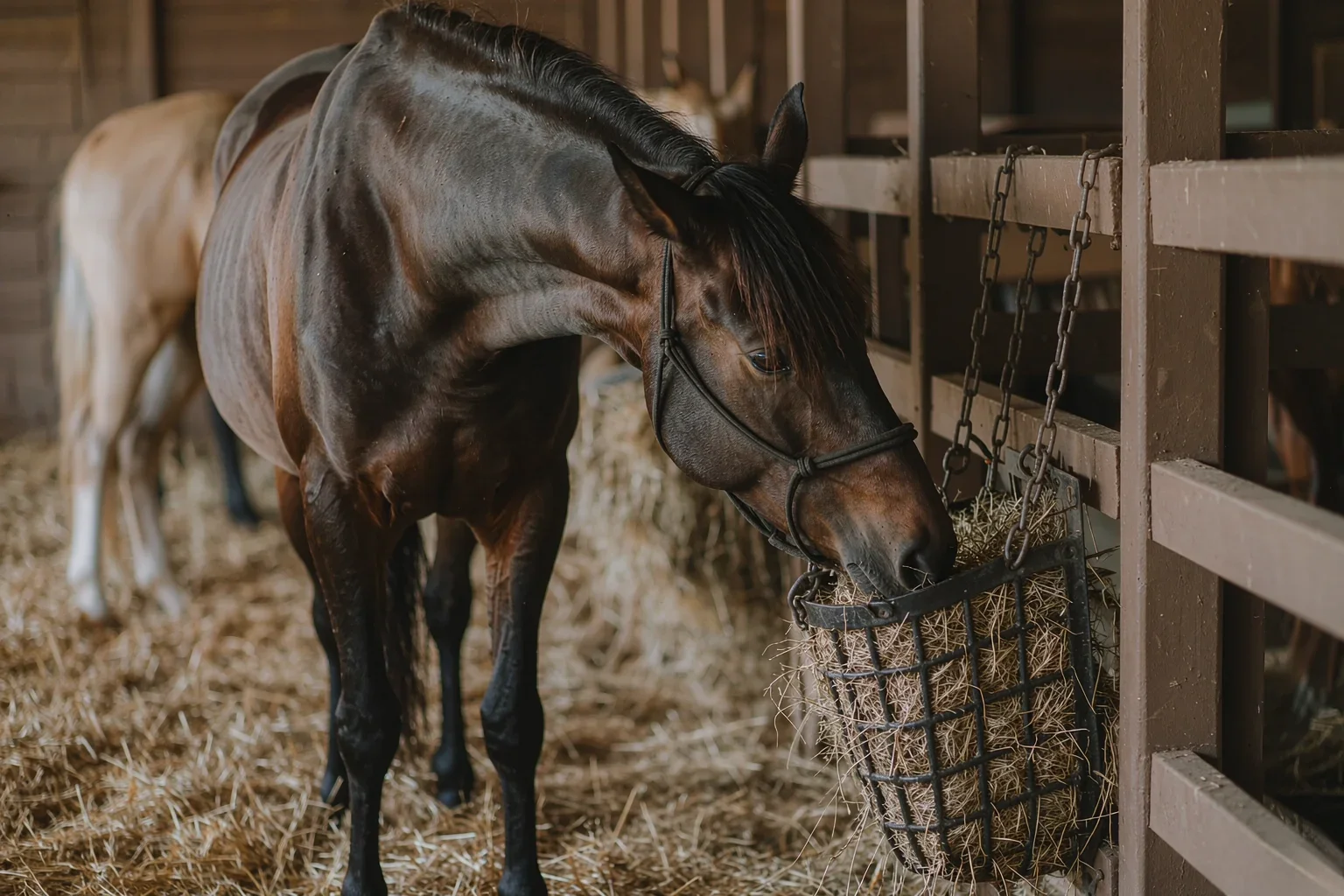
- Forage in front of the horse, almost always. The single biggest risk factor is an empty stomach. Horses at pasture have dramatically lower ESGD rates than horses fed two hay meals a day. If your horse is stabled, the practical answer is slow feeders that turn 8 kg of hay into 16 hours of eating rather than 4.Check Price
- Alfalfa as a buffer, not as a feed. Alfalfa’s high calcium content buffers stomach acid, and trial work supports a small alfalfa inclusion reducing squamous lesion severity. A flake or two, or an alfalfa-based chaff, is the dose most vets suggest — not a full alfalfa diet, which brings its own problems.Check Price
- Cut starch per meal, not just total. Keep any single concentrate meal under roughly 1 kg (2 lb) for a 500 kg horse, and choose feeds that keep starch low. Large starch meals produce volatile fatty acids in the stomach that injure the glandular lining.Check Price
- Reduce the stress load you can actually see. Ulcers track stress more closely than they track feed. Constant turnout, a settled herd, hay before work rather than after, and no long trailer trips on an empty stomach will do more than any supplement on the market. Note the word “supplement”: there is currently no product with the same evidence base as omeprazole for treatment, and only weak evidence for prevention.
As an Amazon Associate we earn from qualifying purchases. Nothing on this list replaces your vet’s advice on your horse.
Five questions worth asking your vet
Bring these written down. A fifteen-minute appointment goes very differently when you are not trying to remember them from a website.
- Did you grade the lesions, and is this squamous or glandular disease?
- How long should I treat before we re-scope, and will you re-scope?
- Is this horse a candidate for compounded omeprazole, and what does the evidence say about absorption?
- What in my current management would you change first?
- If the horse does not improve in 14 days, what is the next diagnostic step — and what does that cost?
Related reading
Sources & further reading
- AAEP — Equine Gastric Ulcer Syndrome (owner resources)
- Merck Veterinary Manual — Gastric Ulcers in Horses
- UC Davis Center for Equine Health — Equine Gastric Ulcer Syndrome
- Sykes et al., ECEIM consensus statement on equine gastric ulcer syndrome (J Vet Intern Med, 2015)
Price ranges are compiled from published U.S. veterinary fee surveys and practice websites for 2025–2026. Regional variation is large; treat every number here as a planning figure and ask your own clinic for a written estimate before treatment begins.
Guides
Gear & Reviews
Popular Reads