Barn Drill: A Clean Standing Wrap in Six Steps
Barn Drill: A Clean Standing Wrap in Six Steps
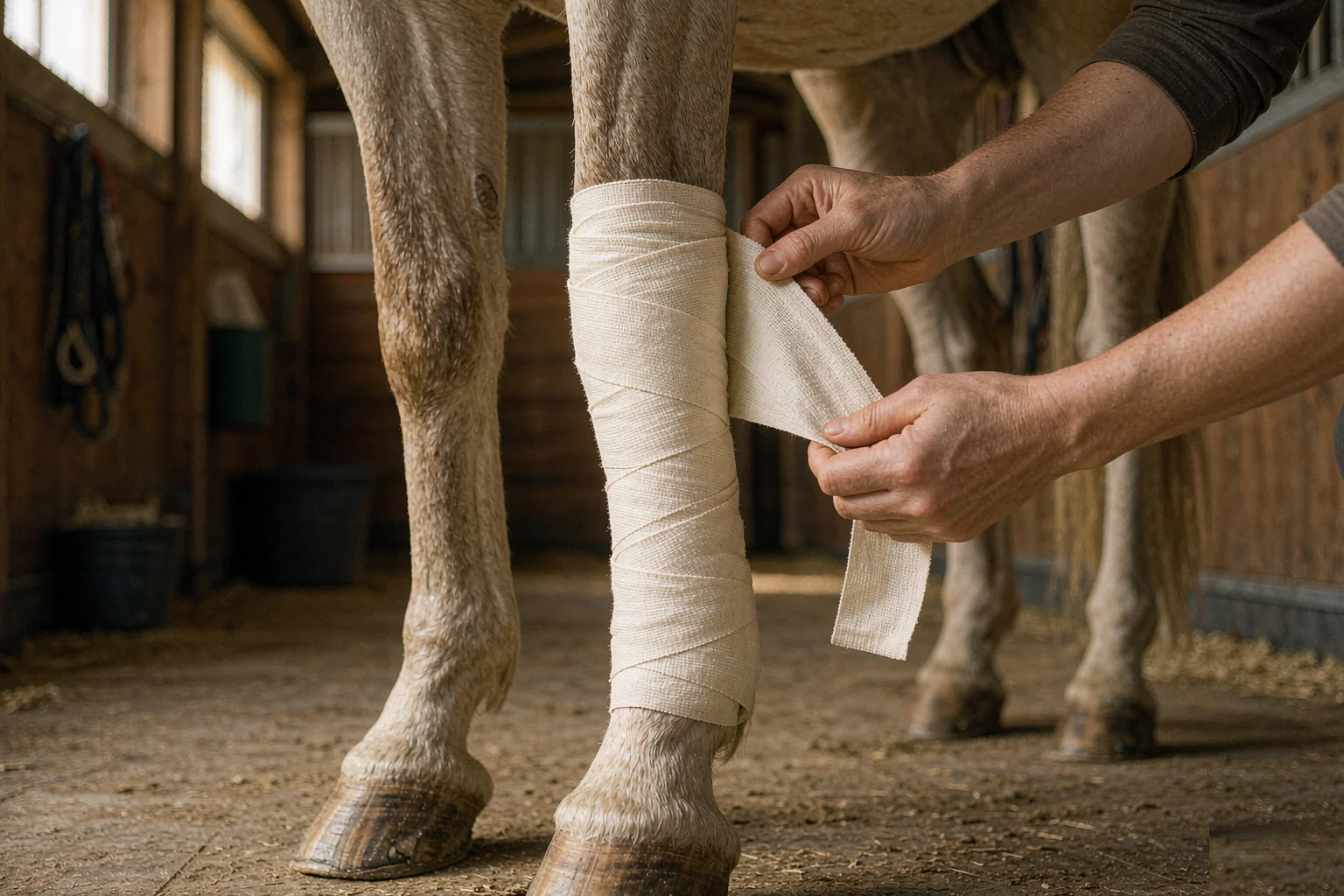
Wrapping a leg is one of those barn skills that looks simple until you do it badly. This drill covers the sequence, the pressure rule, and the mistakes that turn support into a problem.
Start With a Clean, Dry Leg
Dirt and moisture trapped under a wrap are the main cause of rubs and skin trouble. Brush the leg dry and check for cuts, swelling or heat before you touch the bandage. If the leg is already hot or painful, that is a vet question, not a wrapping job.
Even Layers, No Wrinkles
Work from the inside out: soft cotton or a clean fabric layer first, then the cohesive wrap over it. Lay each turn roughly half over the previous one and keep the tension even. A wrap that is tight at the top and loose at the bottom does more harm than no wrap at all.
Direction and the Joint Below
Wrap down the leg toward the fetlock, then finish back up — never reverse direction midway, because the fold you create becomes a pressure point. Leave the fetlock free to move and never wrap so tight that you cannot slide two fingers under the edge.
Finish Where You Started
End on the outside of the leg, level with your starting point, and secure the tape there. A fastening point on the front or back of the cannon bone rubs when the horse moves.
Check It Again in Twenty Minutes
Re-check for swelling above or below the wrap, heat, and any sign the horse is uncomfortable. Remove it at the first sign of rubbing. Extension’s first-aid guidance is blunt about waiting: wounds can enter joints and tendon sheaths, and an incomplete injury can become complete.
Sources & scope. Technique sequence summarised from University of Minnesota Extension’s equine first-aid resources, including its standing-wrap and lower-limb bandaging videos, and the written first-aid guidance by Erin Malone, DVM. This is a general guide, not a substitute for hands-on instruction.
Wrapping Kit
- Bulk vet wrap — Several clean wraps beat one reused rollCheck Price
- Horse ice boot — For cooling after work, before wrappingCheck Price
Guides
Gear & Reviews
Popular Reads