The First-Time Horse Owner Checklist (2026 Edition)
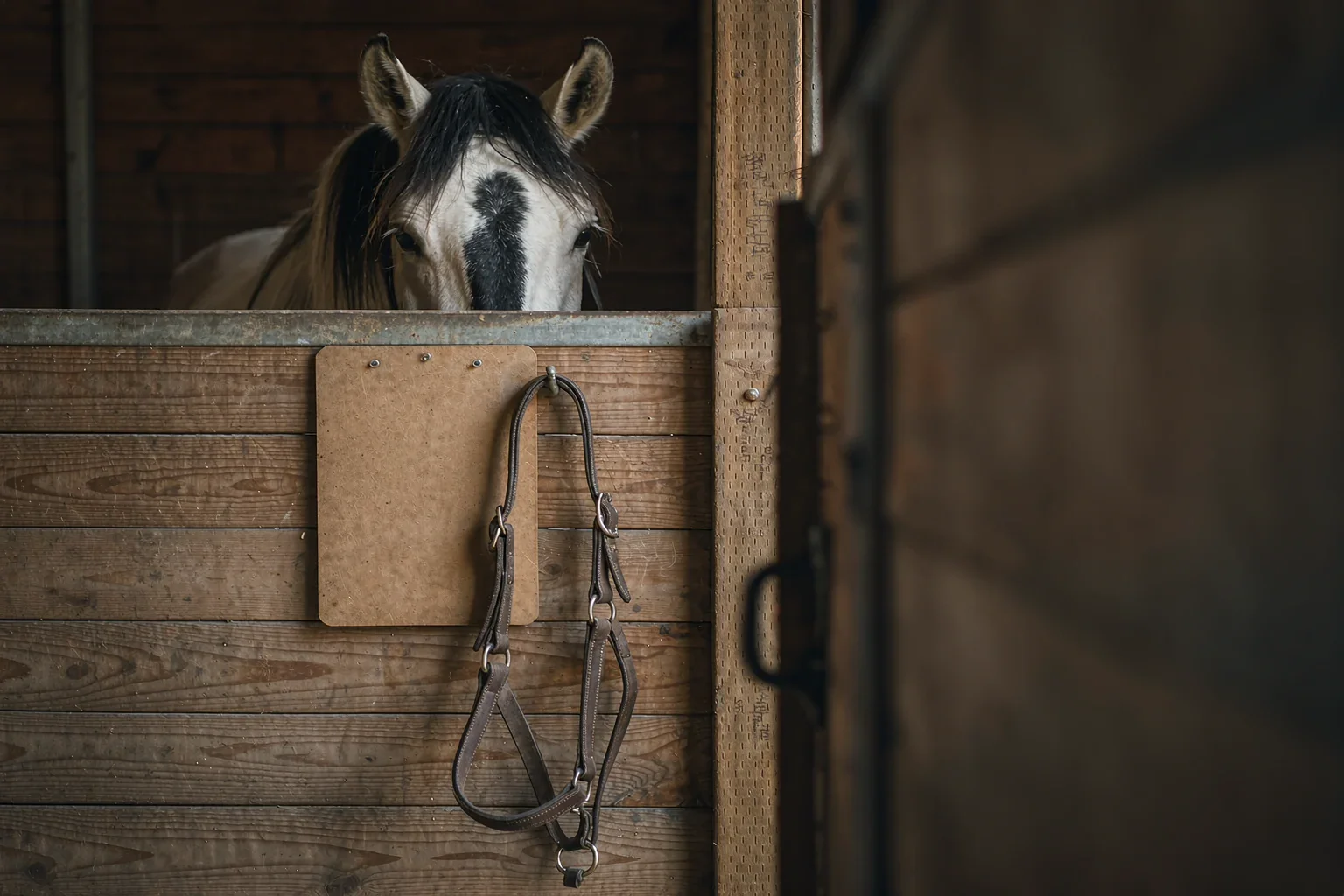
Everything to arrange before the trailer arrives — budget, care team, equipment and paperwork. Print this and work down the list.
1. Verify the Budget First
Use real numbers, not hopeful ones: full board in your area, farrier interval and pricing, a vet you’ve actually called, plus a $2,000–$5,000 emergency reserve. Most owners underestimate by 3–4× (Synchrony lifetime-of-care study).
2. Build the Care Team Before Buying
- Vet: chosen, phone number saved, emergency clinic located
- Farrier: booked for a first trim within 2 weeks of arrival
- Instructor/trainer: for at least the first 6 months
- Barn buddy: someone who can cover feed when you’re sick
3. The Pre-Purchase Exam (PPE)
Bring your own vet, not the seller’s. A $300–$500 exam reveals chronic issues — old tendon injuries, navicular changes, respiratory disease — that become five-figure bills immediately after purchase.
4. Starter Equipment Budget
| Item | Typical Range |
|---|---|
| Saddle (quality used recommended) | $500–$1,500 |
| Bridle & bit | $80–$250 |
| Grooming kit | $50–$120 |
| Halter & lead | $40–$100 |
| First-aid kit | $80–$200 |
| Blankets (climate dependent) | $100–$400 |
5. Paperwork
Bill of sale, current Coggins (EIA test), vaccination records, deworming history, and registration papers if applicable. Photograph everything on arrival day.
Why the Checklist Exists
Most first-horse disasters are not bad luck — they are predictable omissions that every experienced owner made once. This is the checklist against those omissions. It assumes you have already chosen the horse and agreed a price; the sections run in the order the decisions actually happen, from pre-purchase vetting to the first 30 days of ownership.
Before You Pay: The Pre-Purchase Exam
The PPE (pre-purchase exam) costs $250–$500 for a basic version, $500–$1,000 with X-rays, and it is the highest-return money in horse buying. A horse with an undiagnosed suspensory injury or early navicular changes is worth a fraction of the asking price and costs five figures in vet bills.
- Use your own vet, not the seller’s. The seller’s vet has a client relationship; yours has only your interest.
- Be present. A vet’s verbal explanation of “minor” findings is worth more than the written report.
- Decide in advance what findings you will accept. “A few abnormalities” in a flexion test can mean anything from nothing to the end of the horse’s intended career. Know your tolerance before the vet calls.
- X-rays for horses over 8, or any horse intended for hard work. The most common expensive surprises — navicular changes, hock arthritis, suspensory — show on films before they show in movement.
The Legal and Paperwork Checklist
- Bill of sale with the horse’s name, registration, price, and the words “sold as-is where-is” or whatever warranties were agreed in writing. Verbal warranties are unenforceable.
- Registration papers transferred in your name before money changes hands, or a signed transfer held in escrow. An unregistered horse you paid for is a horse with no proof of ownership.
- Coggins (EIA test) within 12 months, current — required for transport in every state and the baseline document for any boarding barn.
- Health certificate if the horse crosses state lines (usually within 30 days of travel).
- Vaccination and deworming records from the seller, including dates and products. Gaps in this record are themselves information.
- Insurance activated the day money changes hands if you are insuring — mortality policies can be bound same-day by phone.
The First 30 Days: Housing, Feed, Farrier, Vet
Housing. Whether you board or keep at home, decide and prepare before the horse arrives: a stall or run-in with clean dry bedding, safe fencing (no barbed wire near a new horse’s introduction paddock), water that is not a pond, and somewhere to isolate the new horse for 2–3 weeks if you have others. Quarantine is not paranoia — strangles and EHV-1 arrive with new horses, and a two-week quarantine paddock costs nothing but planning.
Feed transition. Ask the seller exactly what the horse eats — brand, amount, hay type — and buy enough of it for a two-week transition. Change one thing at a time, over one to two weeks. A horse that arrives to a completely different diet is in the highest-risk colic window of its life.
Farrier. Ask when the horse was last trimmed or shod and get the farrier’s name. Book your own farrier inside the first two weeks — not because the trimming is urgent, but because the farrier sees the feet before problems develop and becomes your baseline.
Vet. Book a new-client wellness exam in week one, even if the PPE was recent. The vet needs a baseline: weight, teeth, body condition, and a relationship with the horse before it is bleeding at 9pm on a Sunday.
Buy Once, Cry Once
- Complete grooming kit — The tote that covers day oneCheck Price
- Heavy-duty storage tote — Tack survives when the barn floodsCheck Price
- Rechargeable work light — Power cuts happen at feeding timeCheck Price
The Budget You Actually Signed Up For
| Category | First month | Steady state / month |
|---|---|---|
| Boarding (full care) | $450–$900 | $450–$900 |
| Hay and feed | $150–$300 | $180–$280 |
| Farrier (trim or reset) | $80–$180 | $80–$180 every 6–8 wk |
| Vaccines, dental, vet baseline | $300–$600 | $50–$90 amortized |
| Equipment for horse AND rider | $800–$2,500 | $30–$80 |
| Insurance (optional but wise) | $40–$120 | $40–$120 |
| Emergency fund contribution | $100–$200 | $100–$200 |
Mistakes That Cost First-Timers the Most
- Buying equipment before the horse. Saddles must fit the horse, and the horse is not known until it is vetted. Buy the saddle after the horse, fitted by a fitter, on the horse.
- Skipping quarantine. One case of strangles in a barn costs more than the quarantine paddock would have cost in a decade.
- No emergency fund. The first colic or lameness is statistically likely within 18 months. $2,000 set aside converts an emergency from a credit-card decision into a calm one.
- Changing everything at once. New feed, new schedule, new turnout, new tack, new training in week one is a stress cascade. Change one variable per week.
- Not asking the seller for the horse’s routines. What it is turned out with, when it is fed, what it is stabled next to — this information prevents the avoidable behavior problems that get “problem horses” sold twice.
Day-one essentials
- Halter and lead rope set — Breakaway halter, 10-ft lead: the first thing your horse needs at the gateCheck Price
- Complete grooming kit — Hoof pick through sweat scraper in one caddyCheck Price
- Horse first aid kit — Stock it before you need it at 11pmCheck Price
Guides
Gear & Reviews
Popular Reads
Keep reading: 12 boarding barn red flags to check before you sign