How to Buy Your First Saddle Without Wasting $2,000
Why the Saddle Is the Worst Place to Save Money
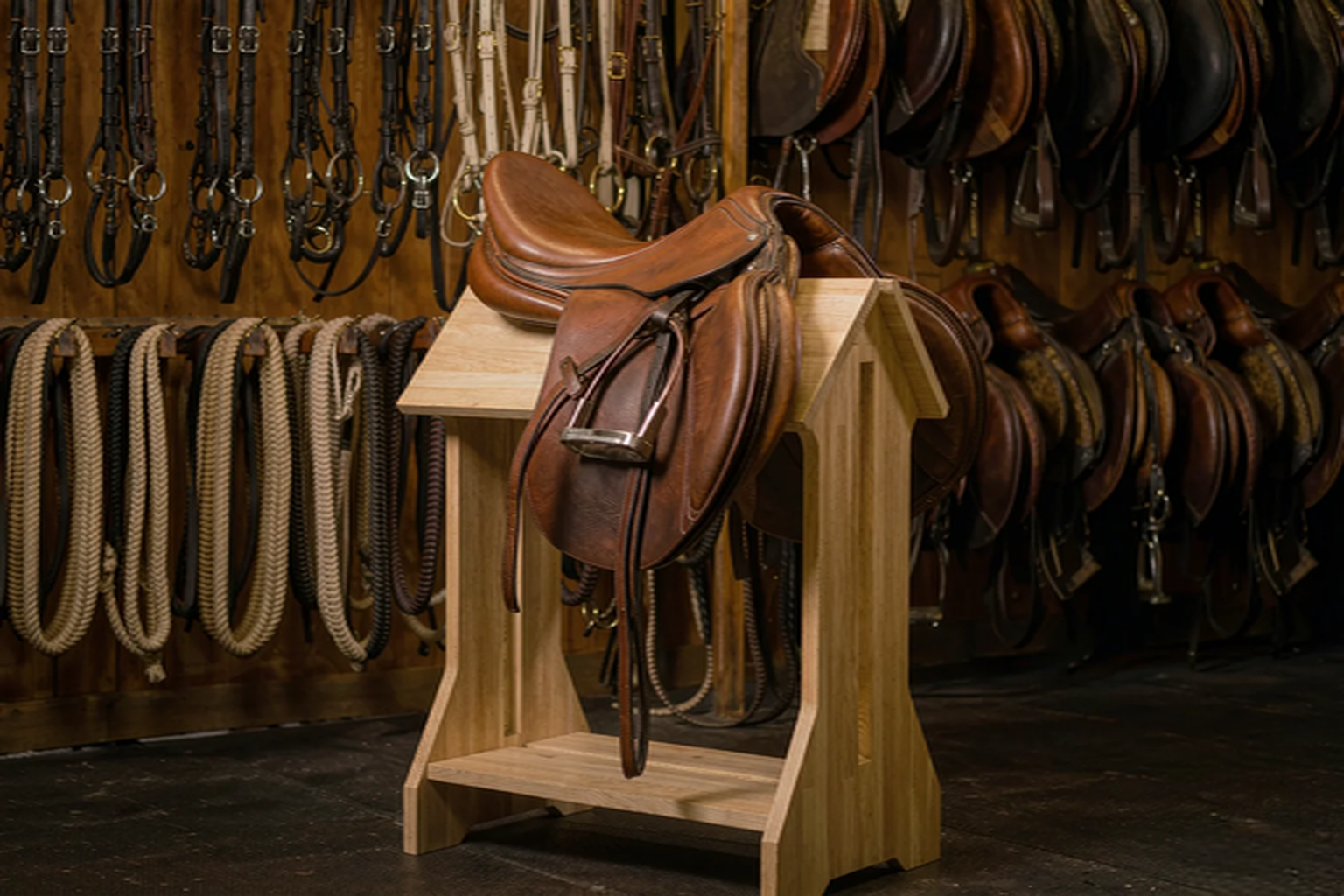
A saddle is the only piece of equipment that is bolted to the horse’s back for hours at a time and connected to the rider’s balance for decades. Buy a bad saddle and you get three failures at once: the horse develops soreness that shows up as “girthiness” or a stiff transition, the rider’s position distorts to compensate, and — because no saddle shop wants a used saddle with worn flocking — the resale value collapses.
The $2,000 in the title is not the price of a good saddle. It is the realistic total cost of buying the wrong one: a $900 saddle bought new, $150 in resoling and repair when you try to fix it, $60 in gel pads to mask the fit problem, and $890 of depreciation when you sell it for less than half of what you paid. The point of this guide is to spend the budget once, on the right tree, in the right size, for the right horse.
Budget Reality: What the Money Actually Buys
| Price band | What you get | Who it suits |
|---|---|---|
| $500–$900 new | Synthetic or entry leather; heavy, short-lived trees | Very short rides, small riders, kids outgrowing horses |
| $1,200–$2,000 new | Proper leather, adjustable gullet or flocked panels | Most adult beginners on a horse they keep |
| $1,000–$2,500 used | $3,000–$6,000 saddle 3–8 years old, Professionally reflocked | The best value in the market if you can assess condition |
| $3,000–$6,000+ new | Custom-fit, lifetime flocking, brand with resale | Riders committed for 5+ years or competing |
The uncomfortable truth in that table: a $1,500 used saddle from a good brand usually fits better and lasts longer than a $1,500 new saddle from a budget brand. Leather from twenty years ago was thicker; trees were built to be reflocked; and the saddle has already done its initial stretching, so the fit you try is the fit you keep.
Fit for the Horse Comes First — Here Is How to Check
Everything about saddle fit starts with the tree width and the panel contact. A saddle that is too narrow pinches the withers and rocks onto the shoulders; one that is too wide sits on the withers and slides side to side. Both cause muscle atrophy over the topline that you will not see under the saddle pad until it is advanced.
The five-point check, no specialist needed
With the saddle on the horse, ungirthed and no pad:
- Wither clearance. You should fit two to three stacked fingers vertically between the pommel arch and the withers. One finger is too narrow; four is too wide.
- Channel clearance. The gullet channel must clear the spine by roughly a finger’s width along its whole length. If it touches at any point, that is permanent spine pressure.
- Panel contact. Slide your hand under the panel from front to back. Pressure should be even across the whole surface. Any bridging — contact at front and back with a gap in the middle — concentrates the rider’s weight on two pressure points.
- Rock test. Press down on the pommel, then the cantle. A small amount of give is normal; visible rocking means the tree width is wrong.
- Seat level. Look from the side. The lowest point of the seat should be in the middle, not tipped forward or back. A tipped seat puts the rider’s weight on the horse’s shoulders or loins.
Do this check before you buy, on the horse the saddle is for, at the place the seller can witness it. A “it fit my mare” saddle is not evidence it will fit yours.
New vs Used: What to Inspect on a Used Saddle
Used is where the value is, but a used saddle is sold as-is. Check these five things and most bad purchases will eliminate themselves:
- Tree integrity. Flex the saddle gently front-to-back and side-to-side. Any creak, click, or asymmetric flex means a cracked tree. A cracked tree is a scrap saddle; do not accept “it rides fine.”
- Flocking. Feel under the panel where it meets the seat. Flocking should be firm and even, like a firm pillow. Lumpy, rock-hard, or visibly compressed patches need a reflock ($150–$250) — price that into the offer.
- Leather condition. Cracked billet straps are a safety issue, not cosmetic; a strap that snaps mid-ride drops the saddle sideways. Check every billet’s stitching at the base and replace any that are worn ($20–$40 per strap).
- Stitching on stress points — the cantle binding, the gullet, the stirrup bars. A loose line of stitching at a stress point becomes a tear.
- Staple or nail lines on the tree visible through the leather. This is a repair, and it means the saddle has already had a major failure.
The Discipline Rule
Buy for the horse you have, in the size that fits both of you. It is tempting to buy a slightly wider tree “because the next horse might need it.” Saddles do not work that way — a tree that fits two horses is rare, and the compromise always costs the first horse. Equally: buy the seat size for your body, not the body you plan to have. A 17.5” seat on a rider who needs 16.5” puts every stride’s balance in the wrong place.
And budget for the fitter. A saddle fit by a professional fitter, at your barn, with your horse, costs $75–$150 for the visit and is the single highest-value hour in horse ownership. If you buy online, find a fitter first and make the sale conditional on their assessment — most reputable sellers agree, and the ones who do not are telling you something.
Leather Care From Day One
- Saddle soap conditioner — The habit that doubles saddle lifeCheck Price
- Fleece saddle cover — Dust off between ridesCheck Price
- Leather hole punch — Fit the girth, skip the cobblerCheck Price
Common Beginner Mistakes
- Buying for looks. Blingy tooling and fancy stitching add $300–$800 and change nothing about fit. Buy plain, fit properly, add tooling in ten years if you still want it.
- Trusting the size stamped on the flap. Seat sizes vary by half an inch between makers. Sit in the saddle or do not buy it.
- Buying the breed advice. “Quarter Horse bars” is a tree shape, not a guarantee. Two QHs can need different widths.
- Solving fit problems with pads. A shim pad under a badly-fitting saddle redistributes pressure unevenly and hides the actual problem. Pads fine-tune a good fit; they do not rescue a bad one.
- Skipping the girth. A saddle that fits with a cheap elastic girth may not fit with a shaped leather one. Budget $50–$120 for the right girth as part of the saddle budget, not as an afterthought.
What It Costs to Do It Right
A realistic first-saddle budget for an adult beginner keeping their own horse in 2026:
- Used saddle from an established brand: $1,200–$1,800
- Professional fitting at your barn: $75–$150
- Reflock or minor adjustment, often needed on a used saddle: $0–$250
- Proper girth: $50–$120
- Total: roughly $1,325–$2,320
That is the honest range, and it is less than the $2,000 the title promises you will waste by getting it wrong. The saddle is the piece of kit you will still be using in fifteen years, on a different horse, if you buy it right the first time.
Saddle buying essentials
- Saddle fit gauge / measuring kit — Cheap way to check tree width before travelling to view a saddleCheck Price
- Saddle pad (quality, contoured) — Fit and pressure distribution — cheaper than fixing a back problemCheck Price
- Saddle cover for storage — Keeps a used investment in resale conditionCheck Price
Guides
Gear & Reviews
Popular Reads