Hoof Supplements: What the Evidence Actually Supports
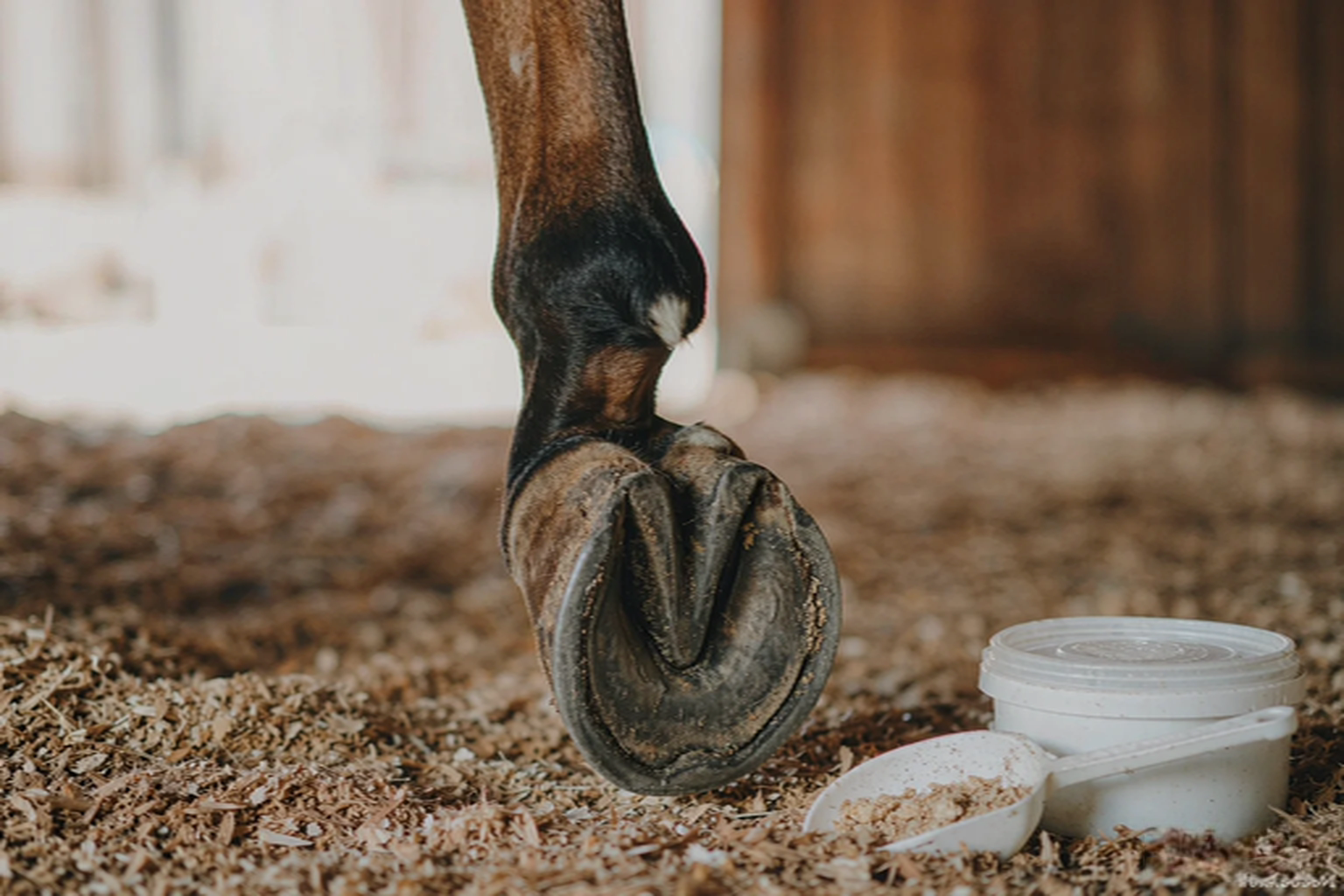
What Hoof Supplements Can and Cannot Do
Hoof supplements are a $400-million-a-year industry built on one honest observation and one dishonest promise. The honest observation: biotin deficiency causes brittle hooves, and supplementing it helps. The dishonest promise: that a bucket of powder will grow a better hoof than the genetics and farriery you started with. It will not. If you buy one thing from this guide, buy the honest part and skip the rest.
Here is the mechanism, because it matters. The hoof wall is produced by the lamellar corium at the top of the hoof and grows downward at roughly 6–10mm per month — a full new hoof wall takes nine to twelve months to grow out. A supplement can only improve the quality of new growth. It cannot repair existing wall, and any seller claiming visible improvement in “two weeks” is describing a topical effect, not nutrition. Judge any supplement over a full growth cycle: 6–9 months minimum, judged at the farrier’s next visits.
What the Evidence Actually Supports
| Ingredient | Evidence | Effective dose | Verdict |
|---|---|---|---|
| Biotin (vitamin B7) | Multiple controlled trials since the 1980s | 15–30 mg/day | Works for deficient horses; most forage already supplies enough |
| Methionine | Supports keratin structure; works with biotin | 2,500–5,000 mg/day | Reasonable in combination, not alone |
| Zinc | Deficiency causes hoof problems; supplementation corrects | 240–400 mg/day elemental | Test first; many forages are already adequate |
| Omega-3 (flax) | Small studies suggest improved hoof moisture and reduced cracking | 2–4 oz/day ground flaxseed | Good value, low risk |
| MSM | No published evidence for hoof quality | — | Skip it |
| Calcium / phosphorus balancers | Ratio matters more than total amount | per forage analysis | Only useful after a forage test |
| Gelatin | One 1990s study, never replicated | — | Skip it |
Read that table again and notice the pattern: the ingredients that work are the ones that correct a deficiency. If your horse is not deficient, adding more does nothing — the hoof is already producing keratin at its genetic maximum. This is why the first step in any hoof-quality problem is not a supplement, it is a forage test.
The Right Order of Operations
Hoof quality problems, in order of how often they are the real cause:
- Farriery interval. A wall that is 4 weeks overdue is permanently stressed. Before any supplement, confirm the trim cycle is right for this horse — 4 to 8 weeks depending on growth rate, surface and workload.
- Environment. Horses on wet-dry cycles (muddy paddock, dry stall) lose hoof moisture and crack. This is a management problem; no supplement out-competes a bog.
- Forage deficiency. A $40 forage analysis tells you the zinc, copper and selenium levels in your hay. Supplement what is missing, ignore what is not.
- Genetics. Some horses have thin walls and always will. A supplement can marginally help; it cannot rewrite the bloodline.
- True deficiency. Only now, after the first four are ruled out, does biotin at 15–30mg/day earn its place.
How to Read a Label Without Being Fooled
- Find the biotin number and the dose. A bucket claiming “25mg biotin” at a 2-scoop serving that costs $80 a month is not better than one claiming 20mg at $35. Divide the ingredient by the daily serving and compare cost per milligram.
- Ignore proprietary blends. “Hoof matrix 3,400mg” is a number chosen by a marketing department. Every ingredient worth having has a published effective dose; if a label will not state it per-ingredient, the dose is probably too low.
- Watch for selenium. It is toxic above 5mg/day for an adult horse, and it is in many hoof and coat products. If you feed two supplements plus a balancer, you can exceed it without noticing.
- “Clinically proven” means nothing. Ask: which study, on how many horses, published where. Most hoof-supplement claims trace back to a single trial on six horses, run by the manufacturer.
Feeding Around a Supplement
- Adjustable supplement scoop — Consistency beats dosageCheck Price
- Lidded feed bucket — Keeps top-dress dry and unclaimedCheck Price
- Horse treat ball — Dose the picky eater inside a treatCheck Price
The Discipline Rule
Spend the first $60 on a forage analysis and a vet-verified farriery schedule, not on a bucket. If both are right and the hoof is still poor, then supplement biotin 15–30mg/day plus methionine, and judge it against photographs of the same hoof, taken in the same light, at the same angle, every four weeks for six months. If there is no visible improvement in new growth at the coronet by month three, the supplement is not working and the cause is somewhere else on the list above.
One more discipline point: do not feed a hoof supplement and a coat supplement and a joint supplement and a calmener. Overlap is where accidental overdoses happen, particularly with selenium and vitamin A. One well-chosen product, at label dose, with the labels cross-checked, beats four overlapping ones every time.
What It Actually Costs
For a horse that genuinely needs supplementation:
- Forage analysis: $35–$60, once a year
- Plain biotin at 20mg/day (unflavoured bulk powder): $15–$25 a month
- Named-brand hoof supplement with biotin + methionine + zinc: $40–$75 a month
- Ground flaxseed for omega-3: $20–$30 a month
The generic biotin-plus-flax route delivers the evidence-supported dose for under $50 a month. The $75 branded bucket is buying a logo and a scoop. Both are cheaper than a single lameness workup, but only the first is backed by anything other than marketing.
Hoof support options
- Standalone biotin (15–20 mg) — Cheapest way to hit the studied dose without paying for filler ingredientsCheck Price
- Balanced trace mineral supplement — For horses on forage-only diets with unknown mineral statusCheck Price
- Flax-based omega supplement — Skin, coat and general condition supportCheck Price
Guides
Gear & Reviews
Popular Reads
Keep reading: How often should a horse see the farrier?