Best Riding Helmets for Beginners: What Actually Matters (2026)
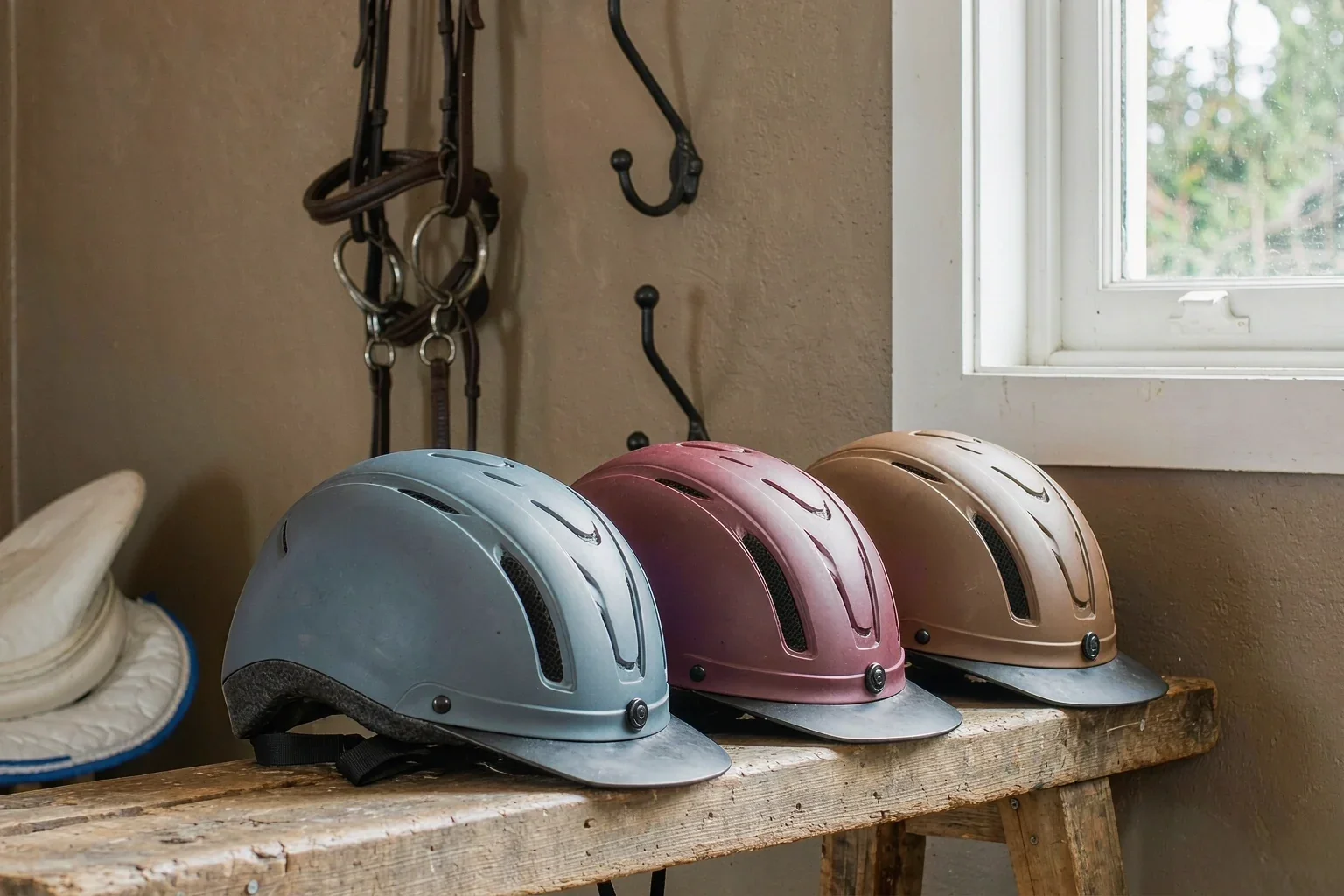
Why Helmet Choice Is Mostly About Certification
Every riding helmet sold in the US after 2022 carries one of two certifications: ASTM/SEI F1163-15a (the US standard) or VG1 01.040 (the EU standard), and many carry both plus PAS015:2011. All three mean the shell survived a standardized impact test and the harness survived a retention test. What they do not tell you is fit, ventilation, weight, or how the helmet performs on a second impact — which is why the rest of this guide exists.
The blunt statistics behind the price of any helmet: head injury is the leading cause of equestrian death, and the single biggest factor in survival is whether a helmet was worn. The second biggest factor, after wearing one, is whether it fit. A helmet that rocks on the head comes off in exactly the tumbling fall it was bought for.
The Price Bands, Honestly Compared
| Price | What changes | What does not | Who should buy here |
|---|---|---|---|
| $60–$120 | Basic shell, minimal vents, heavier | Impact protection (all certified) | Anyone on a budget; kids who will outgrow it |
| $150–$300 | Better fit systems, more vents, MIPS or similar | Impact protection | Most adult beginners — the sweet spot |
| $350–$600 | Carbon shell (lighter), premium fit dials, looks | Impact protection | Riders in the saddle 4+ days a week |
| $600+ | Marginal weight savings, brand | Impact protection | No one needs this for safety’s sake |
The counterintuitive conclusion: a $90 certified helmet protects as well as a $500 one against the same fall. What the more expensive helmets genuinely buy is comfort (they get worn more often and stay on better), ventilation (you will not take it off in July), and a dial-fit system that keeps it correctly seated. Those are real benefits. Impact protection is not one of them.
Fit: The Four Checks That Decide Everything
Brands differ in head shape as much as size. A “long oval” helmet on a “round” head leaves pressure points; a round helmet on a long head leaves gaps at front and back. Buy in person for a first helmet if at all possible.
- Static fit. On the head, straps undone, the helmet should sit level about an inch above the eyebrow and should not slide when you nod firmly. Pressure on the forehead or temples means the shape is wrong, not that you need a bigger size.
- The shake test. With straps fastened, shake your head side to side and up and down. The skin at the brow should move with the helmet. If the helmet slides independently, go down a size or change shape.
- Strap geometry. The chin strap’s Y should meet just below each ear, and the buckle should sit under the chin, not on the jawbone. Adjust both sides evenly.
- The roll test. Grab the helmet at the back and try to roll it forward off the head. It should resist strongly. If it rolls forward off, the harness is too loose or the shape is wrong — this is the failure mode that matters in a real fall.
When to Replace — Including the Fall Nobody Saw
- After any impact, always. The EPS liner crushes once and does not recover. A helmet that saved you from one fall has spent its protection, even if it looks perfect. Most manufacturers will discount a replacement after a fall; some programs (Troxel, One K) offer 20–30% off for exactly this.
- Every 5 years from manufacture date — not purchase date. EPS degrades with UV and temperature cycles; check the date stamp inside the harness.
- Visible damage of any kind — cracks, compressed areas, a harness that no longer holds adjustment, damaged webbing.
- After storage abuse. A helmet left in a hot car for a summer has been slowly cooked; EPS loses integrity above roughly 140°F. Do not store it in the car, the tack trunk in the sun, or the trailer’s nose compartment.
MIPS and the Rotational-Impact Question
Several mid-price helmets now include a low-friction layer (MIPS or similar) designed to reduce rotational forces — the mechanism behind concussion and rotational brain injury. The laboratory evidence for rotational protection is good; the field evidence on real-world concussion reduction is still accumulating. What can be said honestly: a MIPS-equipped helmet at $180–$250 is a reasonable choice for a beginner because it adds rotational protection without the premium-shell price, and there is no evidence it hurts.
What is not honest: marketing that implies a MIPS helmet makes falling “safe.” No helmet prevents concussion. They reduce the severity of what would otherwise be fatal or catastrophic, and the rider’s job is still not to fall off.
Make the Helmet Last
- Helmet sweat liner — Wash the liner, not the helmetCheck Price
- Equestrian helmet bag — Keep the shell safe in the tack roomCheck Price
- Neck cooling towel — Hot rings cook ridersCheck Price
Common Beginner Mistakes
- Buying a used helmet. You cannot see a crushed liner from outside, and the seller may not know it fell. This is the one piece of safety equipment where used is a genuinely bad idea.
- Sizing up to “grow into it.” A loose helmet comes off in a fall, which makes it decoration. Kids outgrow helmets by wearing them out or damaging them — buy the size that fits today.
- Choosing by brand or color first. Find the brands that fit your head shape, then choose color within them. It is a $200 piece of safety equipment with a color choice, not the reverse.
- Keeping the old helmet after the new one arrives. Retire the old one — give it to a non-rider for yard work if you must, but do not leave it in the tack room as a fallback, because a fallback helmet is a helmet someone will eventually ride in.
What a Sensible First Helmet Setup Costs
- Certified helmet with dial fit, MIPS if available: $150–$280
- Spare hair nets / helmet liner if you ride in heat: $10–$25
- Safety vest (optional but worth it for green horses or cross-country): $150–$400
The helmet itself is a one-time-ish cost: with the 5-year rule, $200 today is $40 a year, which is less than one riding lesson a month. It is the cheapest serious safety equipment in the sport, and unlike most of it, you will use it every single ride.
Certified helmets worth considering
- Entry-level certified helmet — Best value if you’re still deciding whether riding sticks — ASTM/SEI certified at roughly $60–80Check Price
- Mid-range ventilated helmet — The sweet spot for weekly lessons: certified, lighter, better airflow in summerCheck Price
- MIPS-style rotational helmet — For riders committing to regular work — rotational protection addresses the most common fall mechanismCheck Price
Guides
Gear & Reviews
Popular Reads